Distinct Metabolomic Alterations Are Associated With Physical Function, Weight Loss, and Muscle Mass in Men With Cancer
Lindsey J. Anderson, Lu Xia, Haiming Kerr, Marin Cabrera, Fabien Chu, Jaqueline Rose, Peter C. Wu, Atreya Dash, Sina A. Gharib, Jose M. Garcia

TL;DR
This study finds that specific changes in metabolism are linked to weight loss, muscle loss, and poor physical function in men with cancer, offering potential targets for treatment.
Contribution
The study is the first to identify distinct metabolomic signals associated with impaired physical function in cancer cachexia.
Findings
Weight loss is linked to altered metabolism in plasma, including microbial and fatty acid pathways.
Reduced muscle mass is associated with changes in skeletal muscle metabolism, such as fatty acid and histidine pathways.
Poor physical function shows distinct metabolic patterns in plasma and muscle, separate from those of weight loss or muscle loss.
Abstract
Treatments for cancer cachexia, defined as involuntary weight and muscle mass loss leading to significant functional impairment, remain unavailable partly due to insufficient improvement of clinically meaningful outcomes in current trials. By reflecting downstream effects of cellular function, metabolomics may identify mechanisms contributing to poor functional performance. Previous metabolomic studies in cancer cachexia have identified alterations in amino acid metabolism with weight loss or low muscularity; none have examined perturbations with poor physical function. We hypothesized that distinct metabolic signals in plasma and muscle are associated with weight loss, low muscle mass, and impaired function in cancer cachexia. We enrolled patients planning elective laparotomy for gastrointestinal or genitourinary cancer. Handgrip strength (HGS), stair climb power (SCP), and fasting…
Genes, proteins, chemicals, diseases, species, mutations and cell lines named across the full text — each resolved to its canonical identifier and authoritative record.
Click any figure to enlarge with its caption.
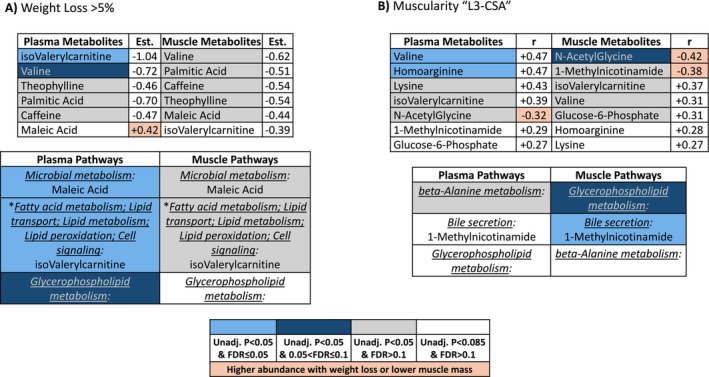 Figure 1
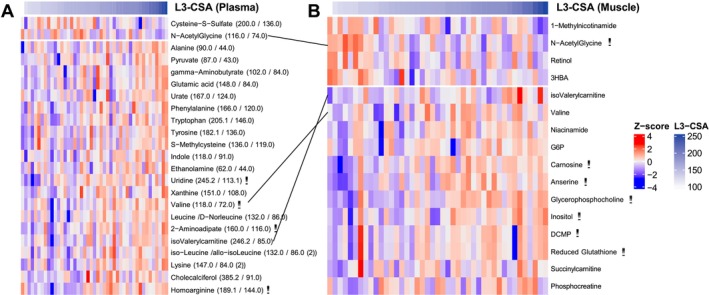 Figure 2
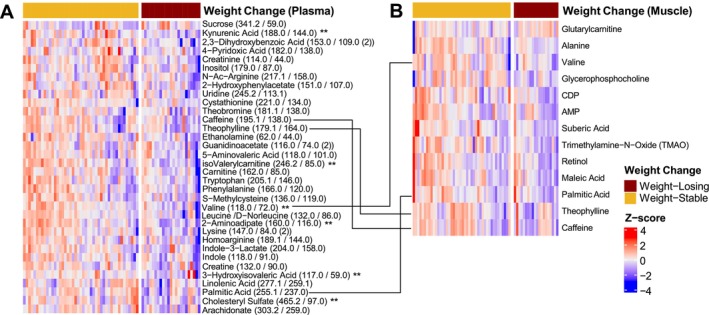 Figure 3
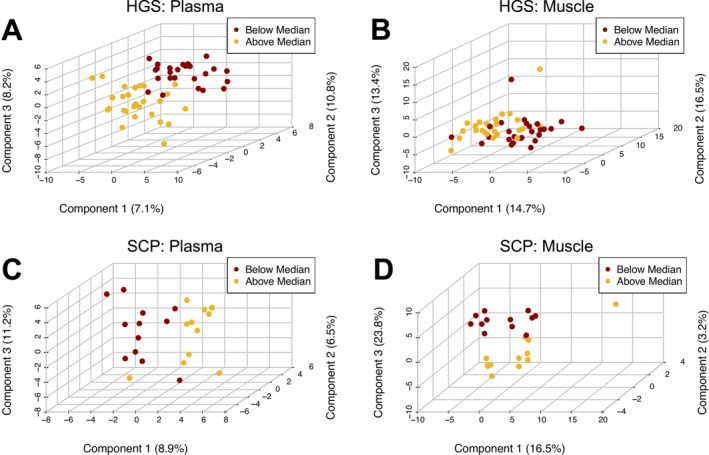 Figure 4
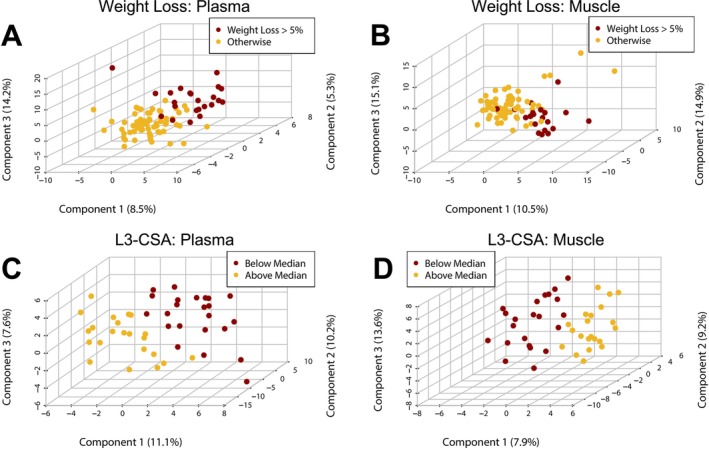 Figure 5
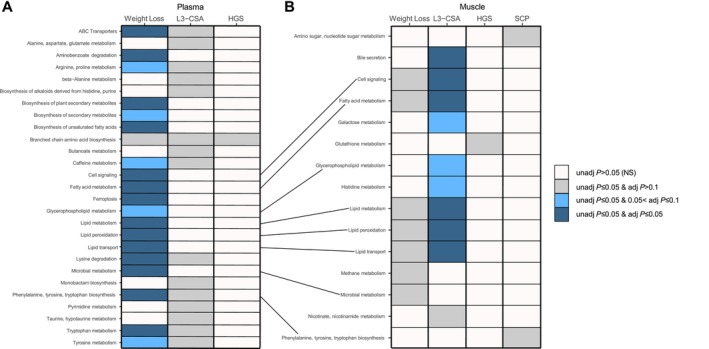 Figure 6
Peer Reviews
No public reviews on file for this paper yet. If you reviewed it on a platform where reviews are public (OpenReview, ICLR, NeurIPS, ICML), you can paste yours below so the community can read it here.
Videos
No videos yet. Explain this paper in a talk, walkthrough, or lecture? Add one.
Taxonomy
TopicsNutrition and Health in Aging · Muscle Physiology and Disorders · Frailty in Older Adults