Dietary Protein Restriction Ameliorates Cardiac Inflammaging via AMPK‐ULK1‐Mediated Mitochondrial Quality Control
Wagner S. Dantas, Elizabeth R. M. Zunica, Elizabeth C. Heintz, Charles L. Hoppel, Cristal M. Hill, Christopher D. Morrison, Christopher L. Axelrod, Gangarao Davuluri, John P. Kirwan

TL;DR
Reducing dietary protein helps protect the aging heart from obesity-related inflammation by improving mitochondrial health through AMPK-ULK1 signaling.
Contribution
This study reveals a novel mechanism by which dietary protein restriction supports mitochondrial quality control and reduces cardiac inflammation.
Findings
DPR reduced cardiac hypertrophy and heart failure markers in obese middle-aged mice.
DPR suppressed cGAS–STING pathway activation and mitochondrial DNA release into the cytosol.
AMPK–ULK1 signaling was identified as a key driver of mitophagy and mitochondrial homeostasis in cardiomyocytes.
Abstract
Calorie restriction (CR) is a robust intervention for improving metabolic health and delaying obesity and age‐related diseases, yet its translational utility is limited by adherence challenges and diminished effectiveness later in life. Dietary protein restriction (DPR), which reduces dietary protein without decreasing total caloric intake, has emerged as a promising alternative, yet its cardioprotective potential in the context of obesity and aging remains poorly understood. Here, we demonstrate that DPR mitigates obesity‐induced cardiac remodeling and inflammaging by activating the AMPK–ULK1 signaling axis and enhancing mitochondrial quality control. In middle‐aged male mice with high‐fat diet‐induced obesity, 4 months of DPR attenuated cardiac hypertrophy and normalized heart failure markers, independently of FGF21 signaling. Transcriptomic and protein analyses revealed that DPR…
Genes, proteins, chemicals, diseases, species, mutations and cell lines named across the full text — each resolved to its canonical identifier and authoritative record.
Click any figure to enlarge with its caption.
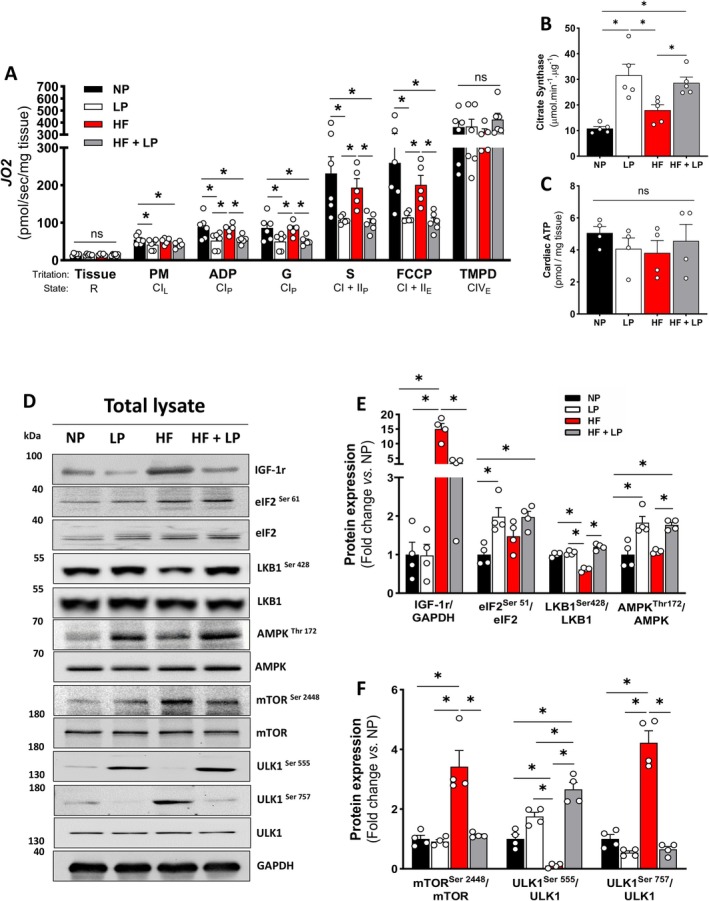 Figure 1
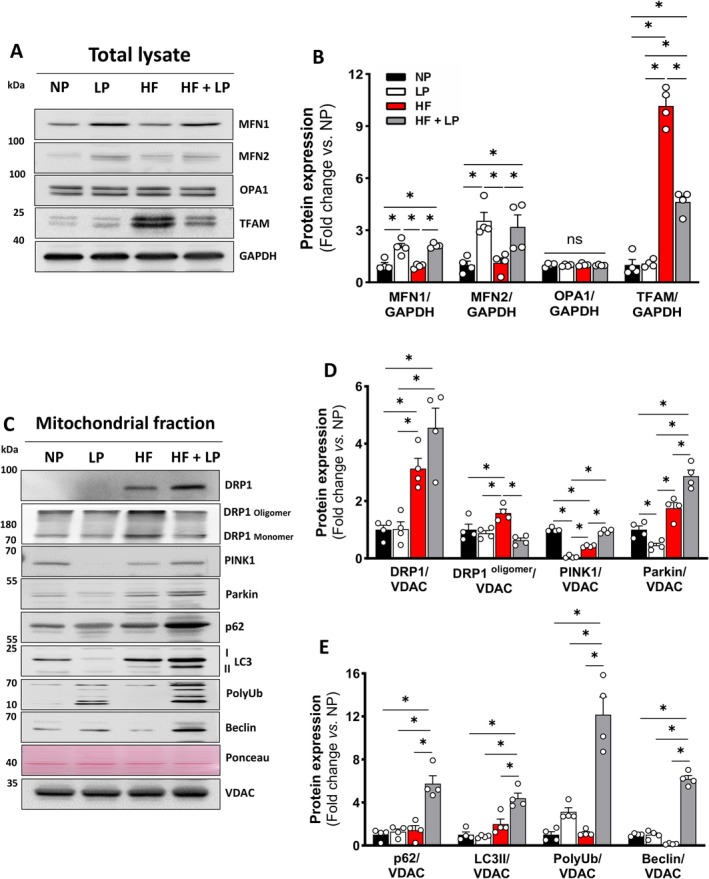 Figure 2
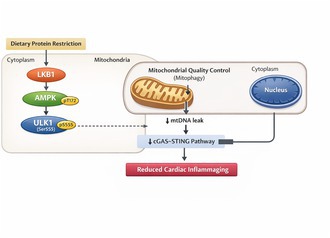 Figure 3
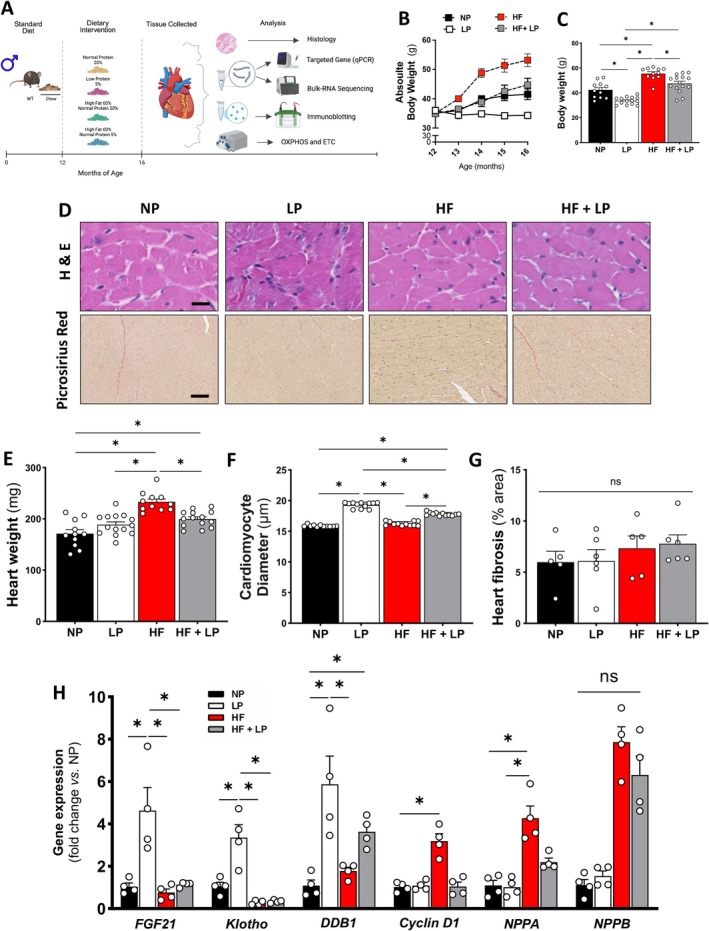 Figure 4
 Figure 5
 Figure 6
 Figure 7
 Figure 8
Peer Reviews
No public reviews on file for this paper yet. If you reviewed it on a platform where reviews are public (OpenReview, ICLR, NeurIPS, ICML), you can paste yours below so the community can read it here.
Videos
No videos yet. Explain this paper in a talk, walkthrough, or lecture? Add one.
Taxonomy
TopicsEndoplasmic Reticulum Stress and Disease · Genetics, Aging, and Longevity in Model Organisms · interferon and immune responses