Co-delivery of panobinostat and siSTAT3 using engineered M1 exosomes to establish a one-two punch therapeutic strategy for glioblastoma recurrence
Xuemeng Liu, Yaotian Hu, Yan Zhang, Chang Liu, Jingwen Wu, Ruiqi Zhao, Zhiyi Xue, Wenjing Zhou, Xiaofei Liu, Hrvoje Miletic, Yongli Gao, Chen Qiu, Jian Wang

TL;DR
This study presents a new treatment for recurrent glioblastoma using engineered exosomes to deliver drugs that target both tumor cells and the surrounding environment.
Contribution
The novelty lies in using M1 macrophage-derived exosomes to co-deliver panobinostat and siSTAT3 for dual targeting of tumor cells and the microenvironment.
Findings
The exosomes effectively target tumor cells and shift macrophage balance to the M1 phenotype.
Co-delivery of panobinostat and siSTAT3 inhibits tumor proliferation, invasion, and M2 macrophage infiltration.
This approach shows promise in overcoming the blood-brain barrier and reducing glioblastoma recurrence.
Abstract
Effectively treating recurrent glioblastoma (GB) remains a significant challenge in the clinic. Considering the multifactorial nature of GB progression, a comprehensive therapeutic strategy that directly targets both the tumor cells and its microenvironment is crucial. In this study, we developed an approach using exosomes derived from genetically modified M1 macrophages that encapsulate panobinostat and siSTAT3 to treat recurrent GB. We demonstrate that this innovative system has an innate ability to actively home to tumor cells, leveraging the inflammation-targeting capabilities of M1 macrophage-derived exosomes. These exosomes are pivotal in shifting the balance from M2 macrophages to the more favorable M1 phenotype within the tumor microenvironment. By loading the exosomes with panobinostat, a compound that faces challenges crossing the blood-brain barrier, it can efficiently access…
Genes, proteins, chemicals, diseases, species, mutations and cell lines named across the full text — each resolved to its canonical identifier and authoritative record.
Click any figure to enlarge with its caption.
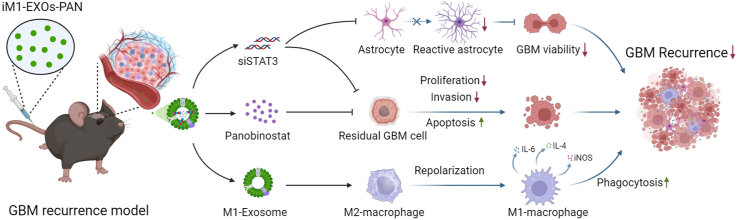 Figure 1
 Figure 2
 Figure 3
 Figure 4
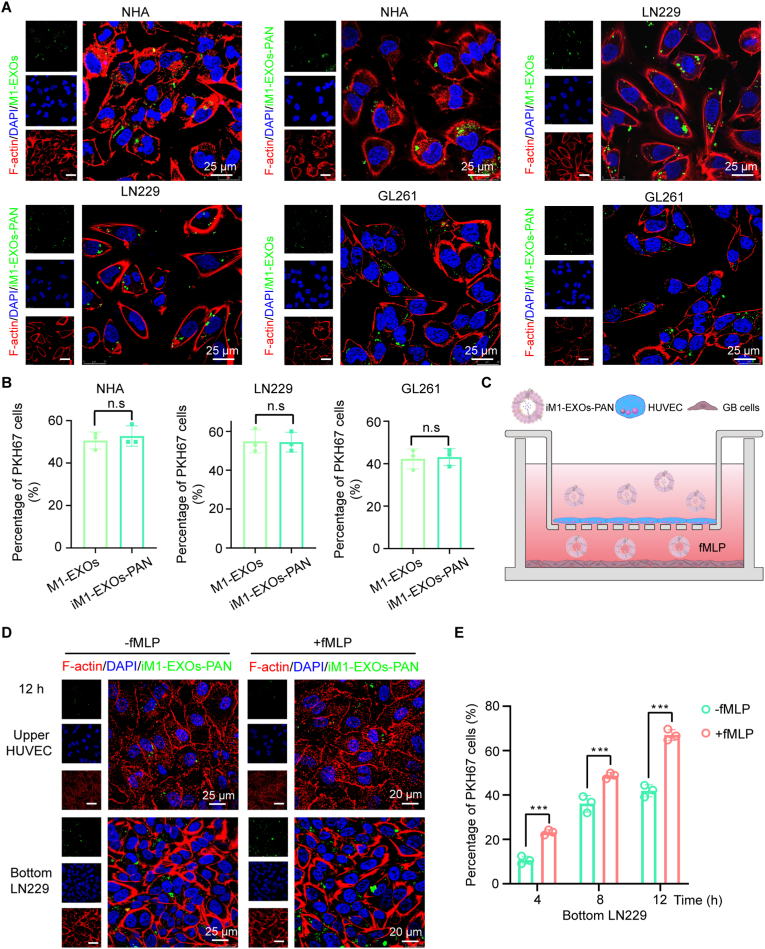 Figure 5
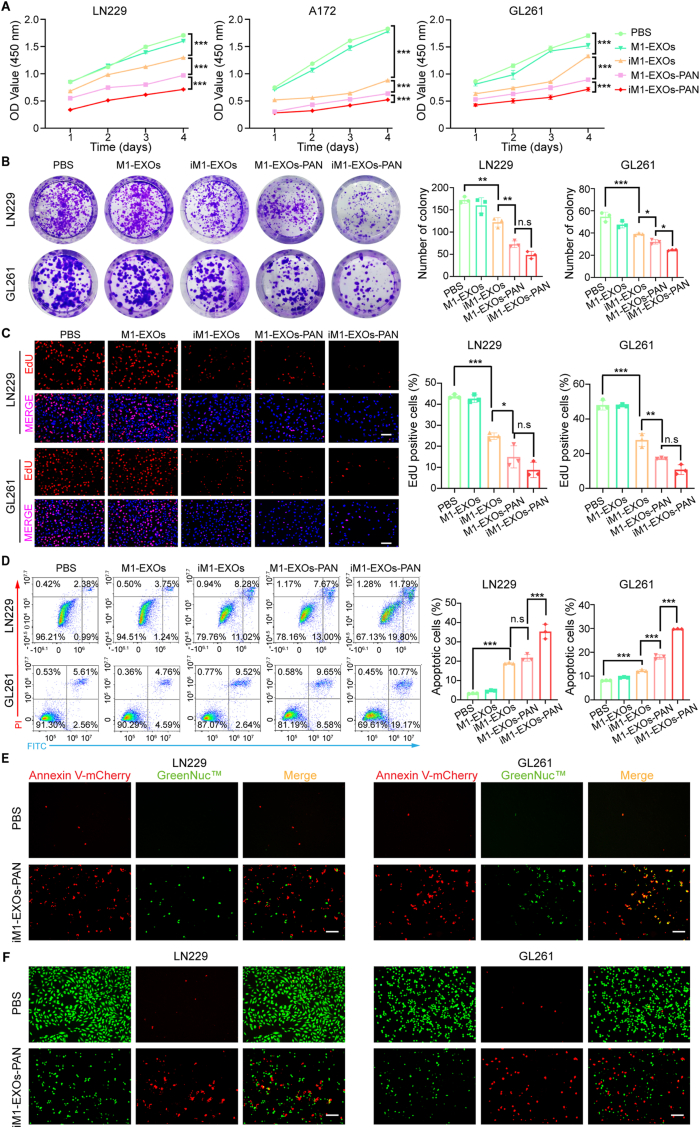 Figure 6
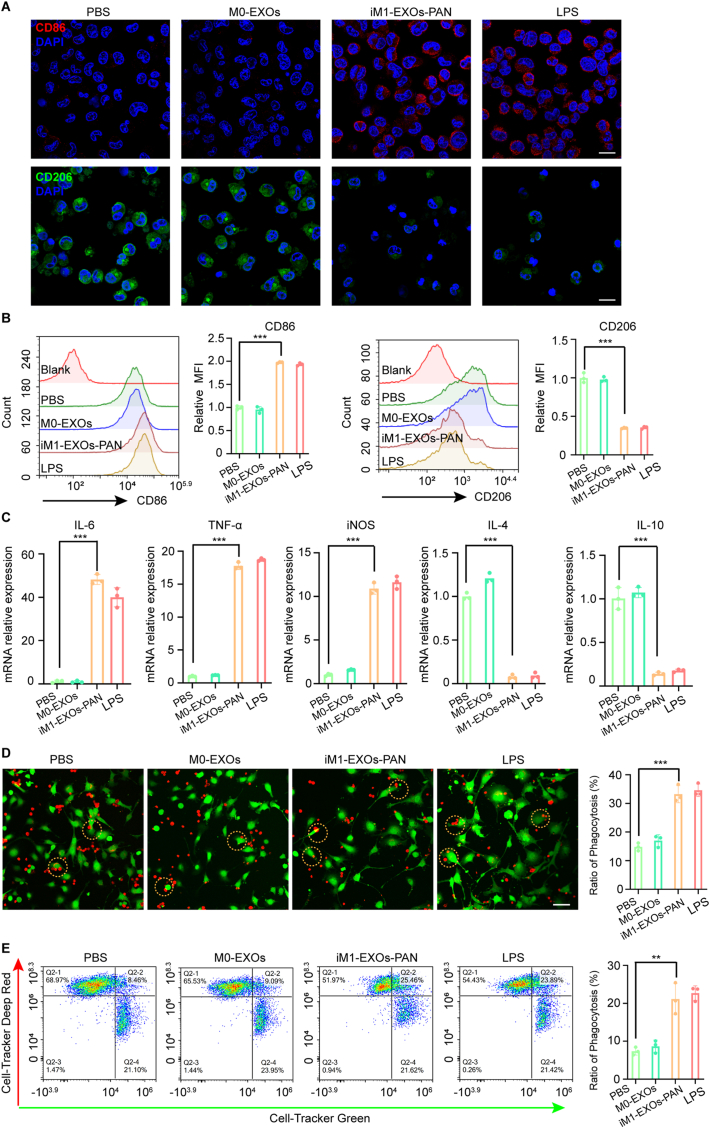 Figure 7
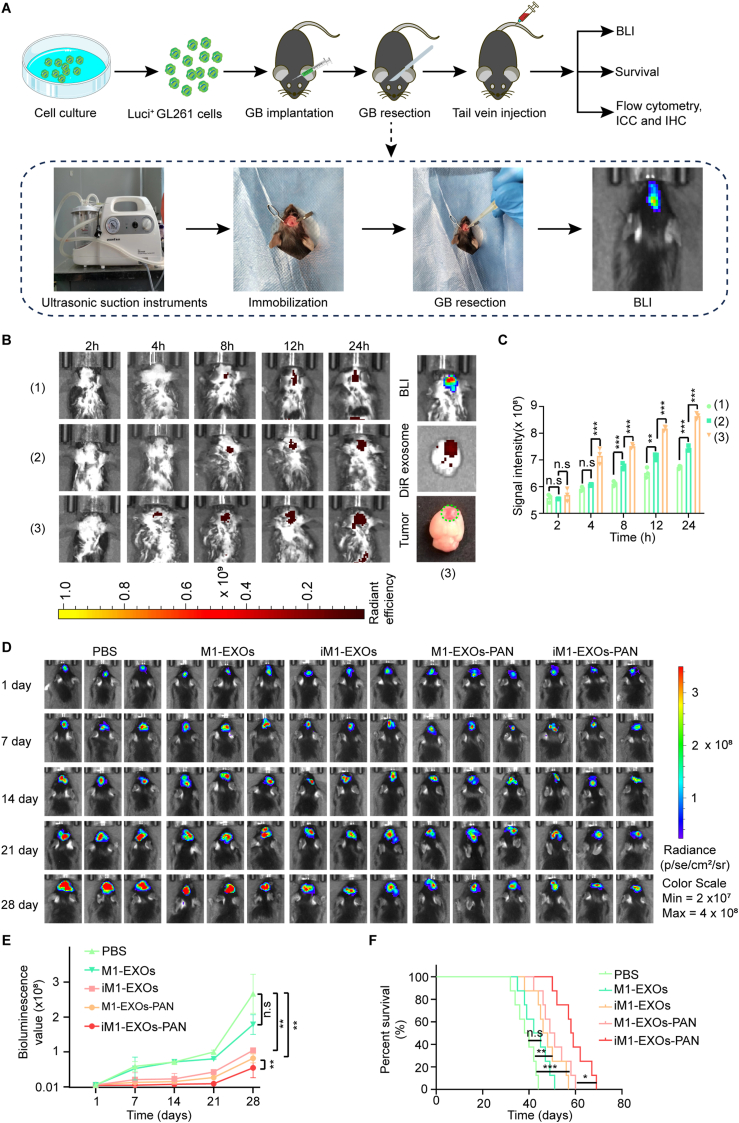 Figure 8
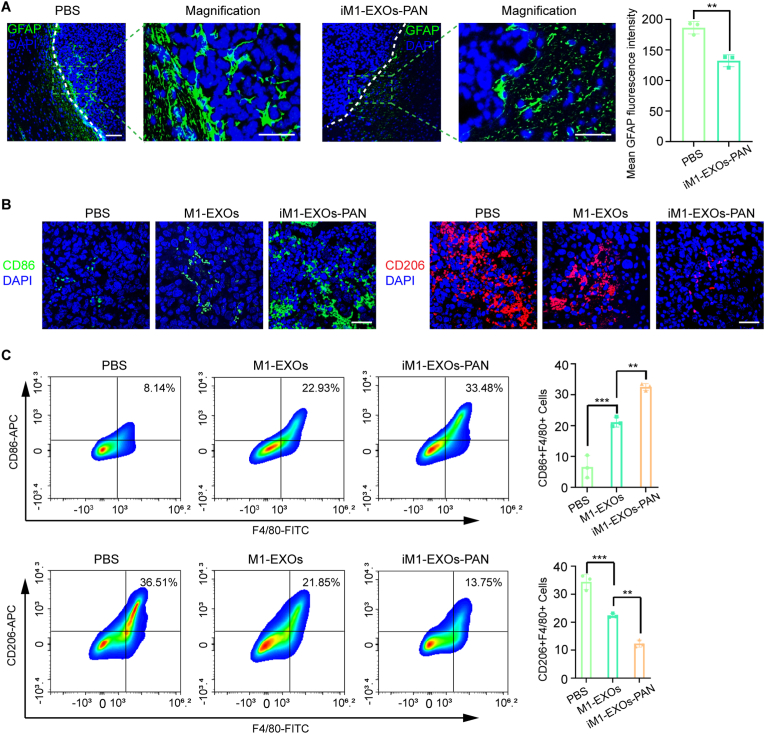 Figure 9
Peer Reviews
No public reviews on file for this paper yet. If you reviewed it on a platform where reviews are public (OpenReview, ICLR, NeurIPS, ICML), you can paste yours below so the community can read it here.
Videos
No videos yet. Explain this paper in a talk, walkthrough, or lecture? Add one.
Taxonomy
TopicsExtracellular vesicles in disease · Immune cells in cancer · Glioma Diagnosis and Treatment