Design and in vitro validation of Brome mosaic –virus-like particles for gene delivery and immunomodulation of melanoma
Khalil Elbadri, Manlio Fuscielo, Firas Hamdan, Ruoyu Cheng, Sara Feola, Honey Bokharaie, Carmine D'Amico, Giuseppina Molinaro, Alexandra Correia, Shiqi Wang, Michael Jeltsch, Vincenzo Cerullo, Hélder A. Santos

TL;DR
Researchers tested plant-based virus-like particles for delivering RNA to silence a cancer immune checkpoint, showing safe and effective gene silencing in melanoma cells and immune cells.
Contribution
BMV-VLPs are proposed as a biocompatible, scalable alternative to synthetic systems for RNA-based immunotherapy.
Findings
BMV-VLPs efficiently encapsulate and deliver siRNA to knockdown PD-L1 in melanoma and immune cells.
PD-L1 silencing via BMV-VLPs enhances T-cell-mediated cytotoxicity and T-cell proliferation in tumor models.
BMV-VLPs show high biocompatibility and no cytotoxicity in vitro.
Abstract
RNA interference (RNAi) is a powerful tool for post-transcriptional gene silencing, yet its clinical translation remains limited by the lack of safe and efficient delivery systems. In this study, we evaluated the potential of plant virus-like particles (VLPs), derived from Brome Mosaic Virus (BMV), as a biodegradable and biocompatible nanocarrier for small interfering RNA (siRNA) delivery aimed at modulating immune checkpoints in melanoma. Recombinant BMV capsid proteins were expressed in E. coli and self-assembled in vitro into uniform VLPs encapsulating siRNA directed against the programmed death-ligand 1 (PD-L1). The VLPs displayed high structural stability, efficient siRNA encapsulation, and excellent biocompatibility. In vitro, A high cellular uptake was confirmed by confocal microscopy and flow cytometry. Besides, no cytotoxicity was observed and functional siRNA delivery was…
Genes, proteins, chemicals, diseases, species, mutations and cell lines named across the full text — each resolved to its canonical identifier and authoritative record.
Click any figure to enlarge with its caption.
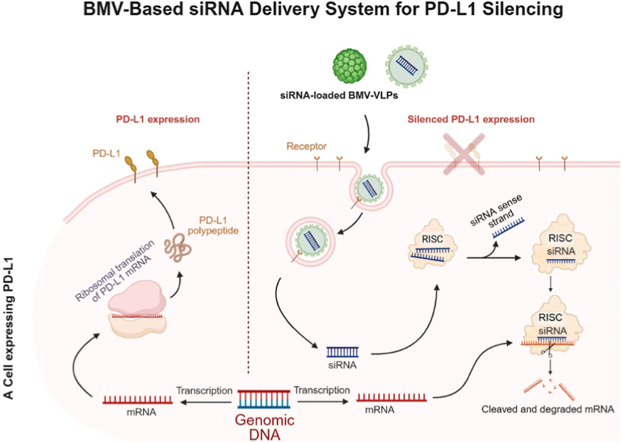 Figure 1
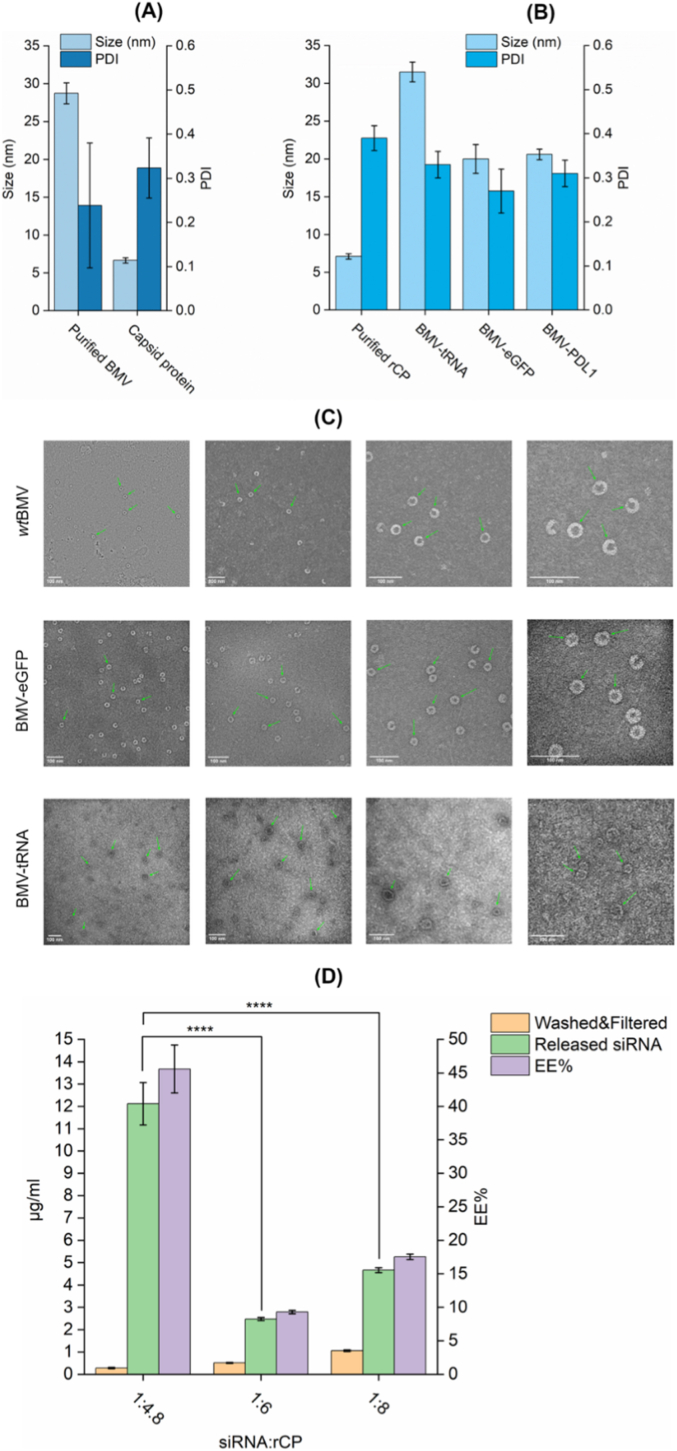 Figure 2
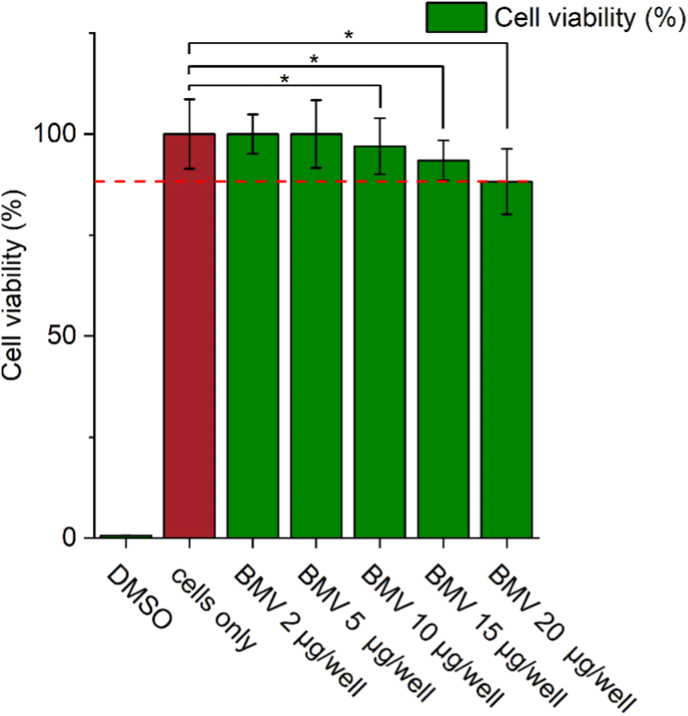 Figure 3
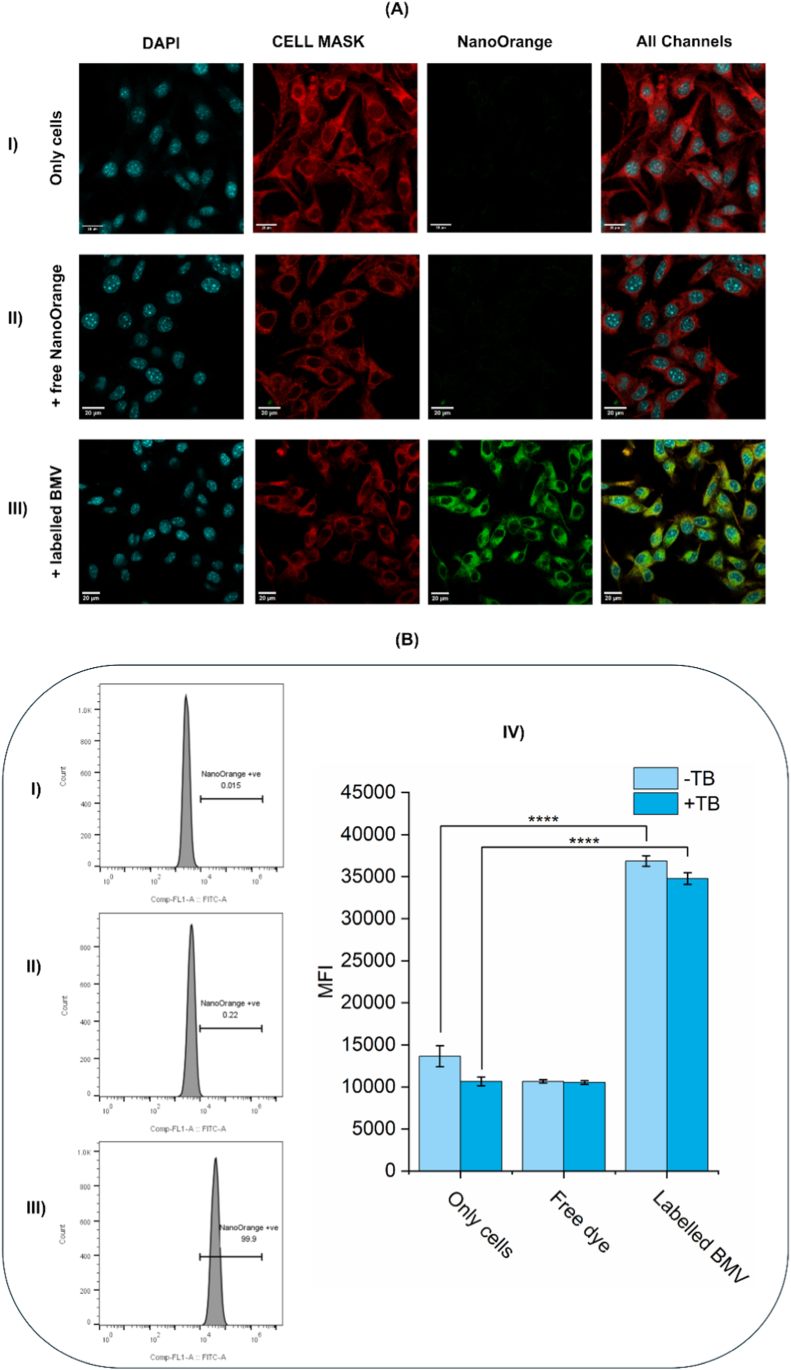 Figure 4
 Figure 5
 Figure 6
 Figure 7
Peer Reviews
No public reviews on file for this paper yet. If you reviewed it on a platform where reviews are public (OpenReview, ICLR, NeurIPS, ICML), you can paste yours below so the community can read it here.
Videos
No videos yet. Explain this paper in a talk, walkthrough, or lecture? Add one.
Taxonomy
TopicsToxin Mechanisms and Immunotoxins · RNA Interference and Gene Delivery · Transgenic Plants and Applications