Thermo-responsive, on-demand adhesive and tissue-conformal hydrogel electrodes for organ repair and brain-computer interfaces
Zhenchun Li, Tiantian Li, Rongfeng Ge, Feixiong Chen, Chuang Du, Dongxu Wang, Lei Wang

TL;DR
A new hydrogel electrode can stick to wet tissues quickly, adjust to body temperatures, and safely detach, making it useful for medical devices like brain-computer interfaces.
Contribution
A novel hydrogel with thermo-responsive adhesion and tissue-conformal properties for stable bioelectronic interfaces.
Findings
The hydrogel adheres to wet tissues in 5 seconds and withstands pressures over 213 mmHg.
It enables stable in vivo ECoG and ECG recordings with a low modulus of 41 kPa.
The material shows high cytocompatibility, low hemolysis, and 90% antibacterial efficiency.
Abstract
Implantable bioelectronic devices, such as brain-computer interfaces (BCIs), face persistent challenges in achieving stable, rapid, and reversible adhesion on wet tissues due to hydration layers and mechanical mismatch, which can cause interfacial failure and unstable signals. Here, we report a conductive hydrogel interface with tissue-adaptive, temperature-controllable adhesion. The material is synthesized via dynamic co-entanglement of poly(acrylic acid) and poly(lipoic acid) with LA-NHS, establishing a dual physico-chemical anchoring mechanism that enables efficient tissue integration in aqueous environments. The hydrogel penetrates tissue microstructures within 5 s, withstands burst pressures >213 mmHg, exhibits <10 % swelling, ∼2784 % extensibility, and a low modulus of 41 kPa, thereby conforming to soft, irregular surfaces and reducing interfacial mismatch. Its…
Genes, proteins, chemicals, diseases, species, mutations and cell lines named across the full text — each resolved to its canonical identifier and authoritative record.
Click any figure to enlarge with its caption.
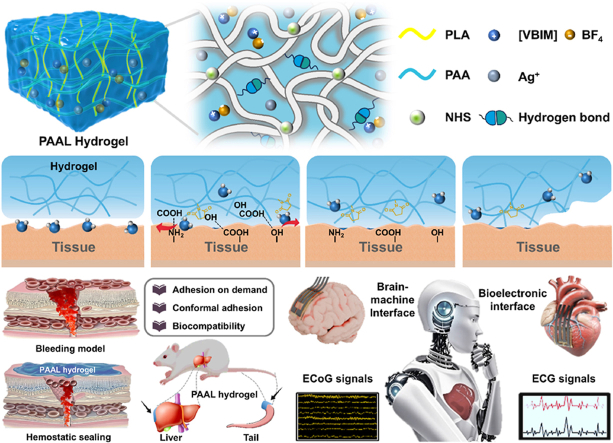 Figure 1
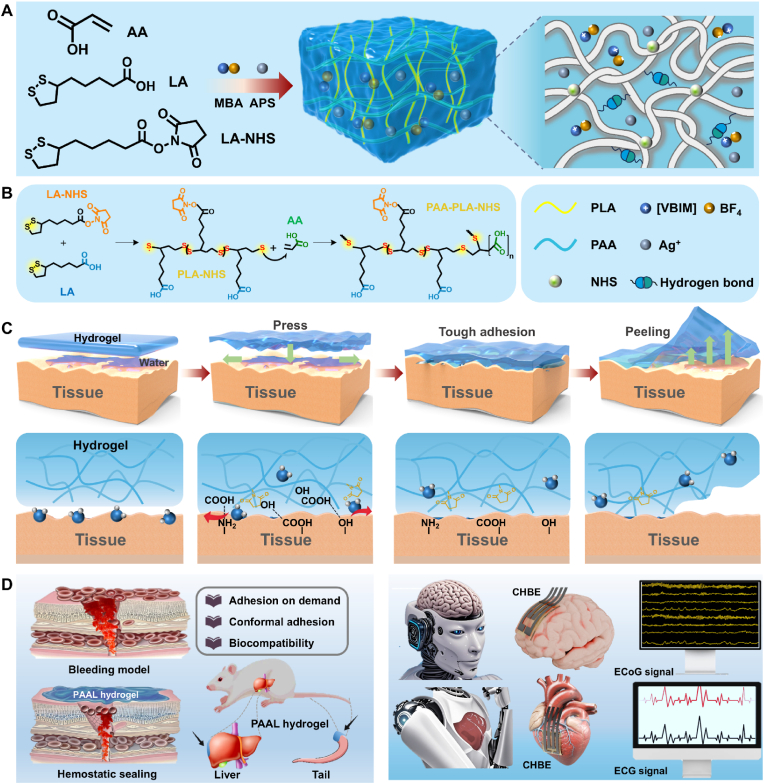 Figure 2
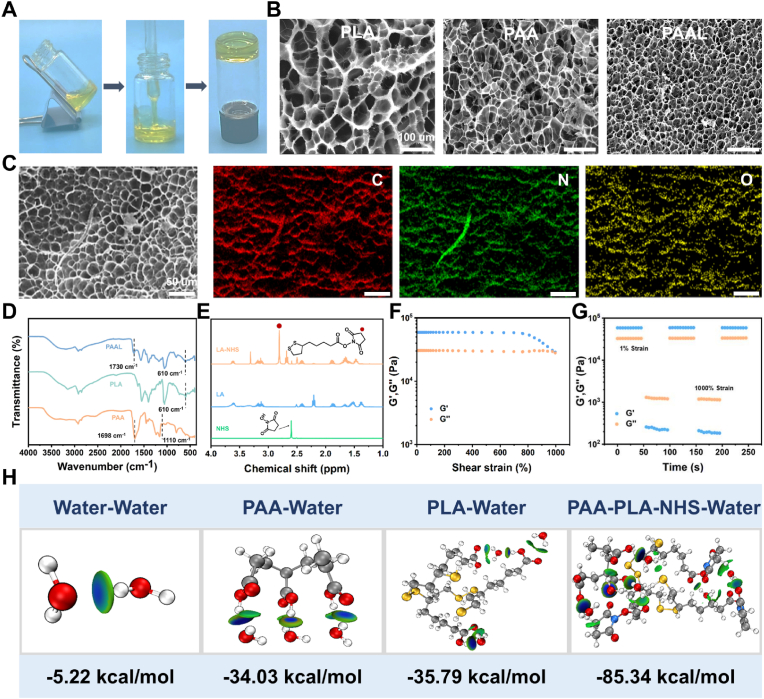 Figure 3
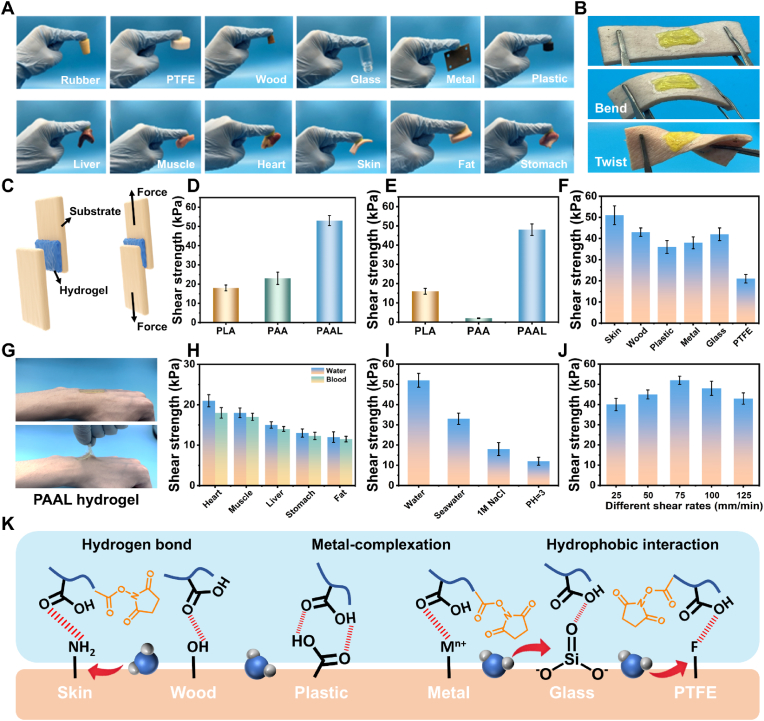 Figure 4
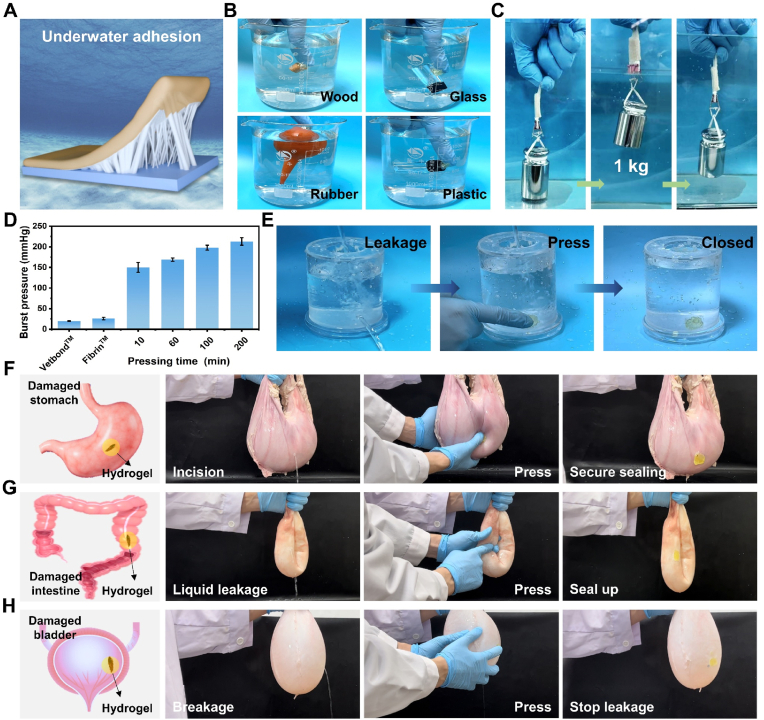 Figure 5
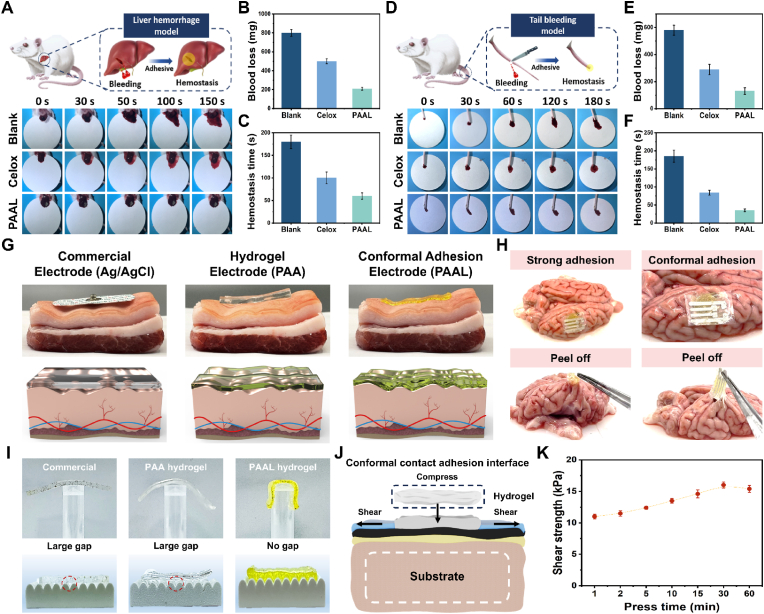 Figure 6
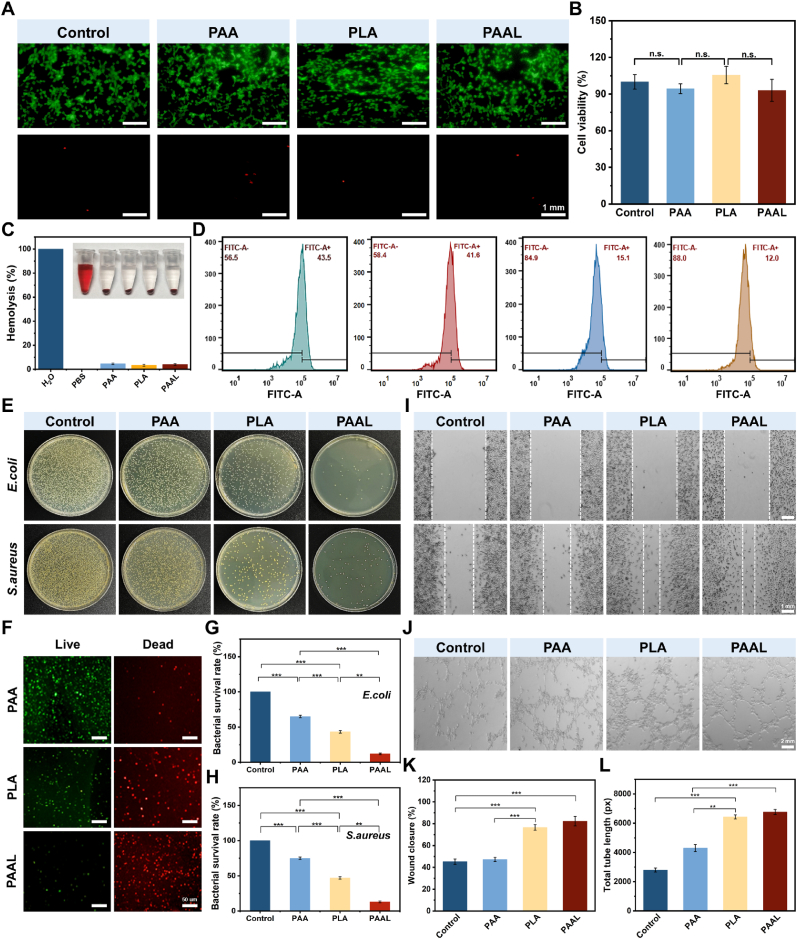 Figure 7
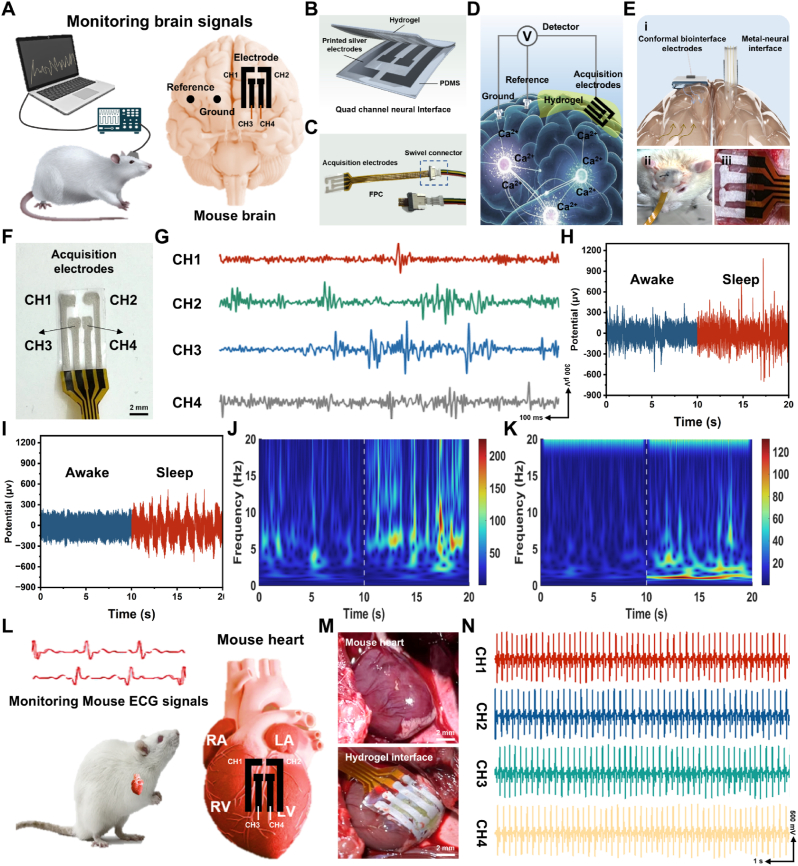 Figure 8
Peer Reviews
No public reviews on file for this paper yet. If you reviewed it on a platform where reviews are public (OpenReview, ICLR, NeurIPS, ICML), you can paste yours below so the community can read it here.
Videos
No videos yet. Explain this paper in a talk, walkthrough, or lecture? Add one.
Taxonomy
TopicsHydrogels: synthesis, properties, applications · 3D Printing in Biomedical Research · Neuroscience and Neural Engineering