Advancing Parkinson’s disease detection through multi-dimensional machine learning: a comprehensive framework using wearable movement sensor analytics
Jun-Zhi Xiang, Qin-Yong Wang, Zhi-Bin Fang, James A. Esquivel, Xue-Yan Li, Xiao-Qun Xu

TL;DR
This study explores how wearable sensors and machine learning can improve the detection of Parkinson’s disease by analyzing movement data and identifying key features that distinguish PD patients from healthy individuals.
Contribution
The study introduces a comprehensive framework combining multiple machine learning algorithms, feature types, and optimization techniques for accurate and interpretable PD detection using wearable sensor data.
Findings
Random Forest with Particle Swarm Optimization achieved the highest PD detection accuracy (87.65%).
Statistical features were most influential, while entropy-based measures and standard deviations were key predictors.
Accelerometer-derived complexity features strongly indicated PD, while gyroscope features were more relevant for non-PD cases.
Abstract
wearable movement sensor technology shows promise for objective assessment of Parkinson’s disease (PD) motor symptoms, but optimal machine learning approaches and feature sets for accurate PD detection remain unclear. This study provides a comprehensive evaluation of classification algorithms, feature contributions, and optimization techniques for PD detection using wearable movement sensor data. We compared twelve diverse machine learning classifiers on motion sensor data, conducted systematic feature ablation studies across statistical, frequency-domain, dynamic, and complexity feature categories, optimized Random Forest parameters using three meta-heuristic algorithms, which is Particle Swarm Optimization (PSO), Improved Satin Swarm Algorithm (ISSA), and Enhanced Whale Optimization Algorithm (EWOA), and performed SHAP value analysis to identify the most influential features and…
Genes, proteins, chemicals, diseases, species, mutations and cell lines named across the full text — each resolved to its canonical identifier and authoritative record.
Click any figure to enlarge with its caption.
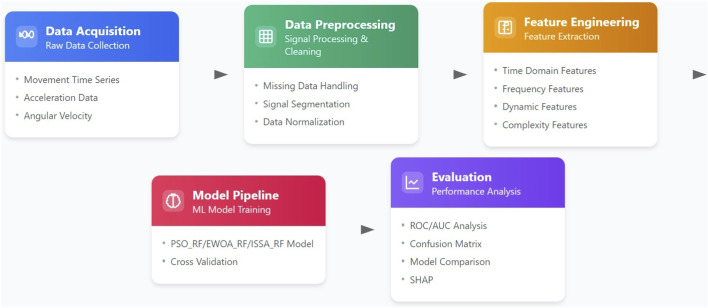 Figure 1
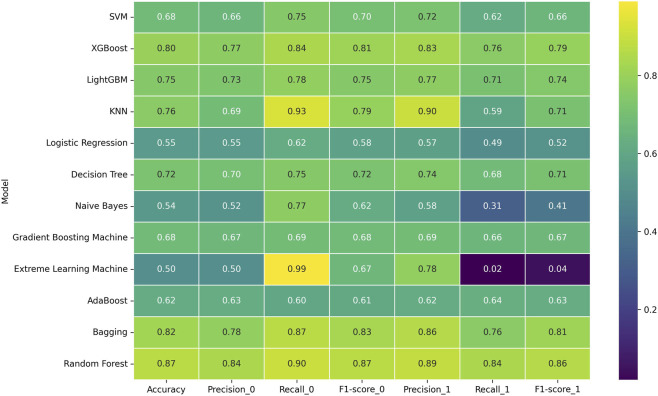 Figure 2
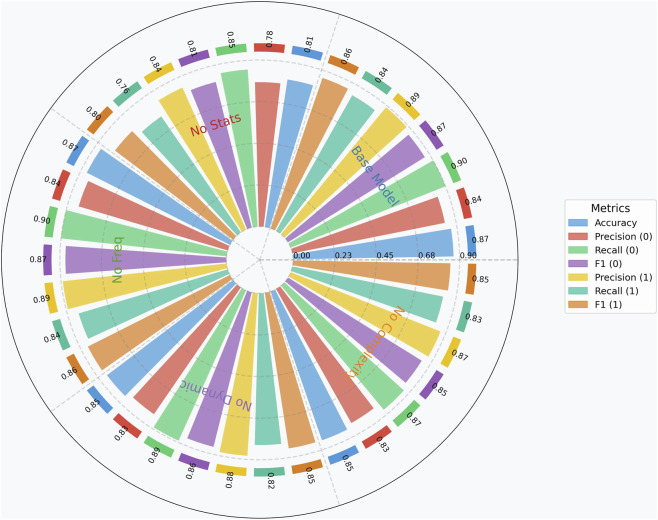 Figure 3
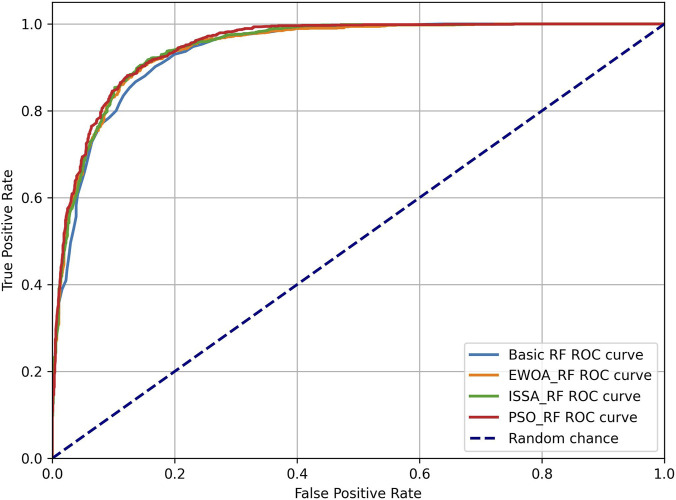 Figure 4
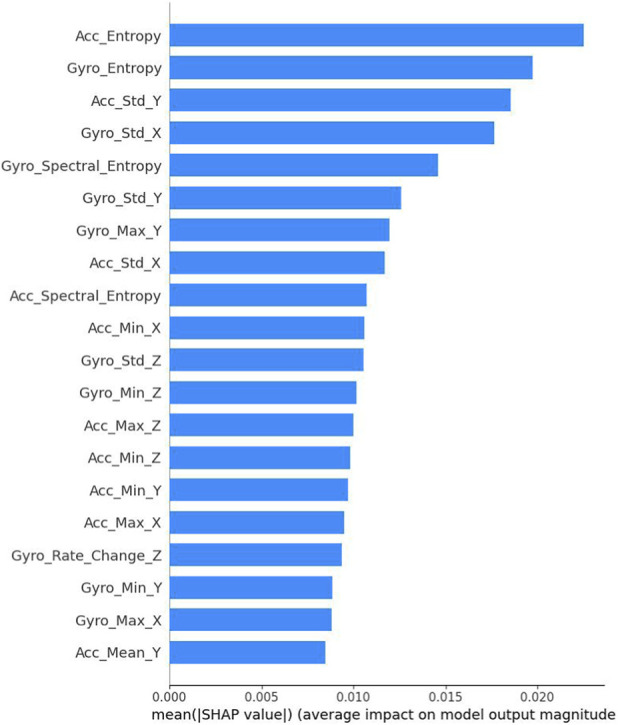 Figure 5
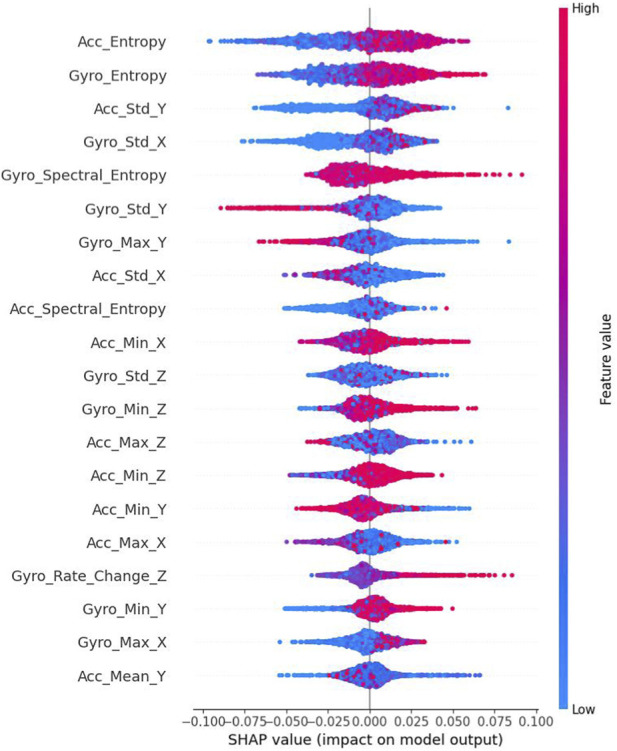 Figure 6
 Figure 7
 Figure 8
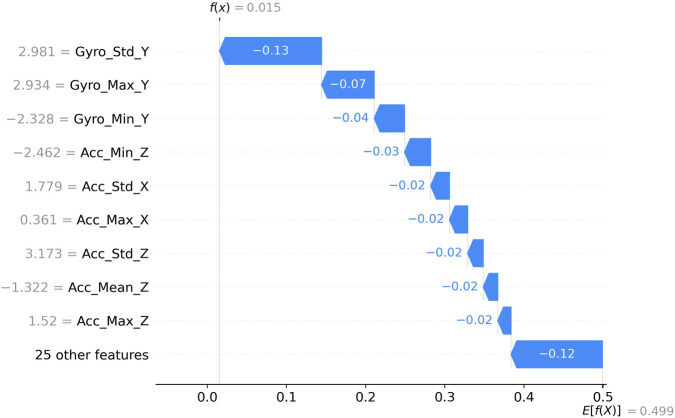 Figure 9
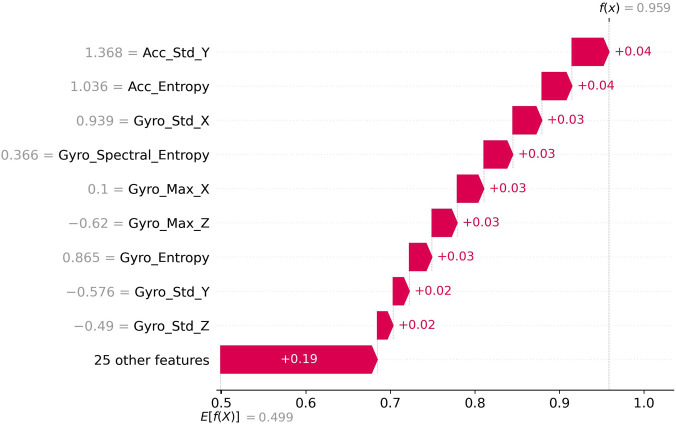 Figure 10
Peer Reviews
No public reviews on file for this paper yet. If you reviewed it on a platform where reviews are public (OpenReview, ICLR, NeurIPS, ICML), you can paste yours below so the community can read it here.
Videos
No videos yet. Explain this paper in a talk, walkthrough, or lecture? Add one.
Taxonomy
TopicsParkinson's Disease Mechanisms and Treatments · Parkinson's Disease and Spinal Disorders · Balance, Gait, and Falls Prevention