Effectiveness of drug-loaded poly(ethylene glycol) and poly(lactic-co-glycolic-acid) nanoparticles in the in vitro treatment of breast cancer: a systematic review
Cristian Sandoval-Vásquez, Isabella Cárcamo, Paula Lagos, Anaís Muñoz, Francisco Zavala, Valentina Colil, Francisca Villagrán-Silva, Edgar Vásquez-Carrasco, Jordan Hernandez-Martinez, Pablo Valdés-Badilla, Francisco Torrens, Paola Fincheira, Paulina Sepúlveda

TL;DR
This review evaluates how well PEG–PLGA nanoparticles deliver cancer drugs to breast cancer cells in lab tests, showing improved drug effectiveness and cell death.
Contribution
The study systematically reviews the in vitro efficacy of PEG–PLGA nanoparticles for breast cancer treatment, highlighting their drug delivery advantages.
Findings
PEG–PLGA nanoparticles significantly reduced breast cancer cell viability and increased apoptosis compared to free drugs.
Functionalization with ligands like folic acid improved drug targeting and cytotoxicity in breast cancer cells.
Molecular analyses showed upregulation of p53, Bax, and caspases, and downregulation of Bcl-2 and hTERT genes.
Abstract
Breast cancer treatment remains a major challenge to modern medicine and has driven the need for nanotechnology-based strategies to improve drug delivery and overcome chemoresistance. Poly(ethylene glycol) and poly (lactic-co-glycolic acid) (PEG–PLGA) nanoparticles (NPs) are a type of FDA-approved biodegradable copolymer (lactic + glycolic acids) that degrades into non-toxic metabolites (lactic acid and glycolic acid); it has emerged as a promising drug carrier owing to its biocompatibility, sustained release properties, and ability to enhance the cellular uptake of chemotherapeutic agents. This systematic review examines the efficacies of PEG–PLGA nanoparticles loaded with antineoplastic drugs on in vitro models of breast cancer cell lines. Following PRISMA guidelines, we conducted a comprehensive search of the Web of Science, Embase, MEDLINE, and Scopus databases to identify…
Genes, proteins, chemicals, diseases, species, mutations and cell lines named across the full text — each resolved to its canonical identifier and authoritative record.
Click any figure to enlarge with its caption.
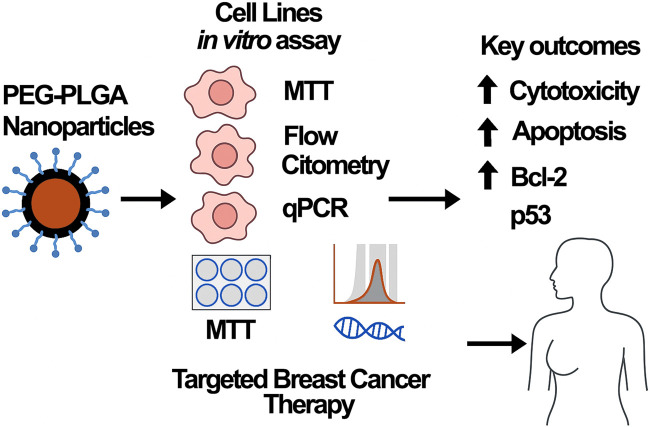 Figure 1
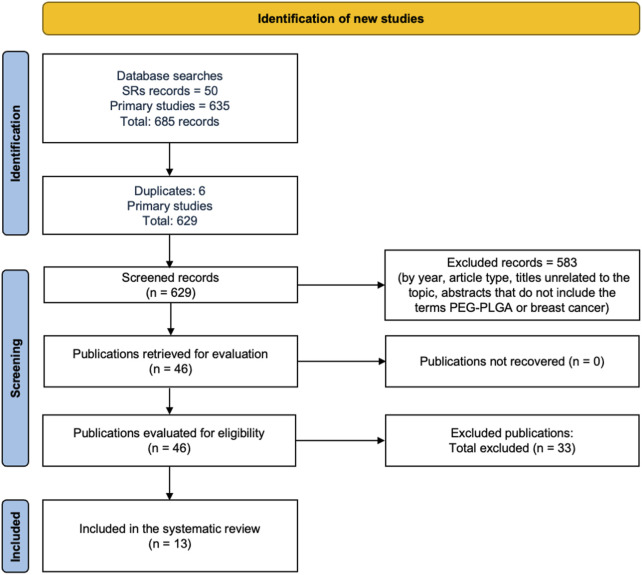 Figure 2
Peer Reviews
No public reviews on file for this paper yet. If you reviewed it on a platform where reviews are public (OpenReview, ICLR, NeurIPS, ICML), you can paste yours below so the community can read it here.
Videos
No videos yet. Explain this paper in a talk, walkthrough, or lecture? Add one.
Taxonomy
TopicsNanoparticle-Based Drug Delivery · Advanced Drug Delivery Systems · Graphene and Nanomaterials Applications