Voriconazole-associated liver injury: clinical risk factor identification and predictive nomogram construction
Dongge Feng, Yiyi Ma, Xiaoyi Liu, Si Tang, Shijian Xiang, Jinghao Wang, Shasha Li

TL;DR
This study identifies risk factors for liver injury caused by voriconazole and creates a predictive tool to improve medication safety.
Contribution
The study develops a novel predictive nomogram for voriconazole-induced liver injury based on clinical risk factors.
Findings
Concomitant use of ezetimibe, caspofungin, and glucocorticoids increases the risk of voriconazole-induced liver injury.
Total cholesterol levels exceeding 4.485 mmol/L are a significant independent risk factor for liver injury.
The predictive nomogram demonstrated good discrimination and calibration with an AUC of 0.728.
Abstract
Investigate the high risk factors contributed to voriconazole-induced liver injury and develop a predictive nomogram for voriconazole-induced liver injury risk, thereby optimizing the clinical medication safety. This observational study retrospectively analyzed the electronic health records of hospitalized patients who received voriconazole treatment or prophylaxis at a tertiary hospital. Patients who met the inclusion and exclusion criteria were enrolled between June 2020 and June 2024, and their general biological data were collected. The diagnosis and severity grading of voriconazole-associated liver injury were determined according to the diagnostic and treatment guidelines for drug-induced liver injury. Patients were categorized into liver injury and non-injury groups based on the results of post-treatment liver function tests. Associations between baseline characteristics and…
Genes, proteins, chemicals, diseases, species, mutations and cell lines named across the full text — each resolved to its canonical identifier and authoritative record.
Click any figure to enlarge with its caption.
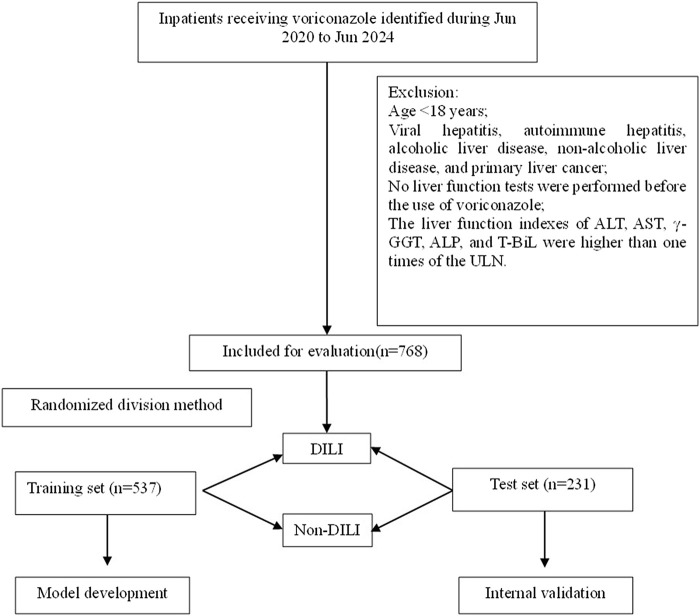 Figure 1
 Figure 2
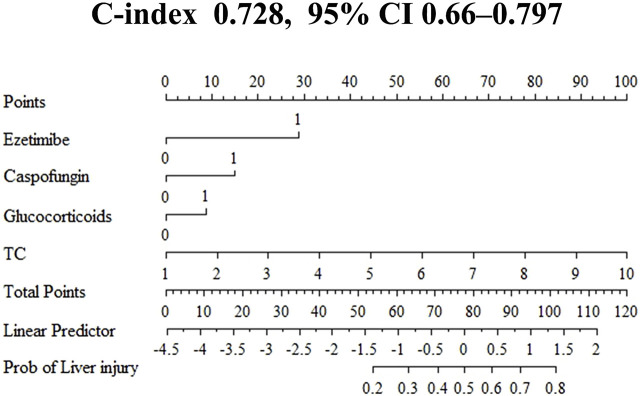 Figure 3
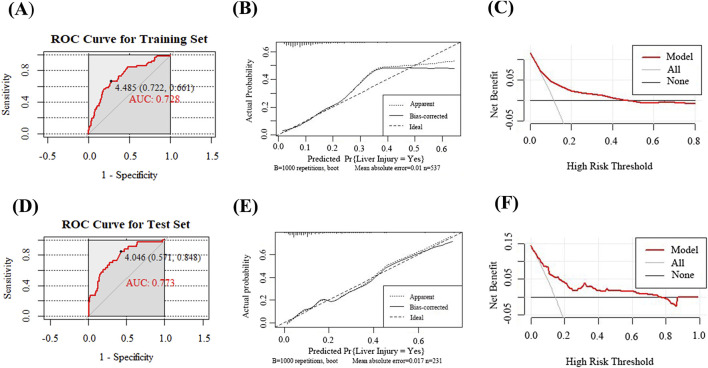 Figure 4
Peer Reviews
No public reviews on file for this paper yet. If you reviewed it on a platform where reviews are public (OpenReview, ICLR, NeurIPS, ICML), you can paste yours below so the community can read it here.
Videos
No videos yet. Explain this paper in a talk, walkthrough, or lecture? Add one.
Taxonomy
TopicsInfections and bacterial resistance · Antifungal resistance and susceptibility · Legionella and Acanthamoeba research