Particulate matter exposure potentiates SARS-CoV-2 delta variant infection by suppressing epithelial antiviral responses
Supasek Kongsomros, Jiraporn Paha, Phayungsap Prasara-a, Sopita Visamol, Pinnakarn Techapichetvanich, Apisada Jiso, Kwanchanok Uppakara, Ardythe L. Morrow, Alexander W. Thorman, Somchai Chutipongtanate, Phisit Khemawoot, Arunee Thitithanyanont

TL;DR
Exposure to coarse particulate matter may worsen Delta variant SARS-CoV-2 infections by weakening the body's antiviral defenses in lung cells.
Contribution
This study reveals a novel mechanism by which PM10 enhances Delta variant infection through suppressed antiviral responses.
Findings
PM10 increased Delta variant infection by 13.7% and viral titers by 2.6-fold in Calu-3 cells.
PM10 suppressed apoptosis and reduced pro-inflammatory cytokines like IFN-γ, IP-10, and TNF-α during Delta infection.
The effect was specific to the Delta variant and not due to changes in ACE2 receptor expression or viral entry.
Abstract
Airborne particulate matter (PM), particularly fine (PM2.5) and coarse (PM10) particles, is a major environmental health concern linked to increased respiratory morbidity and mortality. During the COVID-19 pandemic, epidemiological studies suggested that PM exposure may worsen SARS-CoV-2 infection outcomes; however, cellular mechanisms underlying this association remain incompletely understood. Here, we investigated how pre-exposure to PM2.5 and PM10 impacts SARS-CoV-2 infection dynamics in Calu-3 human epithelial cells. Calu-3 cells were pre-exposed to PM for 72 h prior to infection with either the wild-type Wuhan strain or the more virulent Delta variant for additional 48 h. Viral infection, receptor expression, apoptosis and cytokine responses were assessed. PM10, but not PM2.5, enhanced Delta variant infection, increasing the proportion of infected cells by 13.7% and viral titers…
Genes, proteins, chemicals, diseases, species, mutations and cell lines named across the full text — each resolved to its canonical identifier and authoritative record.
Click any figure to enlarge with its caption.
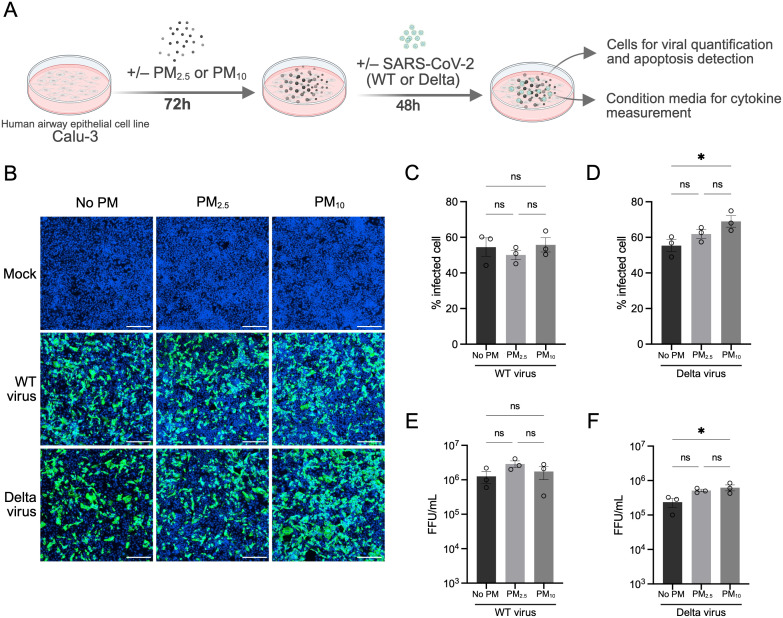 Figure 1
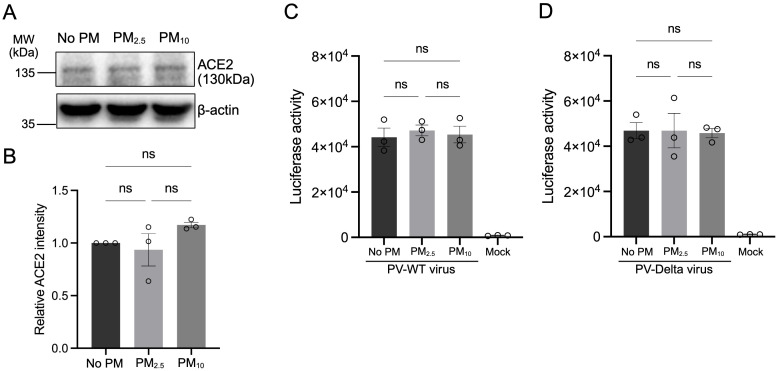 Figure 2
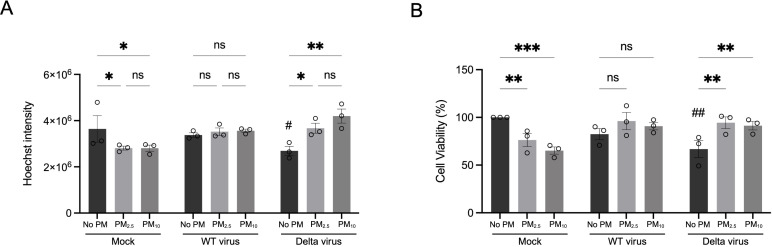 Figure 3
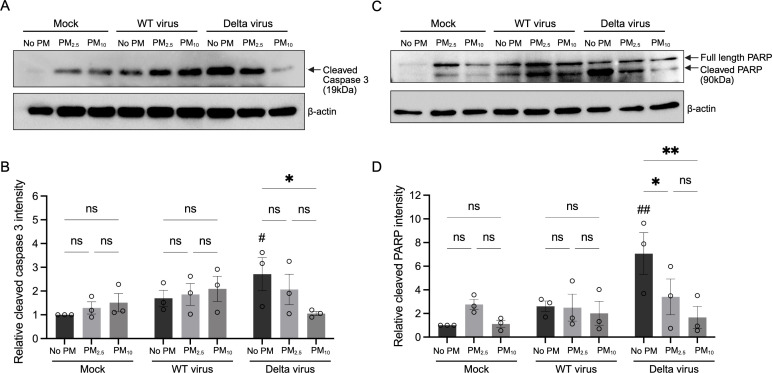 Figure 4
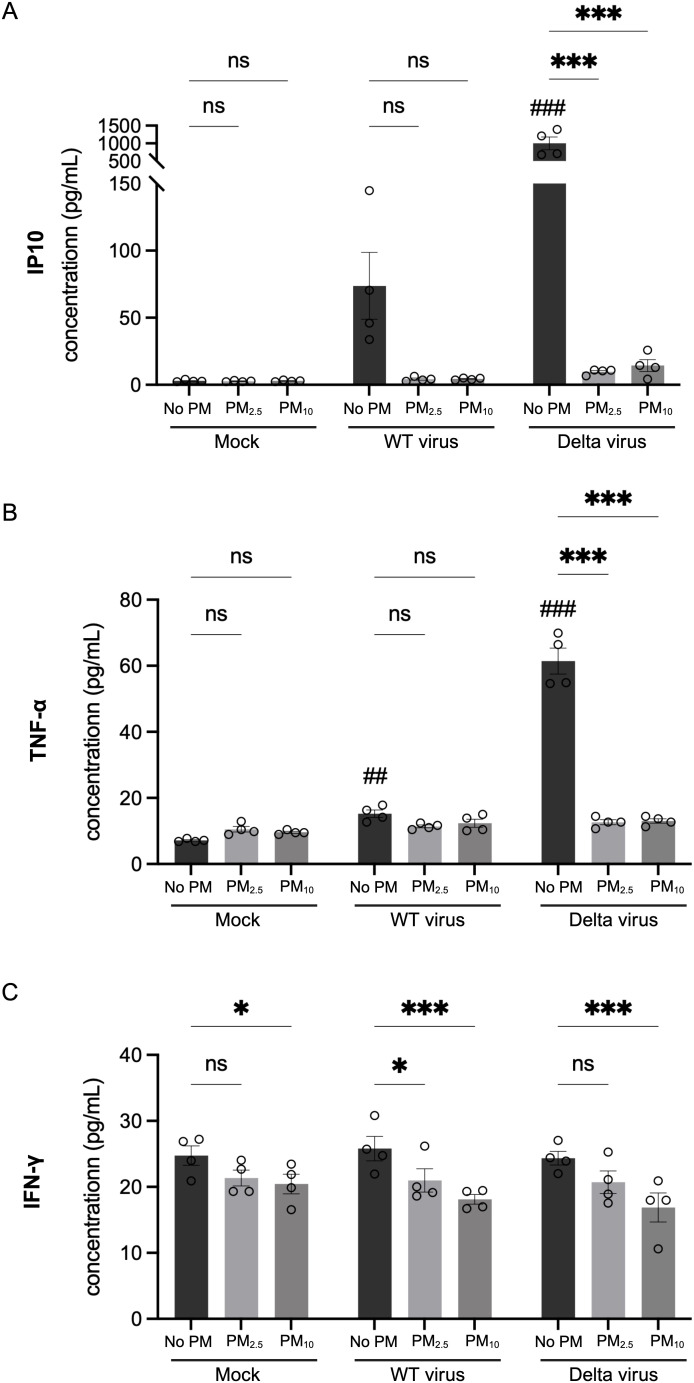 Figure 5
Peer Reviews
No public reviews on file for this paper yet. If you reviewed it on a platform where reviews are public (OpenReview, ICLR, NeurIPS, ICML), you can paste yours below so the community can read it here.
Videos
No videos yet. Explain this paper in a talk, walkthrough, or lecture? Add one.
Taxonomy
TopicsInfection Control and Ventilation · COVID-19 epidemiological studies · COVID-19 impact on air quality