The distribution and evolution of muscarine and the ibotenic acid biosynthetic gene cluster within the genus Amanita section Amanita revealed by phylogenomics
Yu-Ting Su, Zheng-Mi He, Yu-Zhi Yang, Fei Xu, Meng-Meng Lai, Zhu L. Yang, Ping Zhang, Zuo-Hong Chen

TL;DR
This study explores the evolution and distribution of toxins in the Amanita mushroom genus using genetic and biochemical analyses.
Contribution
The study reveals the independent origins and monophyletic distribution of two neurotoxic gene clusters in Amanita mushrooms.
Findings
IboBGC genes are found in 21 species forming a monophyletic clade within Amanita section Amanita.
Muscarine is detected in eight species within a nested subclade of the iboBGC clade.
The iboBGC and muscarine originated independently approximately 28 Mya and 15 Mya, respectively.
Abstract
Numerous severe cases of neurotoxic mushroom poisoning worldwide are caused by ibotenic acid and muscimol produced by specific species belonging to section Amanita of the genus Amanita. Recent studies have demonstrated that both toxins are produced through the ibotenic acid biosynthetic gene cluster (iboBGC) in these species. In addition to these two toxins, section Amanita is also thought to include several species producing another neurotoxic compound, muscarine. However, the taxonomic distribution and evolutionary history of these toxins within the section remain poorly understood. In this study, phylogenetic analyses based on nucleotide sequences of two loci (ITS and LSU) and five loci (ITS, LSU, RPB2, TEF1, and TUB2), together with a phylogenomic analysis using 467 single-copy genes, were conducted to reconstruct the phylogenetic framework of section Amanita. BEAST analysis was…
Genes, proteins, chemicals, diseases, species, mutations and cell lines named across the full text — each resolved to its canonical identifier and authoritative record.
Click any figure to enlarge with its caption.
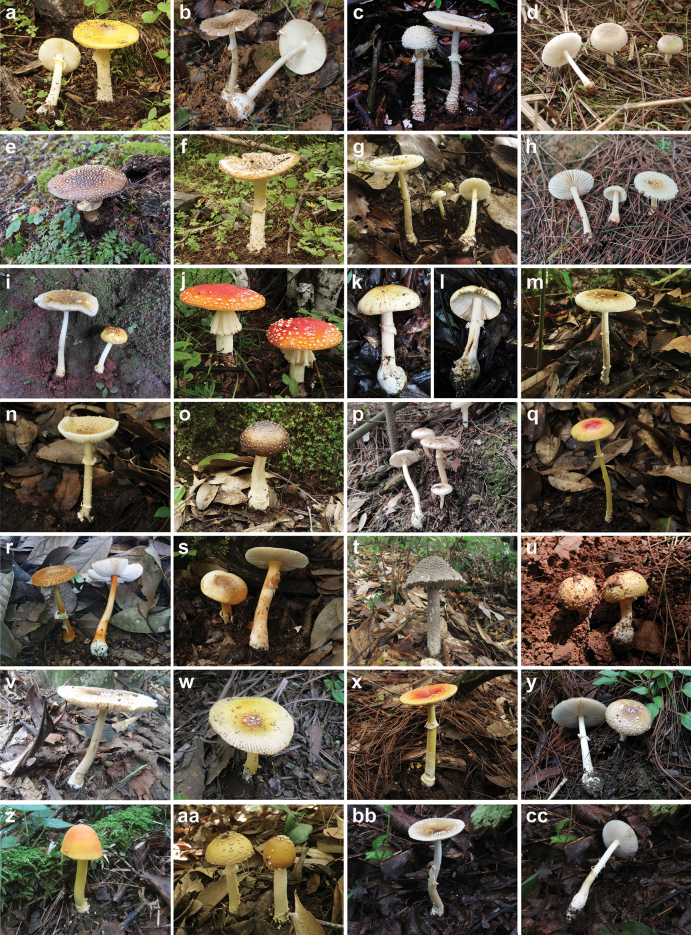 Figure 1
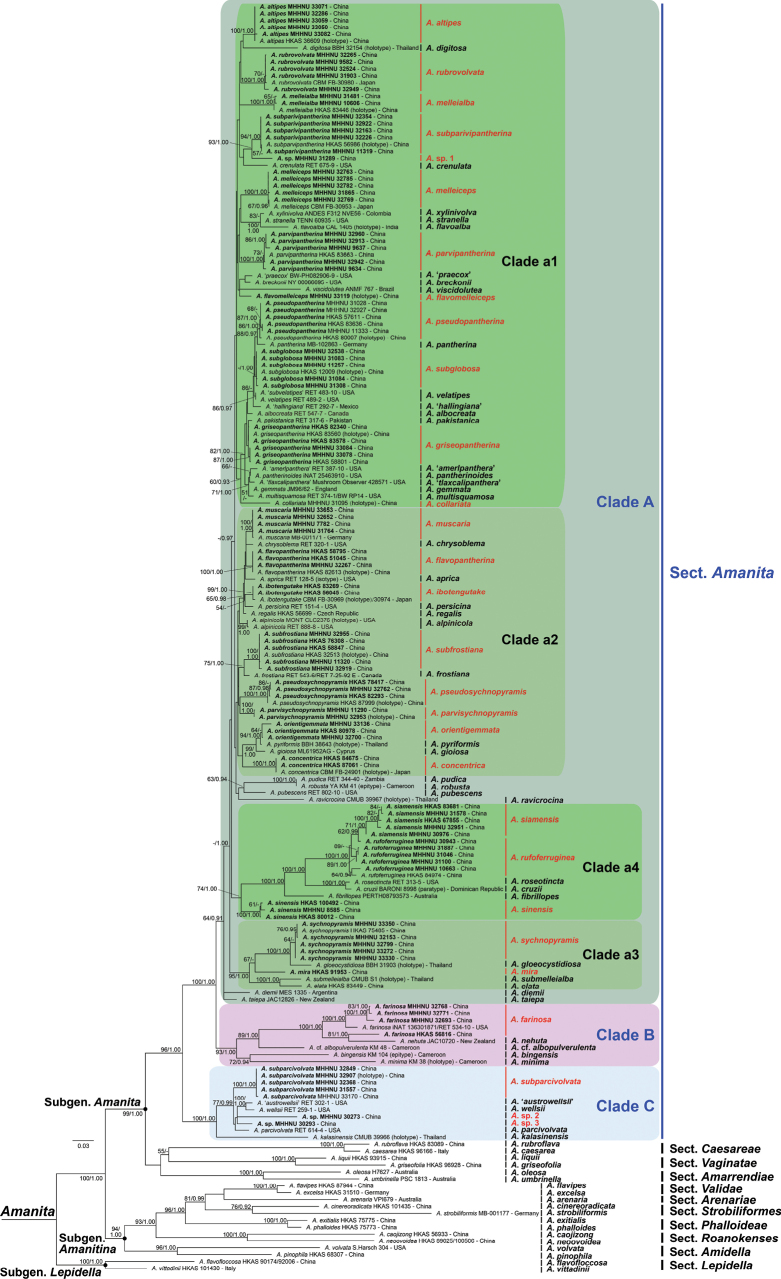 Figure 2
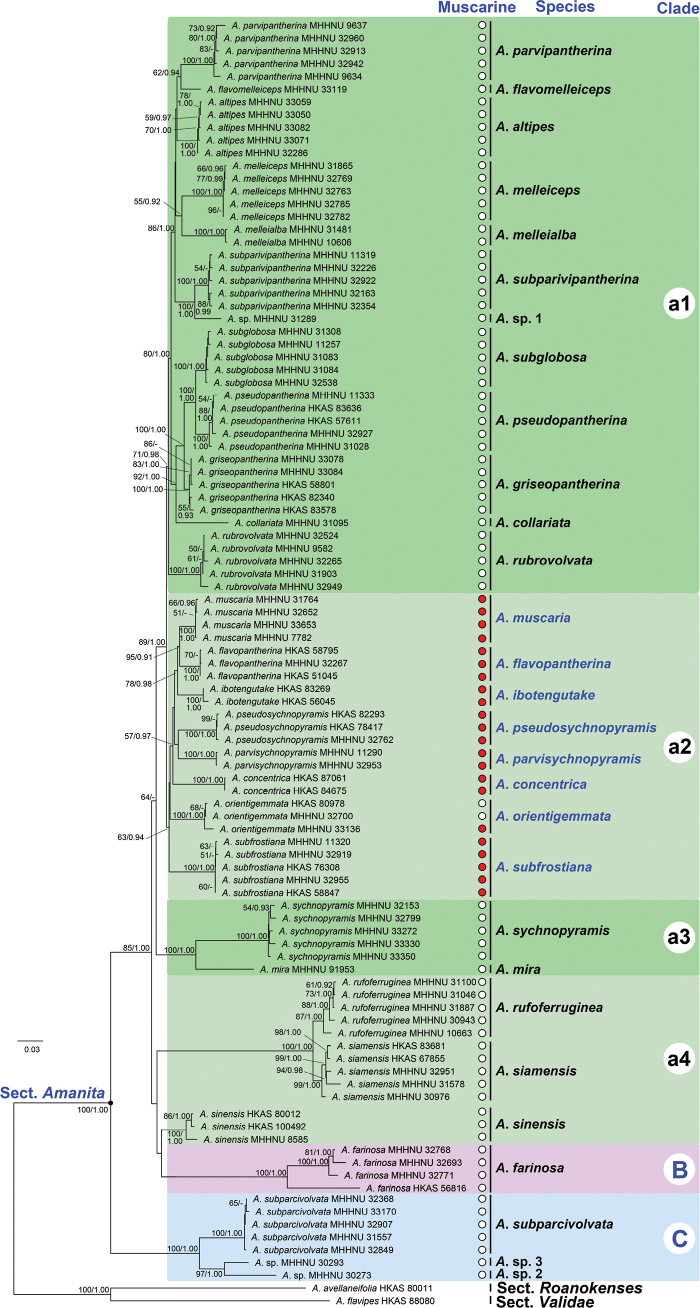 Figure 3
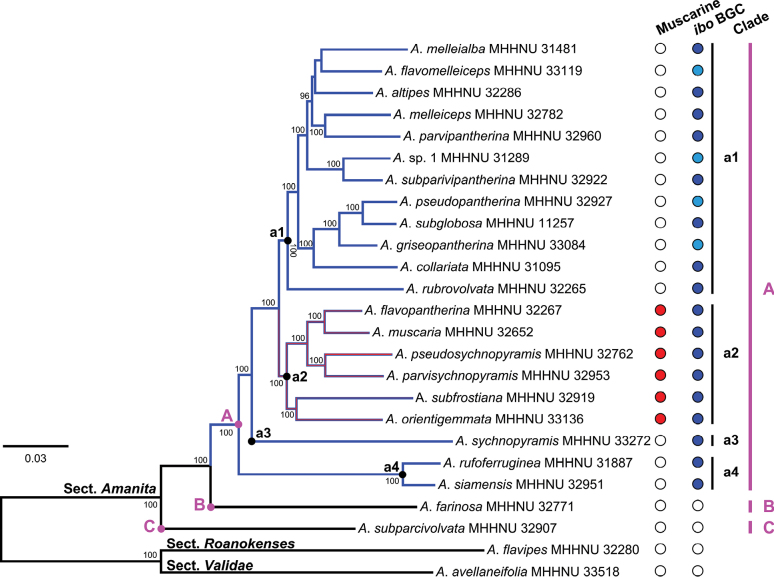 Figure 4
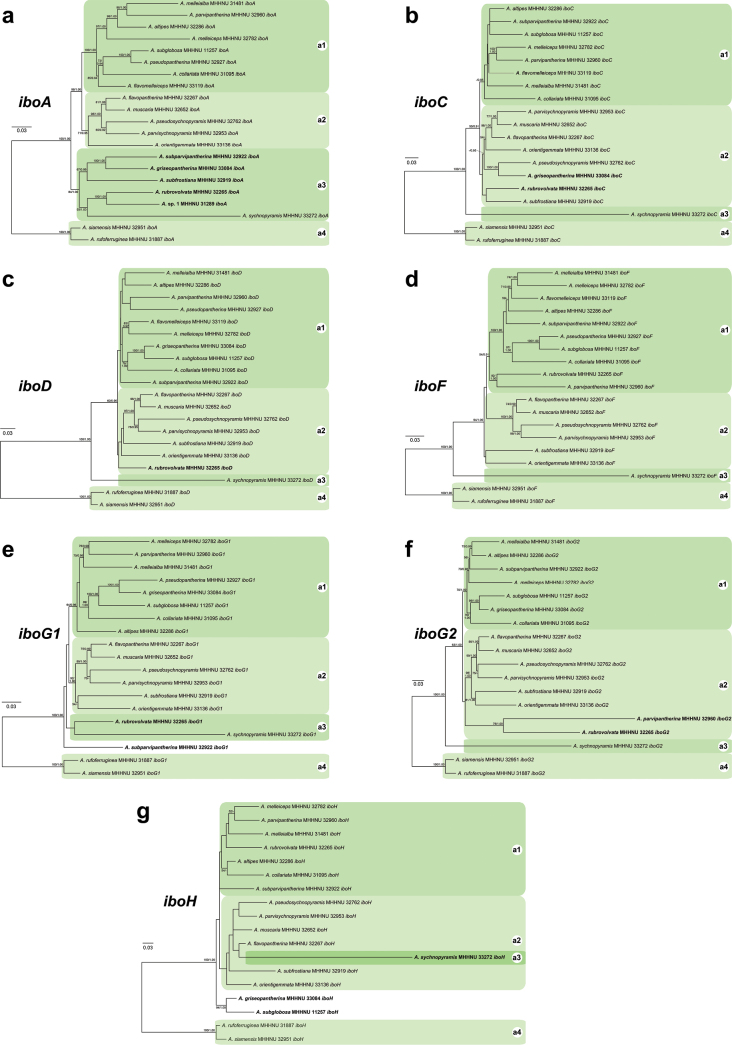 Figure 5
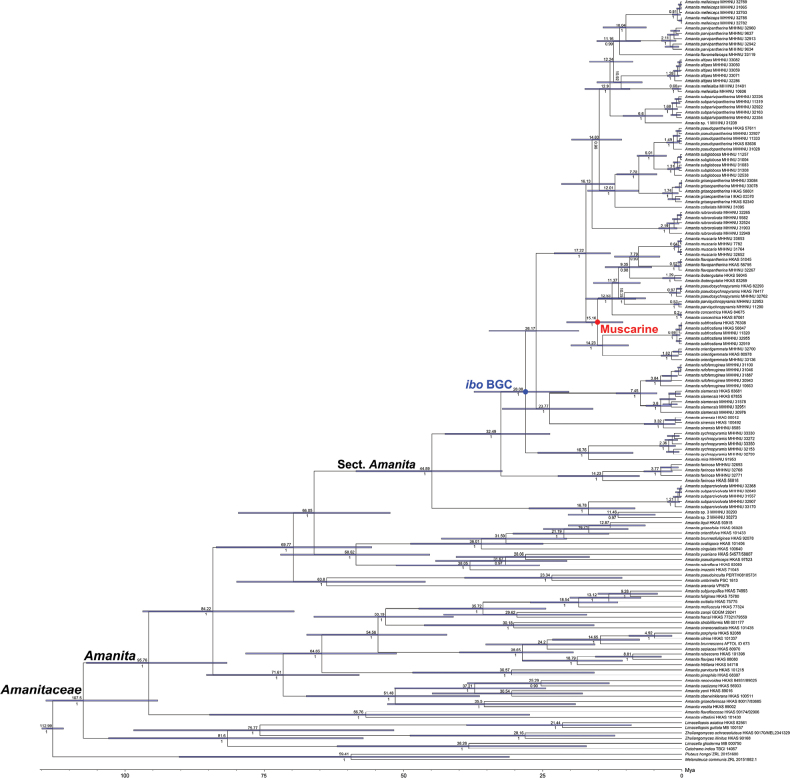 Figure 6
Peer Reviews
No public reviews on file for this paper yet. If you reviewed it on a platform where reviews are public (OpenReview, ICLR, NeurIPS, ICML), you can paste yours below so the community can read it here.
Videos
No videos yet. Explain this paper in a talk, walkthrough, or lecture? Add one.
Taxonomy
TopicsSilymarin and Mushroom Poisoning · Fungal Biology and Applications · Cancer Treatment and Pharmacology