Seven new karyotypes for subfamily Cercosaurinae (Squamata, Gymnophthalmidae) with a synthesis of chromosomal data
Lucas S. F. Rachid, Yatiyo Yonenaga-Yassuda, Miguel Trefaut Rodrigues, Katia Cristina Machado Pellegrino

TL;DR
This study reports seven new karyotypes for lizards in the Cercosaurinae subfamily, significantly increasing chromosomal data for the group and shedding light on their chromosome evolution.
Contribution
The study triples the available cytogenetic data for two tribes in Cercosaurinae and identifies a potential sex chromosome system in one species.
Findings
Diploid numbers ranged from 2n = 32 to 2n = 58 across seven species.
A putative XX:XY sex chromosome system was identified in Bachia dorbignyi.
Constitutive heterochromatin was mostly found in centromeric or telomeric regions.
Abstract
Gymnophthalmidae is a monophyletic family of currently 297 Neotropical lizard species. Over the past 25 years, molecular studies have redefined previous morphology-based classifications, confirming the family’s monophyly and revealing three major clades plus Rachisaurinae: ((Riolaminae(Rachisaurinae(Gymnophthalminae)))(Cercosaurinae)). Despite increased taxonomic efforts, especially in the tribes Bachiini and Cercosaurini, of Cercosaurinae, cytogenetic data remain limited. Of over 200 species in these tribes, only three had published karyotypes. Here, we provide new karyotypic data for seven species of Cercosaurini using standard cytogenetic techniques (Ag-NOR, C- and RBG-banding). Diploid numbers ranged from 2n = 32 in Bachia dorbignyi (Duméril et Bibron, 1839) to 2n = 58 in Placosoma glabellum (Peters, 1870). Almost all species displayed karyotypes composed of macro- and…
Genes, proteins, chemicals, diseases, species, mutations and cell lines named across the full text — each resolved to its canonical identifier and authoritative record.
Click any figure to enlarge with its caption.
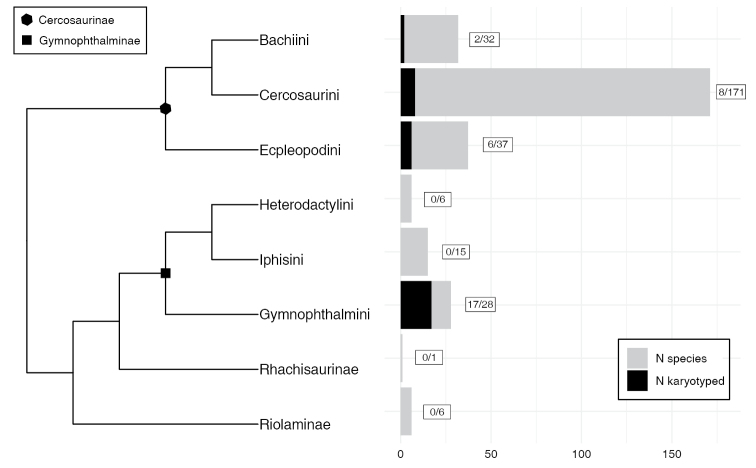 Figure 1
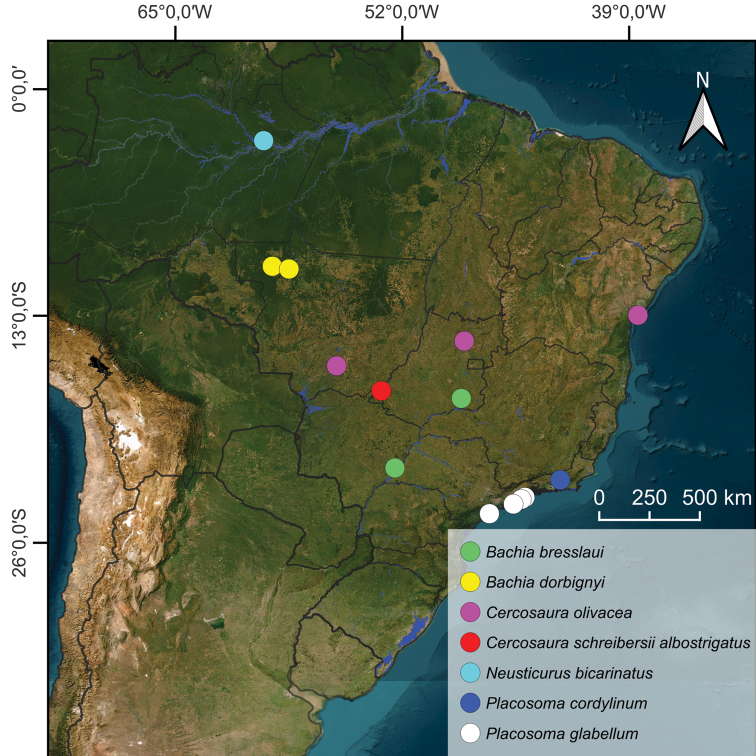 Figure 2
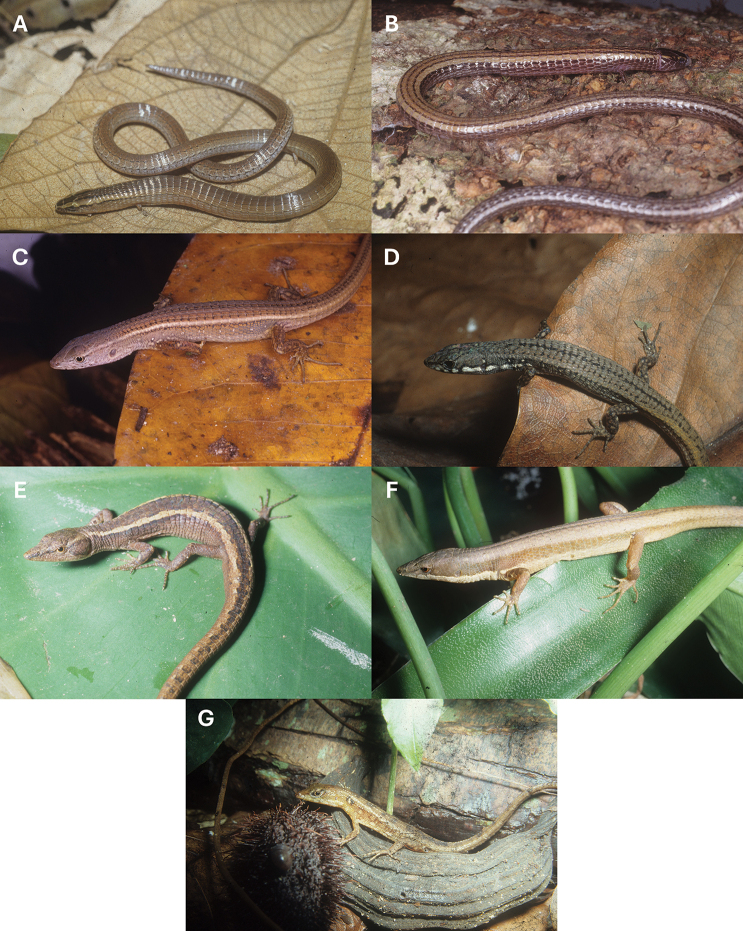 Figure 3
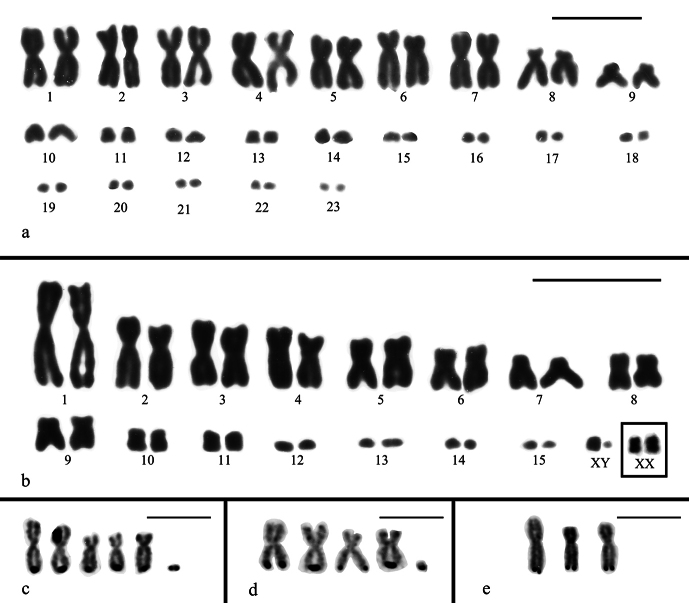 Figure 4
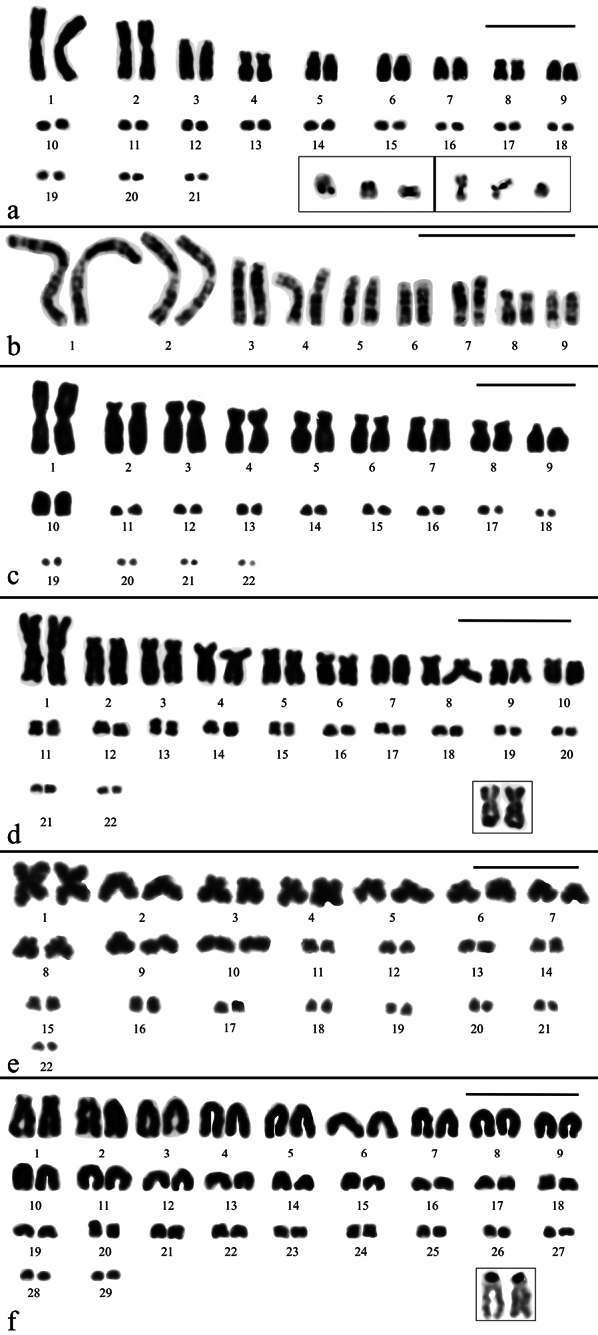 Figure 5
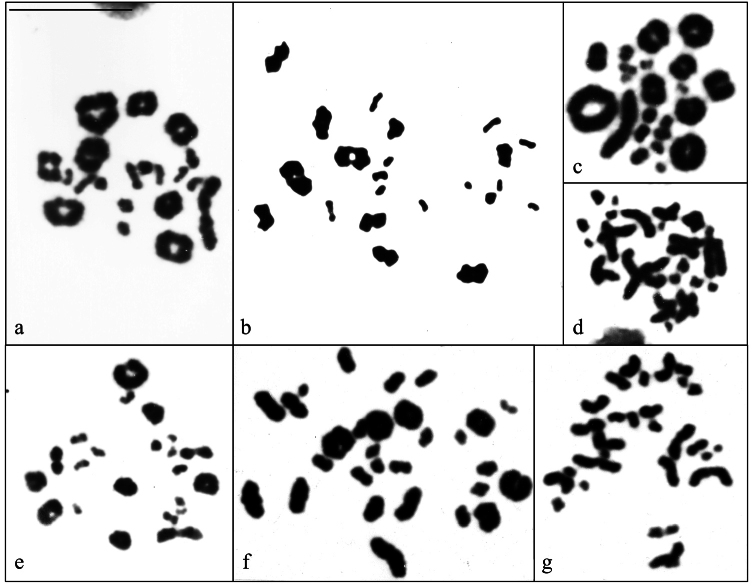 Figure 6
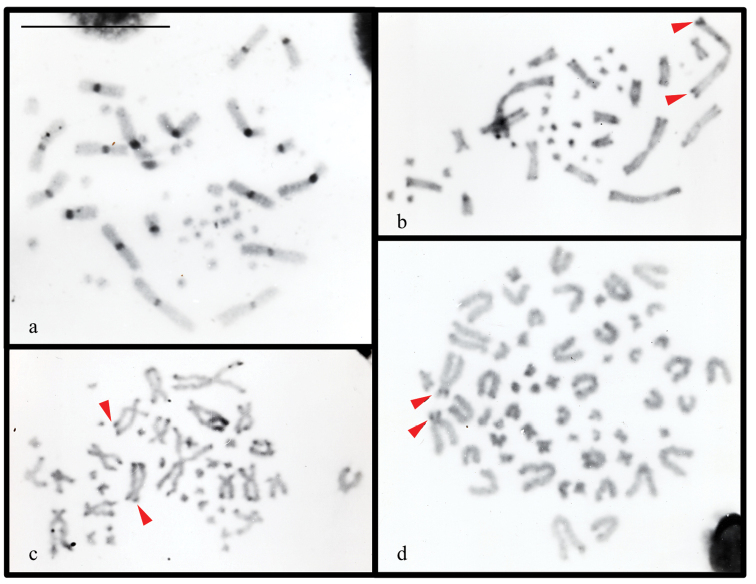 Figure 7
Peer Reviews
No public reviews on file for this paper yet. If you reviewed it on a platform where reviews are public (OpenReview, ICLR, NeurIPS, ICML), you can paste yours below so the community can read it here.
Videos
No videos yet. Explain this paper in a talk, walkthrough, or lecture? Add one.
Taxonomy
TopicsChromosomal and Genetic Variations · Amphibian and Reptile Biology · Genomics and Phylogenetic Studies