Dilemma of Finding the Most Useful QTc Formula: A Retrospective Analysis of South-East London
Rhia Shah, Amol Deokar, Mahnoor Zafar, Sayak Roy, Jagdeep Singh Dagar

TL;DR
This study compares different formulas for calculating corrected QT intervals and finds that Fridericia’s formula is more reliable for clinical use.
Contribution
The study identifies Fridericia’s formula as a more consistent and reliable method for QTc calculation in type 2 diabetic patients.
Findings
Bazett’s formula produced higher QTc values compared to Fridericia’s, Framingham’s, and Hodges’ formulas.
Fridericia’s formula showed lower variability and consistent performance across different heart rates.
Non-parametric tests confirmed significant differences between QTc formulas.
Abstract
Background: Accurate measurement of the corrected QT (QTc) interval is crucial for assessing the risk of arrhythmias. Various formulas, including Bazett’s, Fridericia’s, Framingham’s, and Hodges’, are used to calculate QTc, but discrepancies between them can lead to clinical misclassification. Objectives: This study aimed to compare the performance of different QTc formulas and identify the most reliable method for clinical practice. Methods: A retrospective analysis was conducted on 200 type 2 diabetic patients from South-East London. QT and RR intervals were measured to calculate QTc values. Due to the non-normal distribution of QTc values (Shapiro-Wilk test, p < 0.05), non-parametric statistical methods were employed, including the Friedman test and pairwise Wilcoxon signed-rank tests, to assess differences between QTc formulas. Results: The mean QTc values differed significantly…
Genes, proteins, chemicals, diseases, species, mutations and cell lines named across the full text — each resolved to its canonical identifier and authoritative record.
Click any figure to enlarge with its caption.
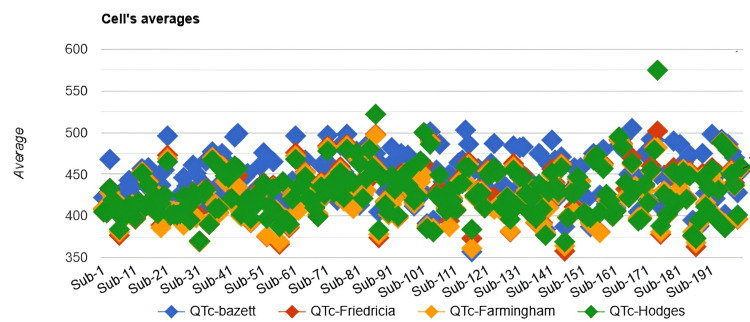 Figure 1
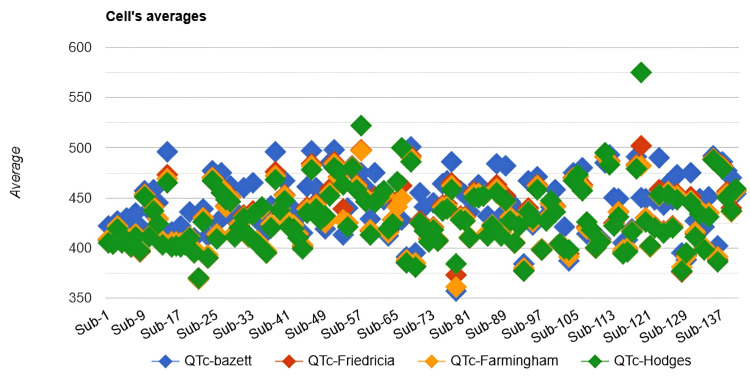 Figure 2
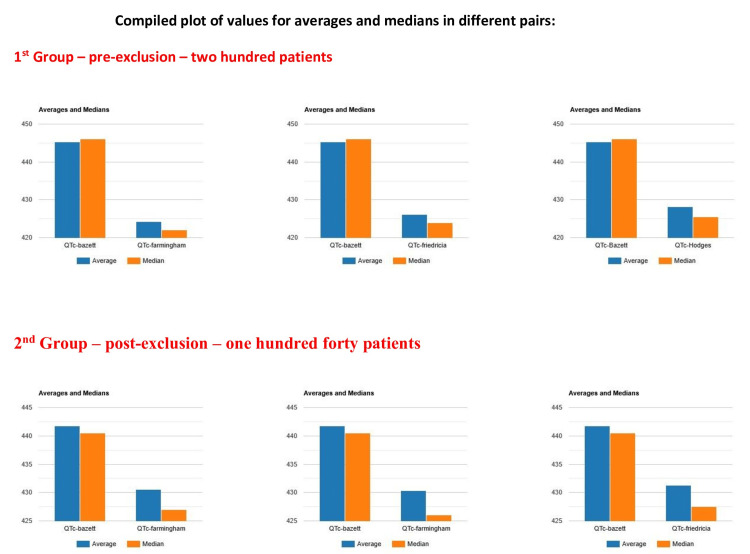 Figure 3
Peer Reviews
No public reviews on file for this paper yet. If you reviewed it on a platform where reviews are public (OpenReview, ICLR, NeurIPS, ICML), you can paste yours below so the community can read it here.
Videos
No videos yet. Explain this paper in a talk, walkthrough, or lecture? Add one.
Taxonomy
TopicsCardiac electrophysiology and arrhythmias · Atrial Fibrillation Management and Outcomes · ECG Monitoring and Analysis