Host‐Driven Genetic Diversity of Leptospira in the Americas: A Continental Perspective
Alejandro Suárez-Galaz, Sokani Sánchez-Montes, Marco Torres-Castro, Rodolfo Chan-Chan, Aarón Yeh-Gorocica, Wilson Moguel-Chin, Carlos I. Miranda-Caballero, Estefanía Grostieta, Alonso Panti-May, Hugo Ruiz-Piña, Roger Iván Rodríguez-Vivas, Anabel Cruz-Romero

TL;DR
This study explores how different mammalian hosts in the Americas influence the genetic diversity of Leptospira bacteria, revealing that bats and artiodactyls play significant roles in shaping this diversity.
Contribution
The study provides a continental perspective on host-driven genetic diversity of Leptospira in the Americas.
Findings
Bats showed greater genetic diversity in Leptospira sequences, especially in the SecY gene.
Artiodactyls exhibited high intraspecific variation, suggesting a role in generating new Leptospira variants.
Rodents, marsupials, and carnivores showed limited Leptospira diversity.
Abstract
Leptospira is a genetically diverse genus of spirochetes comprising over 68 species, including several pathogenic taxa such as L. interrogans, L. santarosai, L. noguchii, and L. weilii. These bacteria infect a wide range of vertebrates, especially mammals, with infected animals serving as renal carriers that excrete the pathogen through urine. While rodents are the primary reservoirs for some species, multiple vertebrate orders participate in Leptospira transmission cycles in the Americas. This study aimed to assess and compare the genetic diversity of Leptospira populations across mammalian hosts throughout their distribution ranges in the Americas, exploring the influence of host interactions on bacterial diversity. Data for this study were obtained from two sources: (1) original screening of bats and rodents for pathogenic Leptospira and (2) partial gene sequences (16S, LipL32, and…
Genes, proteins, chemicals, diseases, species, mutations and cell lines named across the full text — each resolved to its canonical identifier and authoritative record.
Click any figure to enlarge with its caption.
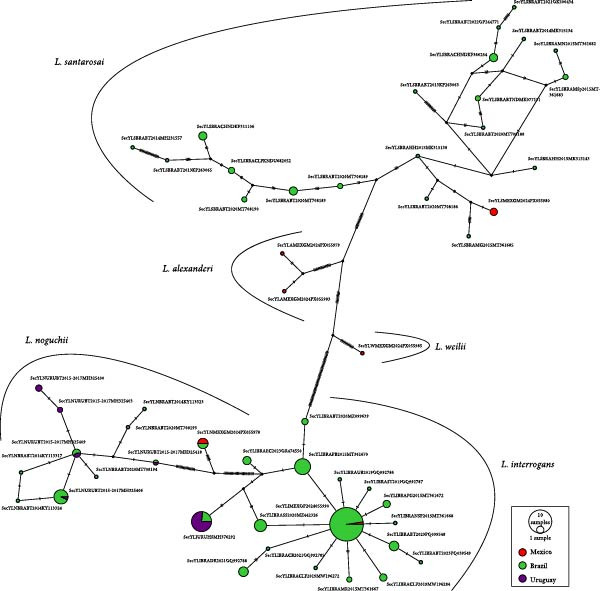 Figure 1
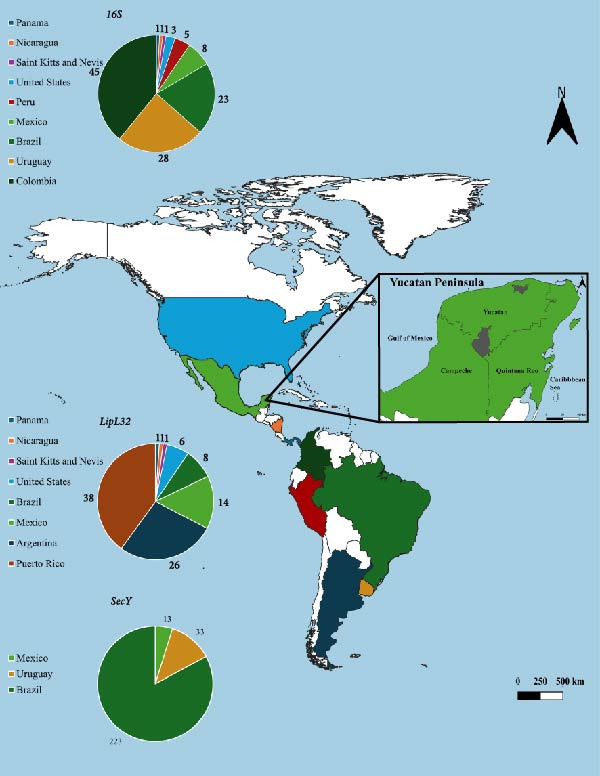 Figure 2
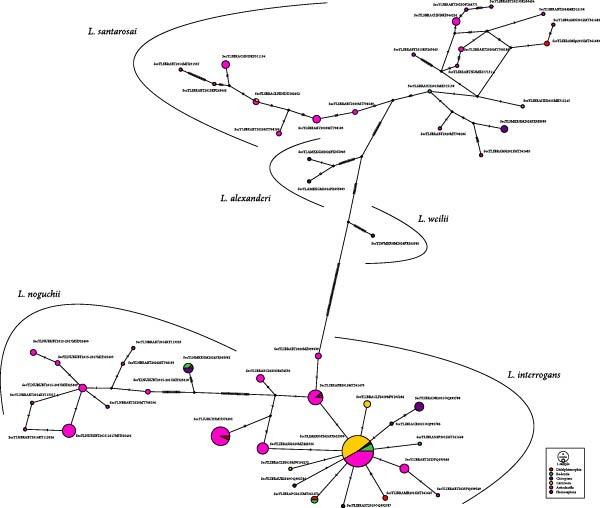 Figure 3
Peer Reviews
No public reviews on file for this paper yet. If you reviewed it on a platform where reviews are public (OpenReview, ICLR, NeurIPS, ICML), you can paste yours below so the community can read it here.
Videos
No videos yet. Explain this paper in a talk, walkthrough, or lecture? Add one.
Taxonomy
TopicsLeptospirosis research and findings · Yersinia bacterium, plague, ectoparasites research · Whipple's Disease and Interleukins