Human Proteoglycan Linkage Region Glycosyltransferases are Dimeric and Show Unexpected Specificities
Sascha Weidler, Ole Bundgaard, Markus Hessefort, Marisa Rädisch, Christopher Günther Franz Graf, Kevin Lam, Vanessa J. Neubauer, Johanna Eisenreich, Leonhard Köhler, Kelley W. Moremen, Catharina Steentoft, Henrik Clausen, Teng‐Yi Huang, Shang‐Cheng Hung, Clemens Steegborn

TL;DR
This study reveals new insights into proteoglycan glycosyltransferases, including their dimeric structure and unexpected enzyme activities.
Contribution
The paper reports the dimeric nature of glycosyltransferases and their unexpected promiscuity in glycan synthesis.
Findings
B3GalT6 and B3GlcAT-1 produce non-canonical glycopeptides, revealing enzyme promiscuity.
B3GalT6 forms a covalent dimer via a disulfide bond, a conserved feature in higher organisms.
B3GlcAT-1 can convert Gal-Xyl to GlcA-Gal-Xyl, confirming a rescue mode in GAG biosynthesis.
Abstract
We selected the N,O‐glycosylated proteoglycan bikunin as a model to establish a chemoenzymatic approach to defined proteoglycans using native chemical ligation. Overexpression of the human linkage region glycosyltransferases B4GalT7, B3GalT6 and B3GlcAT‐1 as N‐terminal SUMO‐fusions gave high yields of soluble and active enzymes in E. col i. When starting with xylosylated bikunin peptides the transferases performed well in enzymatic cascade reactions and provided the desired linkage region tetrasaccharide glycopeptides. B3GalT6 and B3GlcAT‐1 led to side products with N,O‐glycosylated bikunin peptides revealing unexpected promiscuity of both enzymes towards complex type N‐glycans. Additionally, B3GalT6 was found to synthesize short poly‐β3 Gal structures. B3GlcAT‐1 can slowly convert the biosynthetic intermediate Gal‐Xyl to the non‐canonical trisaccharide GlcA‐Gal‐Xyl. This reaction…
Genes, proteins, chemicals, diseases, species, mutations and cell lines named across the full text — each resolved to its canonical identifier and authoritative record.
Click any figure to enlarge with its caption.
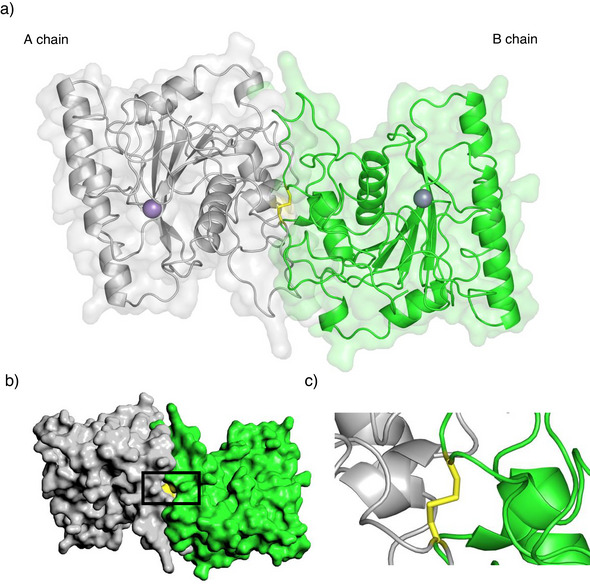 Figure 1
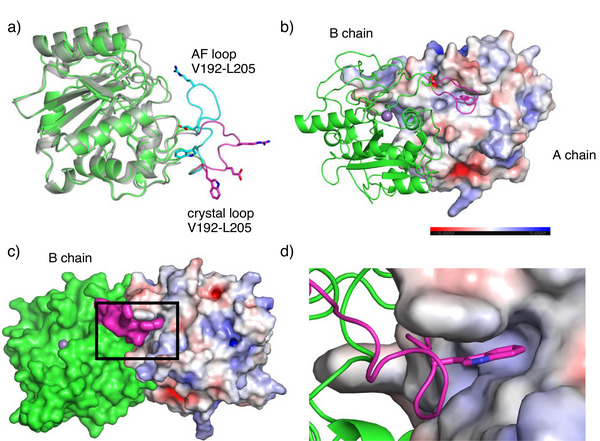 Figure 2
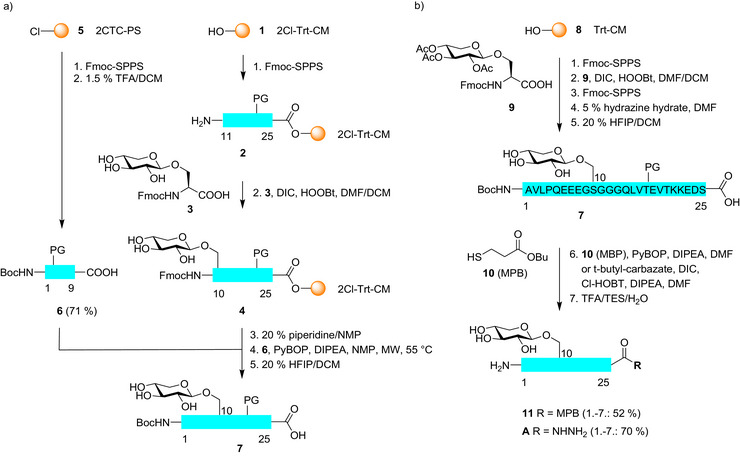 Figure 3
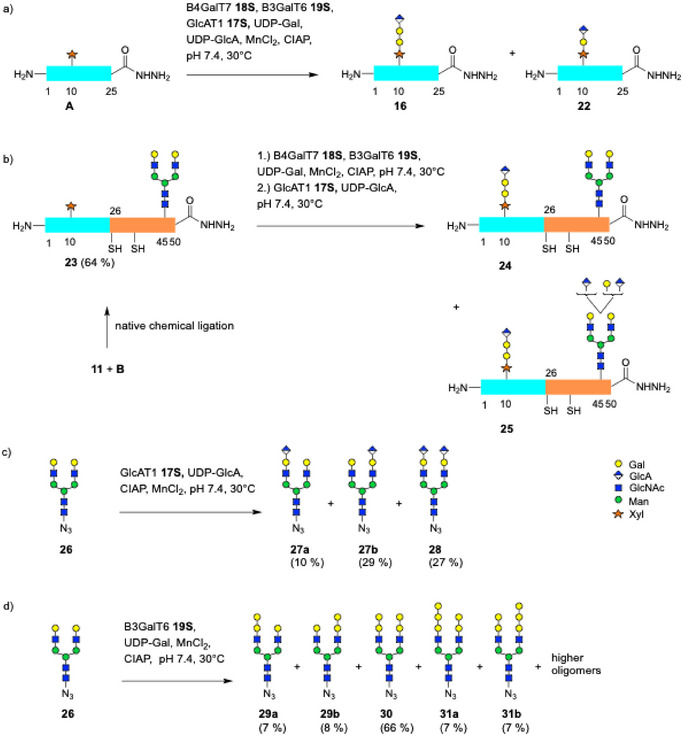 Figure 4
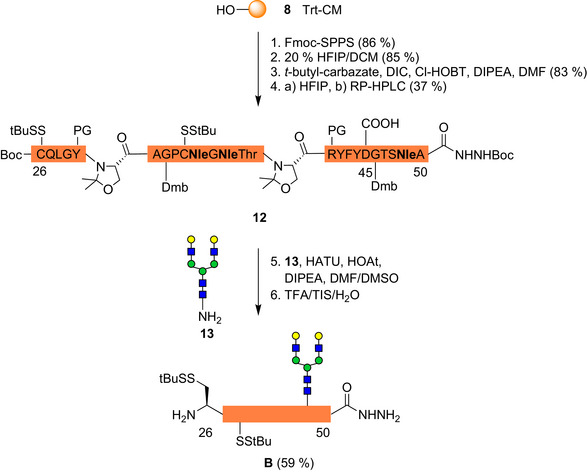 Figure 5
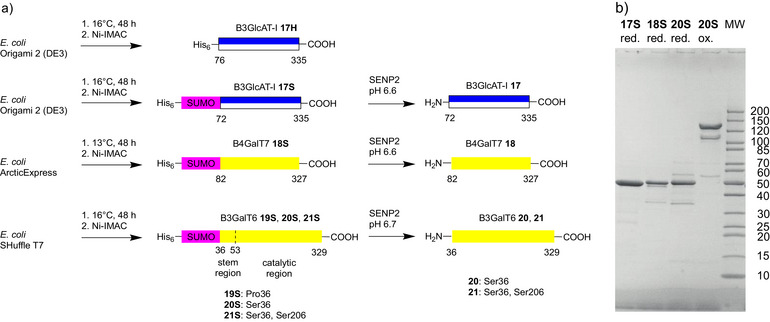 Figure 6
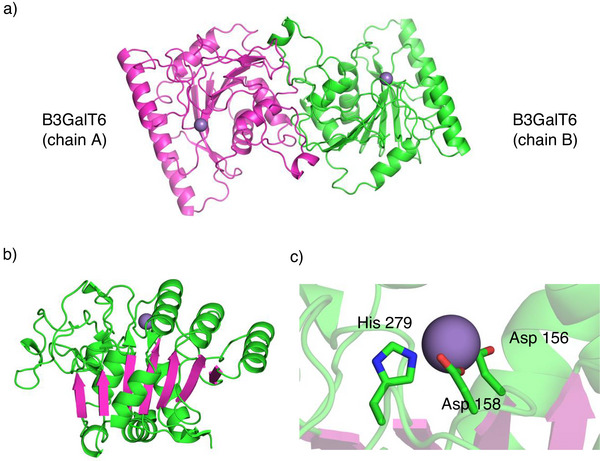 Figure 7
 Figure 8
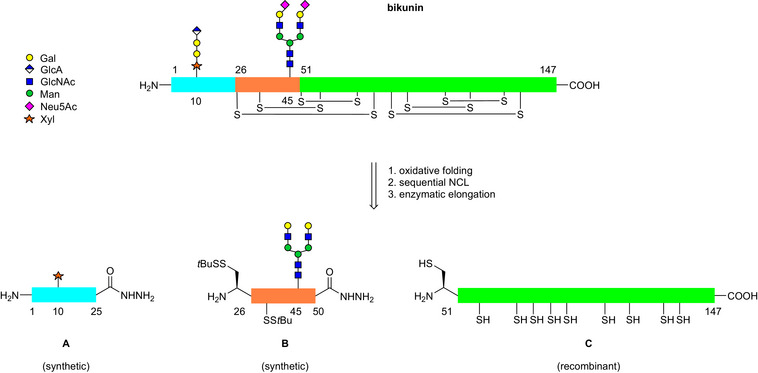 Figure 9
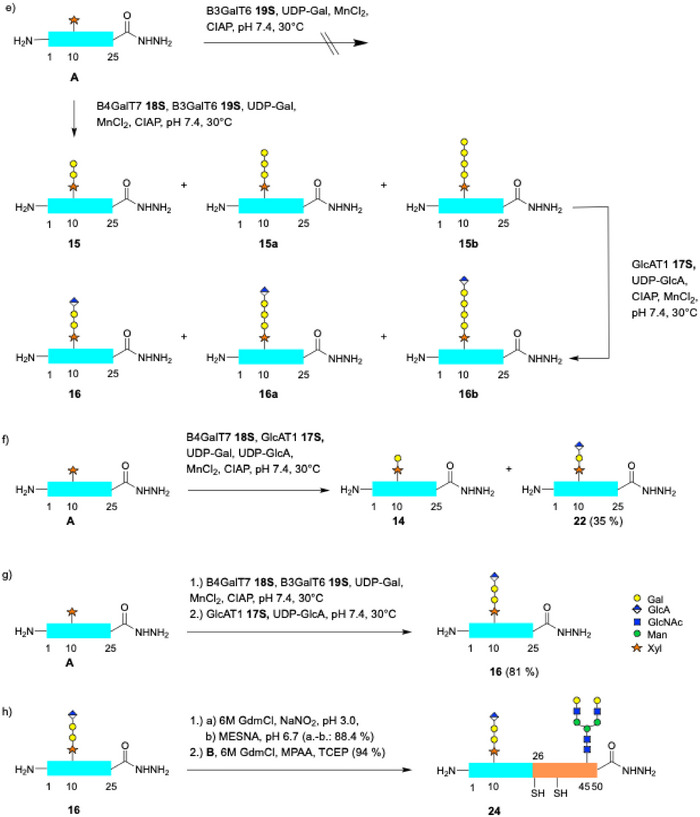 Figure 10
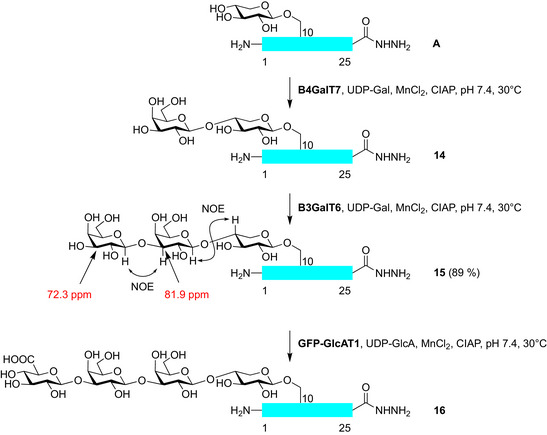 Figure 11
Peer Reviews
No public reviews on file for this paper yet. If you reviewed it on a platform where reviews are public (OpenReview, ICLR, NeurIPS, ICML), you can paste yours below so the community can read it here.
Videos
No videos yet. Explain this paper in a talk, walkthrough, or lecture? Add one.
Taxonomy
TopicsGlycosylation and Glycoproteins Research · Proteoglycans and glycosaminoglycans research · Carbohydrate Chemistry and Synthesis