Hedysarum langranii sp. nov. (Fabaceae, Hedysareae), a New Species From China, and Supplementary Descriptions of H. smithianum and H. dentatoalatum
Pei‐Liang Liu, Yong‐Xing Qin, Lu‐Lu Xun, Bin Li, Yuan Lu, Ming Yue

TL;DR
A new Hedysarum species from China is described, along with updated details for two related species, based on physical and genetic differences.
Contribution
A new Hedysarum species is identified and distinguished through morphological and phylogenetic analysis.
Findings
H. langranii differs from H. smithianum in several morphological traits like petal and loment sizes.
H. langranii is distinct from H. dentatoalatum by leaflet texture, corolla color, and loment features.
Phylogenetic trees based on nuclear and plastid sequences show conflicting relationships for H. langranii and H. dentatoalatum.
Abstract
Hedysarum langranii sp. nov. (Fabaceae, Hedysareae) is described and illustrated from Shaanxi, Henan and Gansu, China. This new species is morphologically similar to H. smithianum, but can be distinguished by its glabrous stipules (vs. sparsely pubescent), standard petal 9–11 mm long (vs. 12–13 mm long), keel petals 12–13 mm long (vs. 14–15 mm long), androecium 13–15 mm long (vs. 16–17 mm long), loment articles 4–5 mm wide (vs. 5–7 mm wide). The new species can be easily distinguished from H. dentatoalatum by its papyraceous leaflets (vs. membranaceous), corolla pale purple or pink (vs. pale yellow); loment articles 5–7 × 4–5 mm, without prickle on the veins, with minute irregular teeth along both sutures (vs. 8–12 × 10–12 mm, with prickles on the veins, with wings and prominent teeth along both sutures). The phylogenetic tree based on the nuclear sequences shows that H. langranii is…
Genes, proteins, chemicals, diseases, species, mutations and cell lines named across the full text — each resolved to its canonical identifier and authoritative record.
Click any figure to enlarge with its caption.
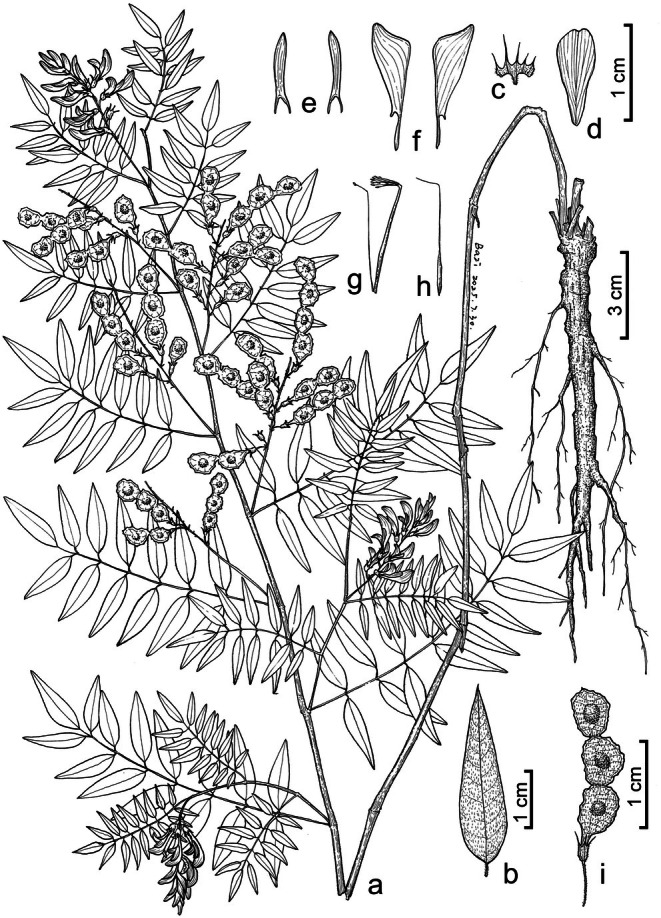 Figure 1
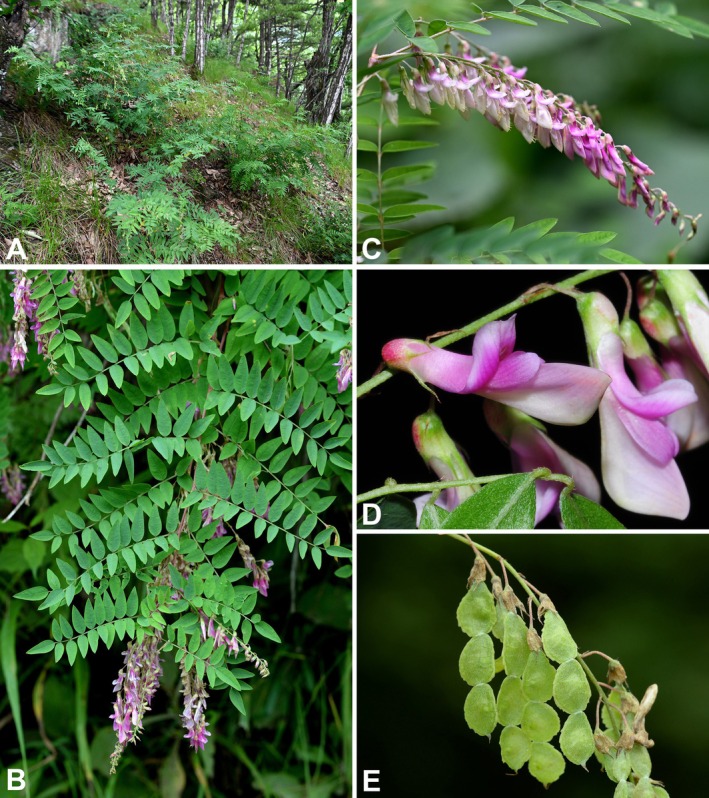 Figure 2
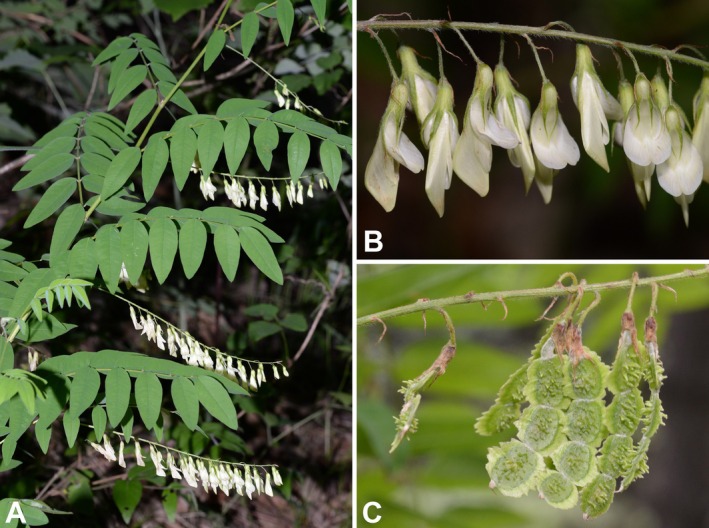 Figure 3
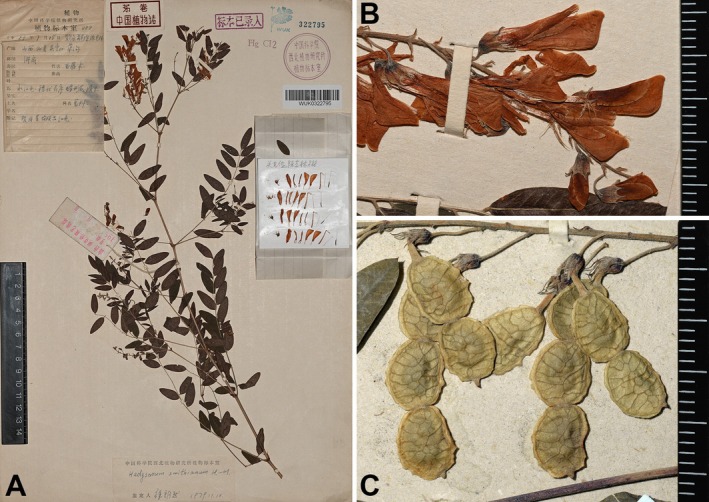 Figure 4
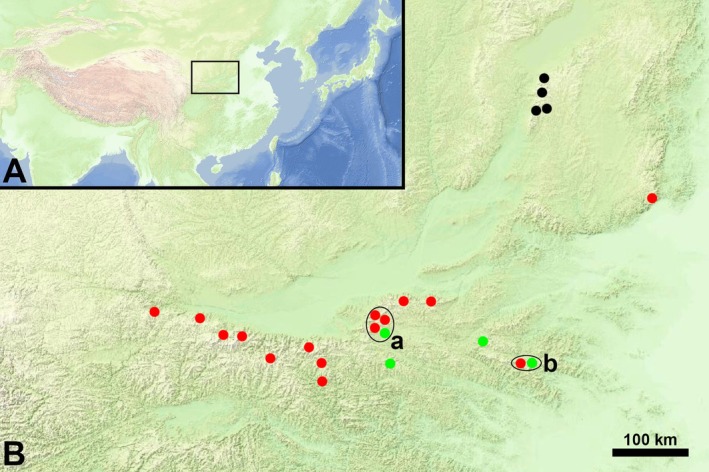 Figure 5
 Figure 6
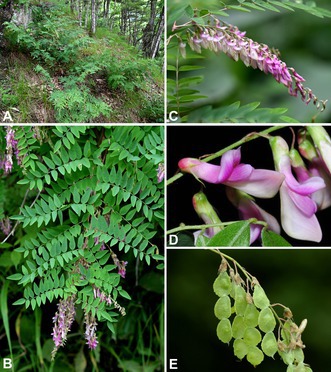 Figure 7
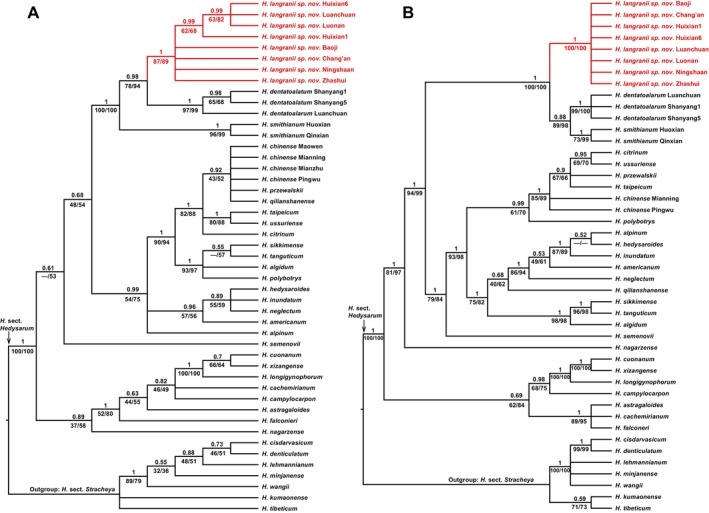 Figure 8
Peer Reviews
No public reviews on file for this paper yet. If you reviewed it on a platform where reviews are public (OpenReview, ICLR, NeurIPS, ICML), you can paste yours below so the community can read it here.
Videos
No videos yet. Explain this paper in a talk, walkthrough, or lecture? Add one.
Taxonomy
TopicsPlant Diversity and Evolution · Genomics and Phylogenetic Studies · Plant and Fungal Species Descriptions