Refining mechanistic models of hallucinations for enhanced translatability
Justin Buck, Kiyohito Iigaya, Guillermo Horga

TL;DR
This paper proposes a strategy to refine theories about hallucinations by using detailed computational models and rigorous testing to improve understanding and treatment.
Contribution
A general strategy for specifying and falsifying mechanistic theories of hallucinations using computational models and comparative testing.
Findings
Computational models constrained by replicated findings can prioritize falsifiable theories of hallucinations.
Theory-driven models can inform richer behavioral paradigms for comparing competing theories.
A principled approach is proposed to enhance translatability of hallucination theories into clinical applications.
Abstract
Over the past two decades, foundational work has provided key insights into the cognitive and neural basis of hallucinations. This progress has led to the development of several families of theories, each of which propose that hallucinations arise from distinct cognitive mechanisms. Since these cognitive mechanisms likely map onto separate circuit-level implementations, arbitrating between them is critical to advance our understanding of hallucination pathophysiology and guide the development of novel targeted therapeutics. However, several obstacles have hindered this progress, including the under-specification of theories and inadequate comparative testing. To overcome these challenges, and following best practices in cognitive computational neuroscience, theories should 1) articulate computational and biological details at a level that allows the generation of precise, testable…
Genes, proteins, chemicals, diseases, species, mutations and cell lines named across the full text — each resolved to its canonical identifier and authoritative record.
Click any figure to enlarge with its caption.
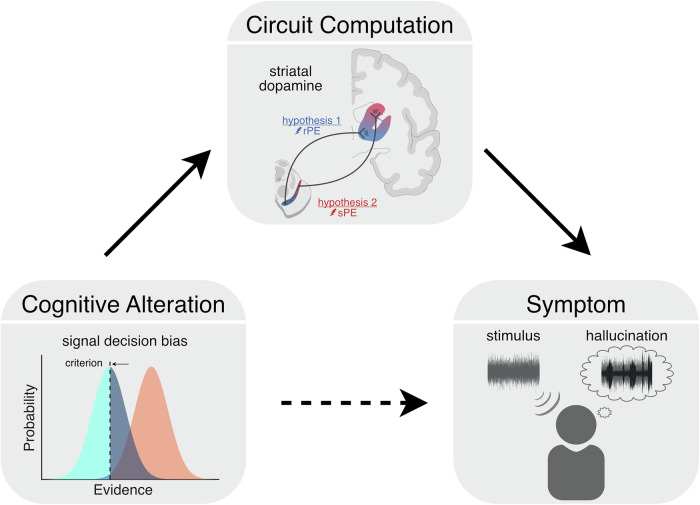 Figure 1
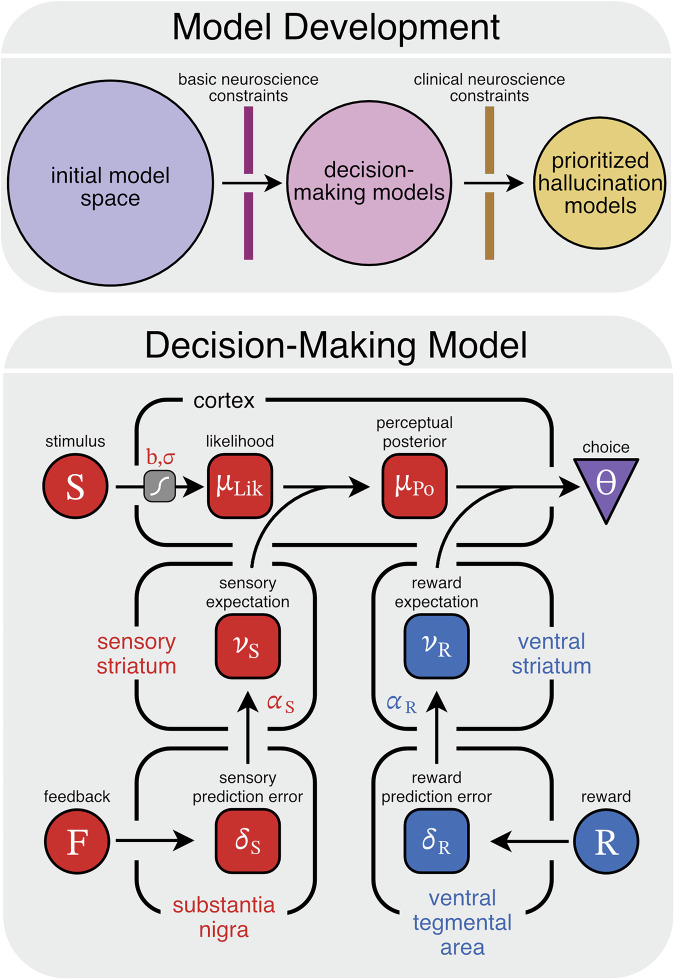 Figure 2
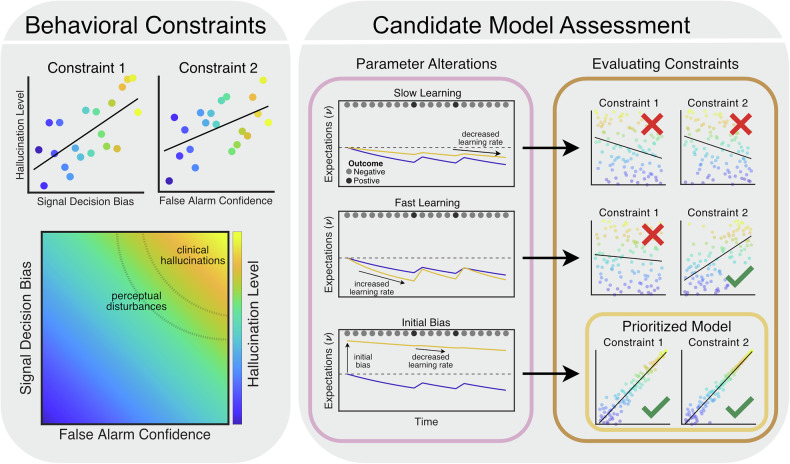 Figure 3
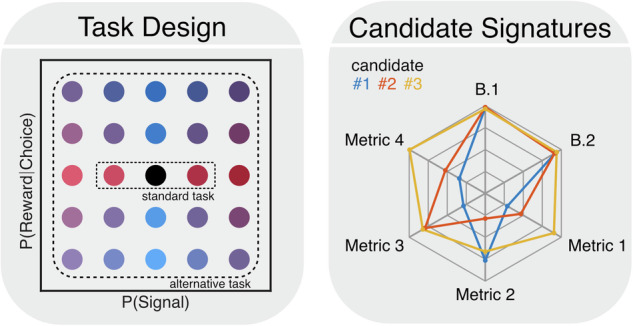 Figure 4
Peer Reviews
No public reviews on file for this paper yet. If you reviewed it on a platform where reviews are public (OpenReview, ICLR, NeurIPS, ICML), you can paste yours below so the community can read it here.
Videos
No videos yet. Explain this paper in a talk, walkthrough, or lecture? Add one.
Taxonomy
TopicsFunctional Brain Connectivity Studies · Neural and Behavioral Psychology Studies · Hallucinations in medical conditions