Cognitive adaptations for memory deficits in MCI and AD patients: A meta-analysis of EEG microstates
Timothy Piton, Una Smailovic, Vesna Jelic, Thomas Koenig, Paul G. Unschuld, Lucie Bréchet

TL;DR
This study uses EEG microstate analysis to identify brain network disruptions in patients with mild cognitive impairment and Alzheimer's disease, suggesting compensatory cognitive strategies.
Contribution
A meta-analysis of EEG microstate changes in MCI and AD patients reveals distinct patterns of cognitive network disruption and compensation.
Findings
AD patients show increased microstate A and B durations, and reduced microstate C/D occurrences.
MCI patients exhibit increased microstate A and reduced microstate D parameters.
Disrupted default mode network and cognitive control processes are linked to compensatory verbal and visual strategies.
Abstract
•Meta-analysis of EEG microstates in MCI and AD patients versus healthy controls.•MCI and AD patients show increased microstate A reflecting auditory/language activity.•Decreased microstate D in MCI and reduced microstates C/D in AD patients.•Findings indicate a disrupted default mode network and cognitive control processes.•Patients may compensate for memory deficits by verbalizing and visualizing thoughts. Meta-analysis of EEG microstates in MCI and AD patients versus healthy controls. MCI and AD patients show increased microstate A reflecting auditory/language activity. Decreased microstate D in MCI and reduced microstates C/D in AD patients. Findings indicate a disrupted default mode network and cognitive control processes. Patients may compensate for memory deficits by verbalizing and visualizing thoughts. EEG microstate analysis enables the exploration of the brain’s…
Genes, proteins, chemicals, diseases, species, mutations and cell lines named across the full text — each resolved to its canonical identifier and authoritative record.
Click any figure to enlarge with its caption.
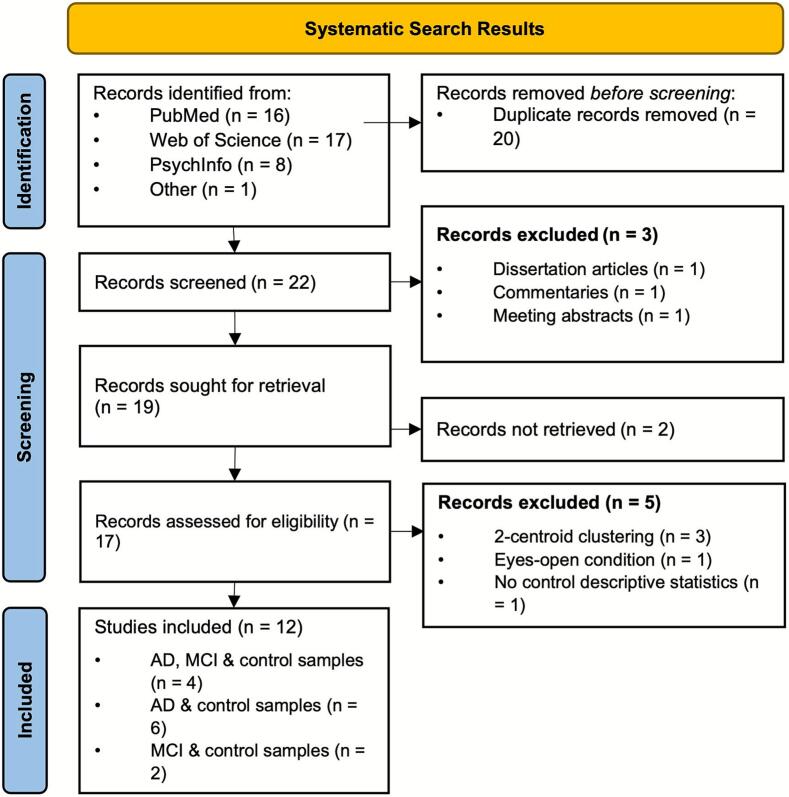 Figure 1
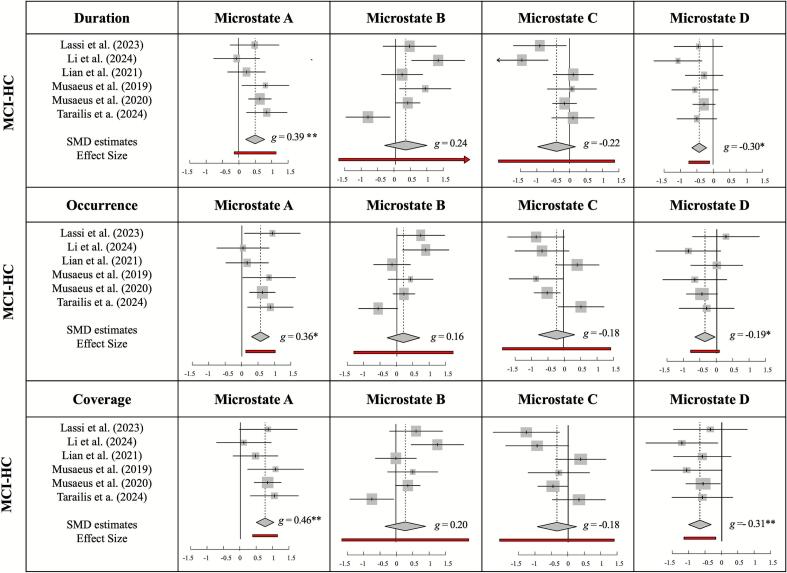 Figure 2
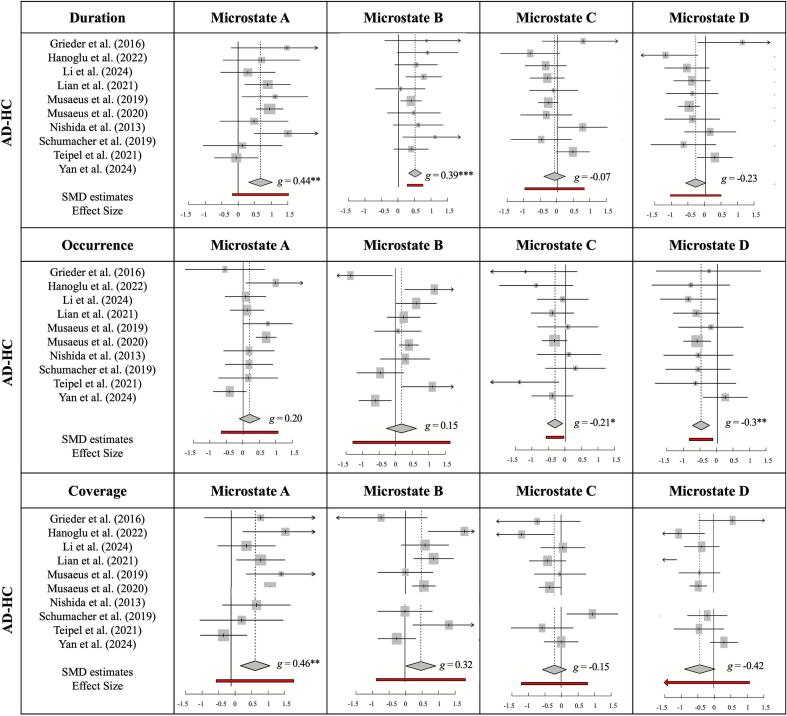 Figure 3
Peer Reviews
No public reviews on file for this paper yet. If you reviewed it on a platform where reviews are public (OpenReview, ICLR, NeurIPS, ICML), you can paste yours below so the community can read it here.
Videos
No videos yet. Explain this paper in a talk, walkthrough, or lecture? Add one.
Taxonomy
TopicsTraumatic Brain Injury Research · Mind wandering and attention · Neural and Behavioral Psychology Studies