The effects of transcranial random noise stimulation on excitation/inhibition balance in ADHD
Ornella Dakwar-Kawar, Amal Jude Ashwin Francis, Renu Arya, Noam Mairon, Jyoti Mishra, Itai Berger, Roi Cohen Kadosh, Pragathi Priyadharsini Balasubramani, Mor Nahum

TL;DR
Transcranial random noise stimulation (tRNS) combined with cognitive training improved neural activity and behavior in children with ADHD.
Contribution
tRNS reduced aperiodic exponents more consistently than ERP or ERSP indices, suggesting a novel approach to modulating E/I balance in ADHD.
Findings
Children with ADHD showed elevated EEG aperiodic exponents compared to healthy peers.
tRNS with cognitive training improved neurobehavioral outcomes and reduced aperiodic exponents in ADHD children.
The effects of tRNS on E/I balance were sustained at follow-up assessment.
Abstract
•Children with ADHD show elevated EEG aperiodic exponents vs. healthy peers.•tRNS with cognitive training modulated neurobehavioral outcomes vs. sham in ADHD.•tRNS reduced aperiodic exponent more consistently than ERP or ERSP indices.•Effects of tRNS on E/I balance persisted at follow-up assessment. Children with ADHD show elevated EEG aperiodic exponents vs. healthy peers. tRNS with cognitive training modulated neurobehavioral outcomes vs. sham in ADHD. tRNS reduced aperiodic exponent more consistently than ERP or ERSP indices. Effects of tRNS on E/I balance persisted at follow-up assessment. Children with attention-deficit/hyperactivity disorder (ADHD) often show aberrant neural activity, including excitation/inhibition (E/I) imbalances, atypical event-related potentials (ERPs), and neural network dysfunction. Transcranial Random Noise Stimulation (tRNS) has shown promise in…
Genes, proteins, chemicals, diseases, species, mutations and cell lines named across the full text — each resolved to its canonical identifier and authoritative record.
Click any figure to enlarge with its caption.
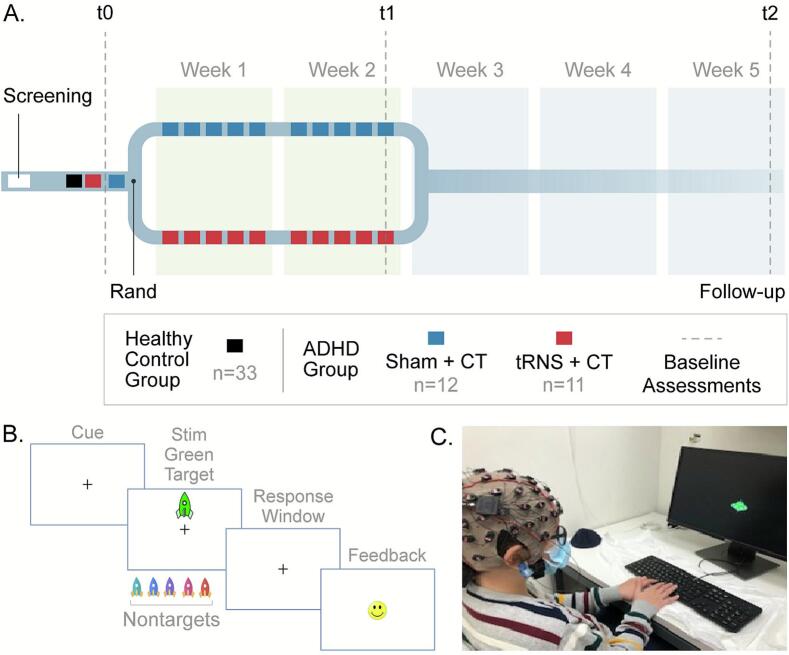 Figure 1
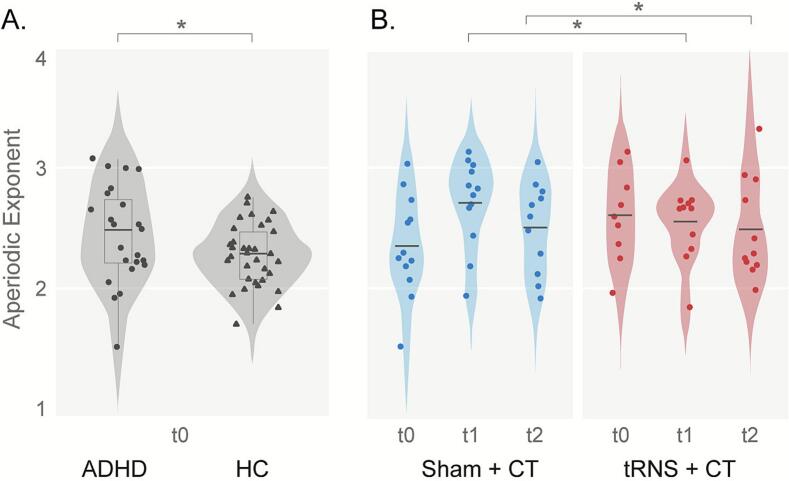 Figure 2
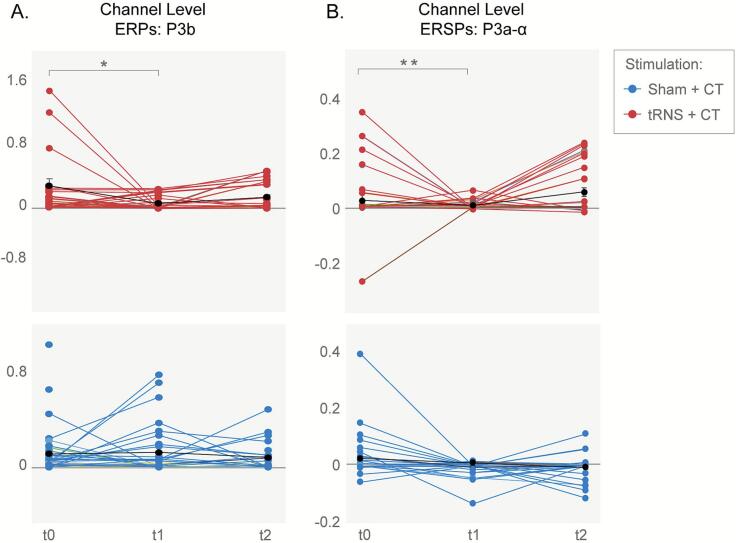 Figure 3
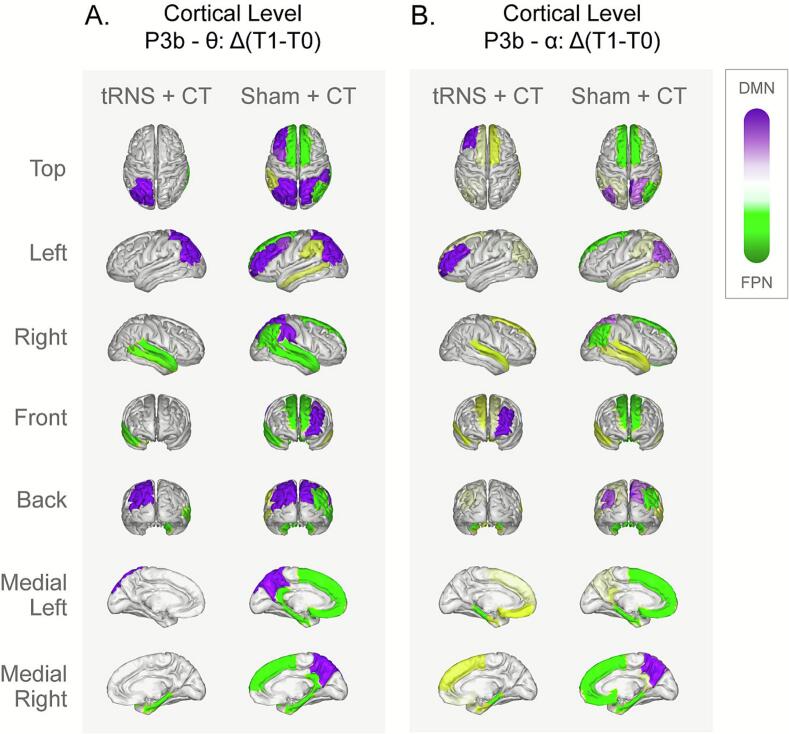 Figure 4
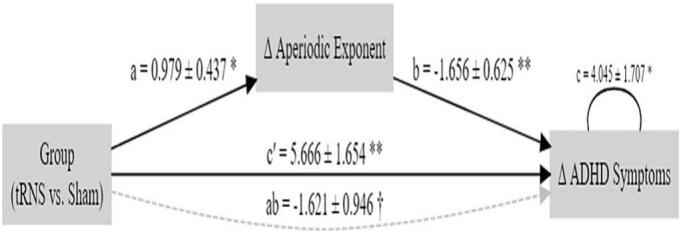 Figure 5
Peer Reviews
No public reviews on file for this paper yet. If you reviewed it on a platform where reviews are public (OpenReview, ICLR, NeurIPS, ICML), you can paste yours below so the community can read it here.
Videos
No videos yet. Explain this paper in a talk, walkthrough, or lecture? Add one.
Taxonomy
TopicsAttention Deficit Hyperactivity Disorder · Neural and Behavioral Psychology Studies · Traumatic Brain Injury Research