Mechanistic roles of long non-coding RNAs in gastric cancer therapy resistance
Jiayi Chen, Juanmei Gao

TL;DR
This paper reviews how long non-coding RNAs contribute to drug resistance in gastric cancer and their potential as biomarkers for better treatment strategies.
Contribution
The paper systematically summarizes the mechanistic roles of lncRNAs in resistance to chemotherapy, immunotherapy, and targeted therapies in gastric cancer.
Findings
LncRNAs like HNF1A-AS1 and CRNDE modulate chemotherapy resistance via autophagy and DNA repair mechanisms.
LncRNAs such as LINC01094 influence immunotherapy resistance by regulating PD-L1 and the tumor microenvironment.
Specific lncRNAs like LINC00665 contribute to resistance against HER2-targeted therapies.
Abstract
Gastric cancer (GC) remains a leading cause of cancer-related mortality worldwide. While gastrointestinal tumor screening has reduced incidence and mortality, its treatment faces is hindered by challenges including chemotherapy resistance and poor prognosis. Long non-coding RNAs (lncRNAs), a class of non-coding RNAs exceeding 200 nucleotides in length, serve as pivotal regulators in GC pathogenesis and therapeutic resistance. This review comprehensively summarizes the mechanistic roles of lncRNAs in chemotherapy, immunotherapy, and targeted therapy resistance for GC. In chemotherapy, lncRNAs modulate drug sensitivity to fluoropyrimidines (5-FU), platinum-based agents and other chemotherapeutics by regulating autophagy, apoptosis, metabolic reprogramming and DNA damage repair mechanisms, such as HNF1A-AS1, LINC00942 and CRNDE. In immunotherapy, lncRNAs influence immune checkpoint…
Genes, proteins, chemicals, diseases, species, mutations and cell lines named across the full text — each resolved to its canonical identifier and authoritative record.
Click any figure to enlarge with its caption.
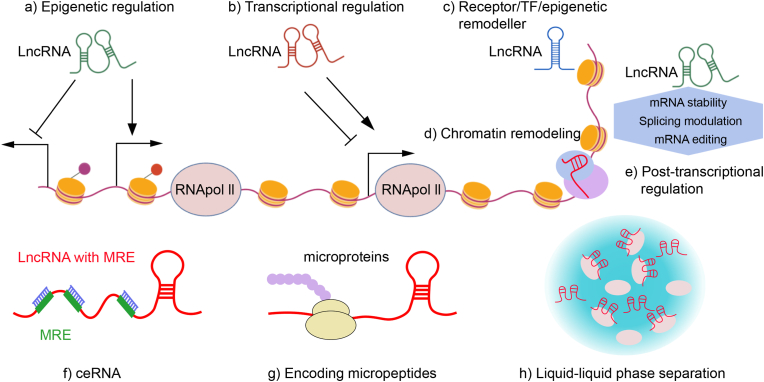 Figure 1
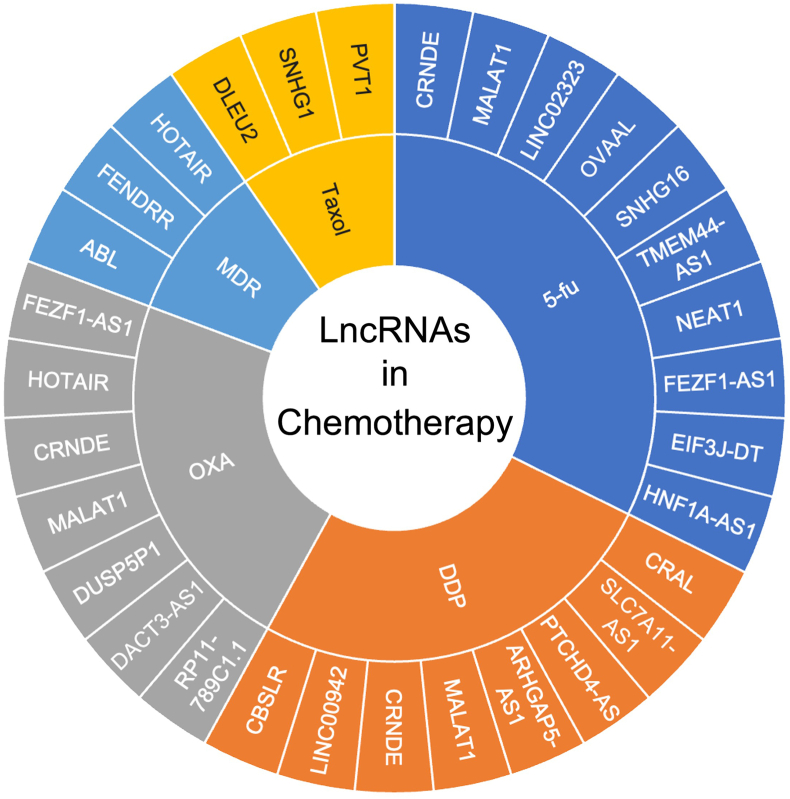 Figure 2
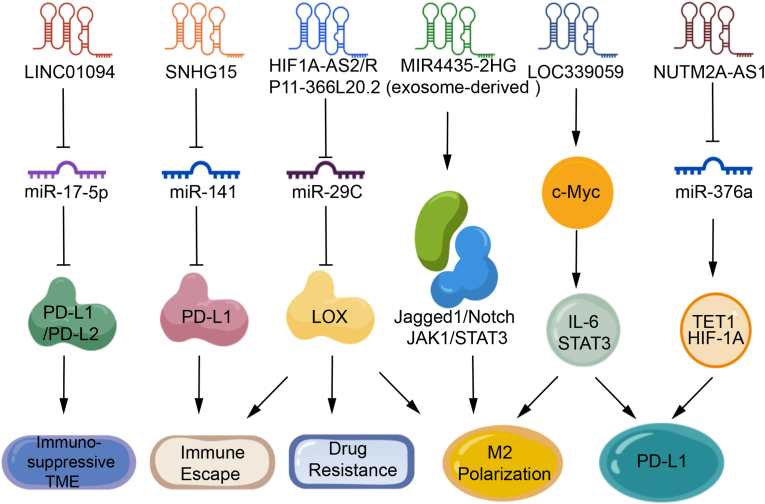 Figure 3
 Figure 4
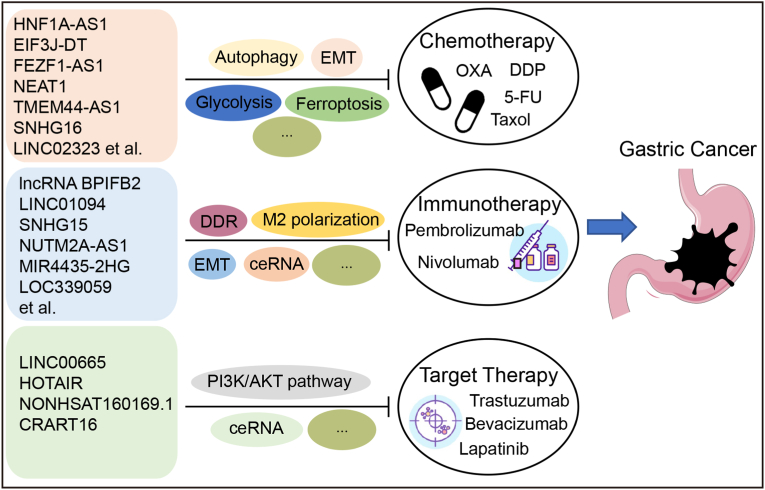 Figure 5
Peer Reviews
No public reviews on file for this paper yet. If you reviewed it on a platform where reviews are public (OpenReview, ICLR, NeurIPS, ICML), you can paste yours below so the community can read it here.
Videos
No videos yet. Explain this paper in a talk, walkthrough, or lecture? Add one.
Taxonomy
TopicsCancer-related molecular mechanisms research · Autophagy in Disease and Therapy · Ferroptosis and cancer prognosis