Comparative analysis of Borrelia’s Defence mechanisms and their impact on genetic manipulation of low-passage isolates of Borrelia afzelii and Borrelia garinii
Margarida Ruivo, Anna-Margarita Schötta, Theresa Stelzer, Michael Reiter, Michiel Wijnveld

TL;DR
This study shows that modifying DNA with in vitro methylation improves genetic transformation in Borrelia, helping researchers better study these tick-borne pathogens.
Contribution
The study demonstrates that in vitro methylation of vectors enhances transformation efficiency in low-passage Borrelia isolates.
Findings
Borrelia species differ in their restriction-modification system (RMS) gene numbers and locations.
In vitro methylated vectors significantly increase transformation efficiency in low-passage Borrelia strains.
The RMS recognizes pre-methylated vectors as native DNA, supporting the hypothesis of methylation-based defense.
Abstract
•The Borrelia restriction-modification system (RMS) differs by species group.•The RMS affects the transformation efficiency of Borrelia.•Increase in transformation efficiency observed with an in vitro methylated vector.•Transformation efficiency increased in low-passage Borrelia strains.•In vitro methylation can be a facilitating tool for Borrelia genetic manipulation. The Borrelia restriction-modification system (RMS) differs by species group. The RMS affects the transformation efficiency of Borrelia. Increase in transformation efficiency observed with an in vitro methylated vector. Transformation efficiency increased in low-passage Borrelia strains. In vitro methylation can be a facilitating tool for Borrelia genetic manipulation. Borrelia, a highly prevalent tick-borne pathogen, has a genome with a linear chromosome and numerous linear and circular plasmids. There are three…
Genes, proteins, chemicals, diseases, species, mutations and cell lines named across the full text — each resolved to its canonical identifier and authoritative record.
Click any figure to enlarge with its caption.
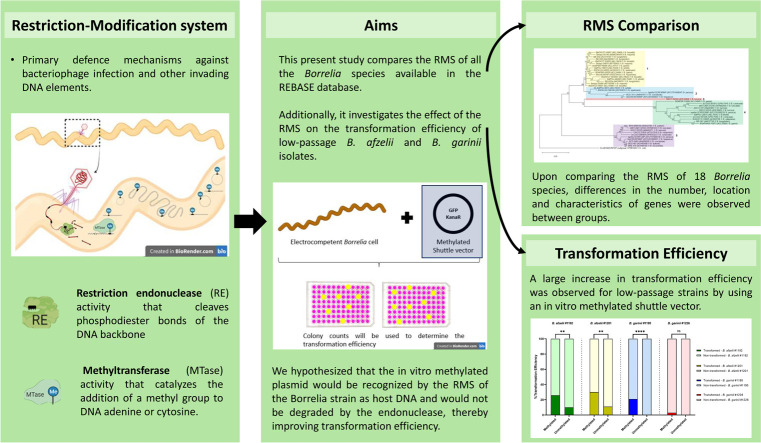 Figure 1
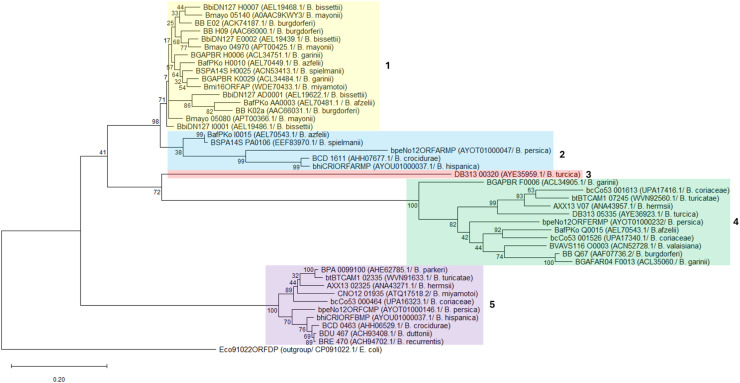 Figure 2
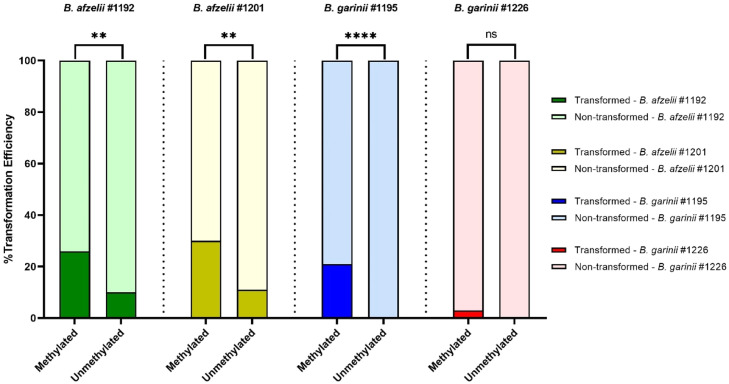 Figure 3
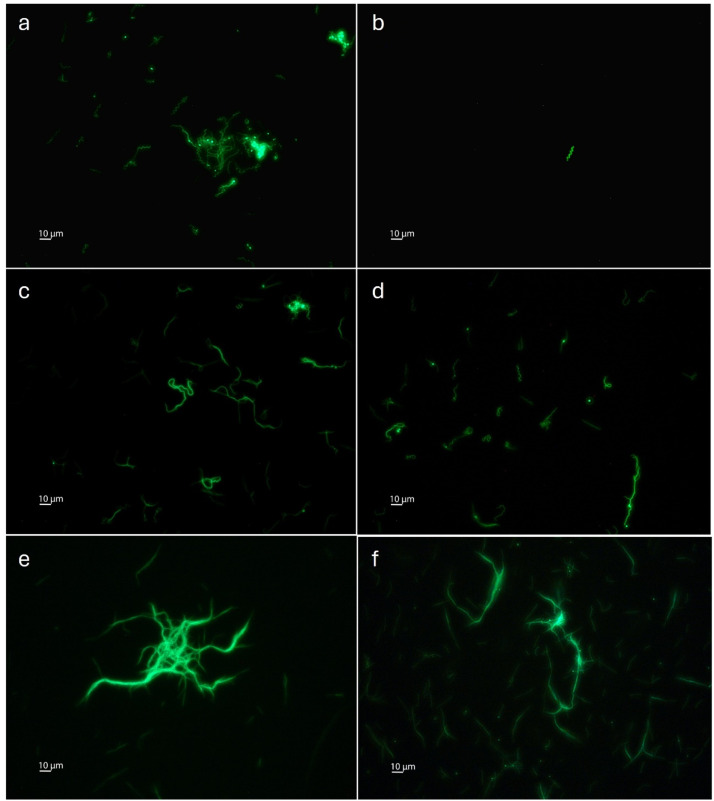 Figure 4
Peer Reviews
No public reviews on file for this paper yet. If you reviewed it on a platform where reviews are public (OpenReview, ICLR, NeurIPS, ICML), you can paste yours below so the community can read it here.
Videos
No videos yet. Explain this paper in a talk, walkthrough, or lecture? Add one.
Taxonomy
TopicsVector-borne infectious diseases · Vector-Borne Animal Diseases · Viral Infections and Vectors