Differential alpha-gal expression during Amblyomma hebraeum and Rhipicephalus evertsi tick feeding and development: A driver for the development of alpha-gal syndrome in South Africa
Tatenda Murangi, Ben Mans, Ronel Pienaar, Maresa Botha, Heidi Facey-Thomas, Stephen Cunningham, Ali Halajian, Lokesh Joshi, Franco H. Falcone, William Horsnell, Michael E. Levin

TL;DR
This study explores how alpha-gal, a sugar molecule in tick saliva, is expressed in South African ticks and may trigger allergic reactions in humans.
Contribution
The study identifies differential alpha-gal expression in ticks and its potential role in sensitization to alpha-gal syndrome in South Africa.
Findings
Alpha-gal–containing proteins increase in tick salivary glands with feeding time.
IgE and IgG4 levels to tick proteins are elevated in alpha-gal–allergic individuals.
Bovine thyroglobulin inhibits human anti–alpha-gal IgE binding to tick proteins.
Abstract
The presence of galactose-α-1,3-galactose (alpha-gal) in tick salivary antigens has been implicated to initiate host IgE responses resulting in sensitization to alpha-gal. We sought to investigate the presence of alpha-gal in different anatomic locations in native South African tick species at different feeding and developmental stages and the ability of sera from our allergic cohort to bind to these tick proteins. Alpha-gal–containing proteins in laboratory-reared ticks at different feeding and developmental stages were detected through Western blotting and immunohistochemical staining. IgE and IgG4 toward the tick proteins were analyzed via ELISA. There is differential expression of alpha-gal in endemic South African ticks Amblyomma hebraeum and Rhipicephalus evertsi. Immunoblotting demonstrated an increase in the prominence of alpha-gal–containing protein bands in salivary glands…
Genes, proteins, chemicals, diseases, species, mutations and cell lines named across the full text — each resolved to its canonical identifier and authoritative record.
Click any figure to enlarge with its caption.
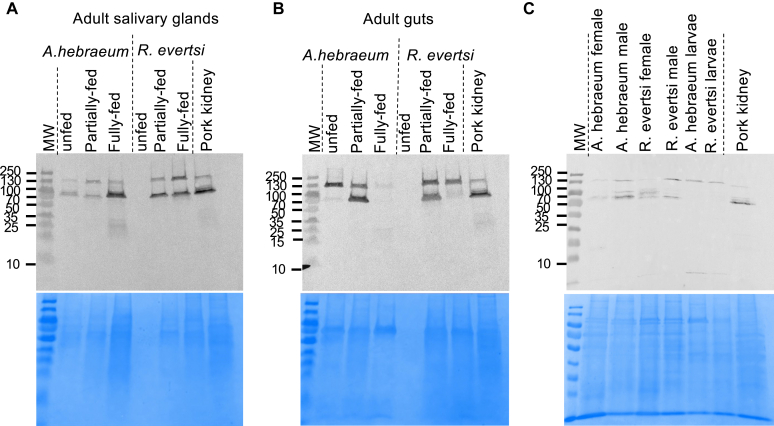 Figure 1
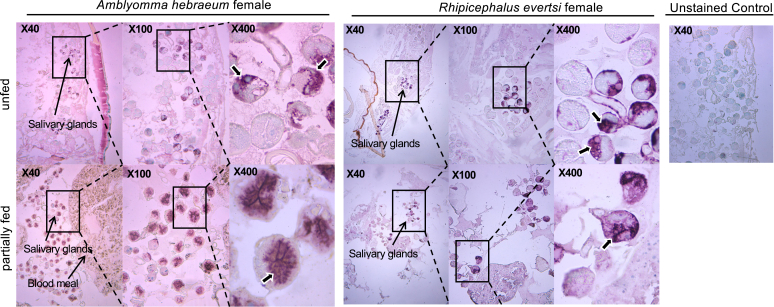 Figure 2
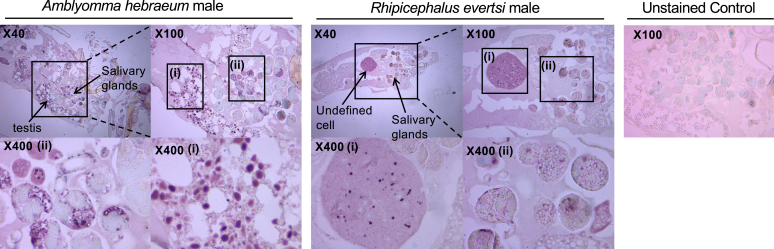 Figure 3
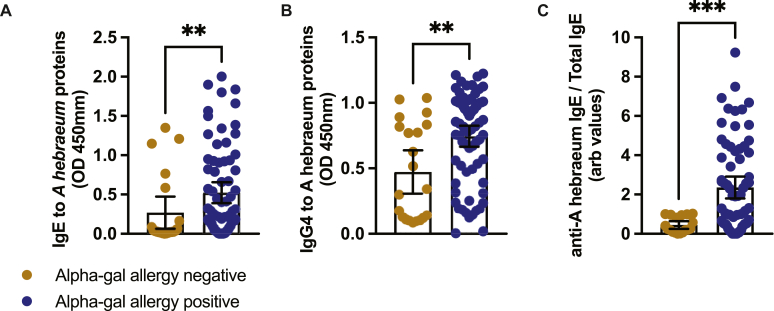 Figure 4
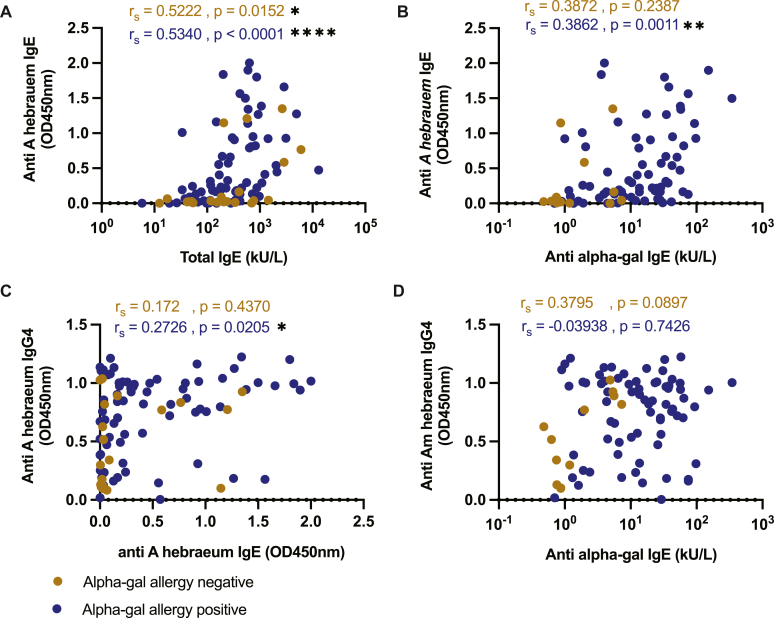 Figure 5
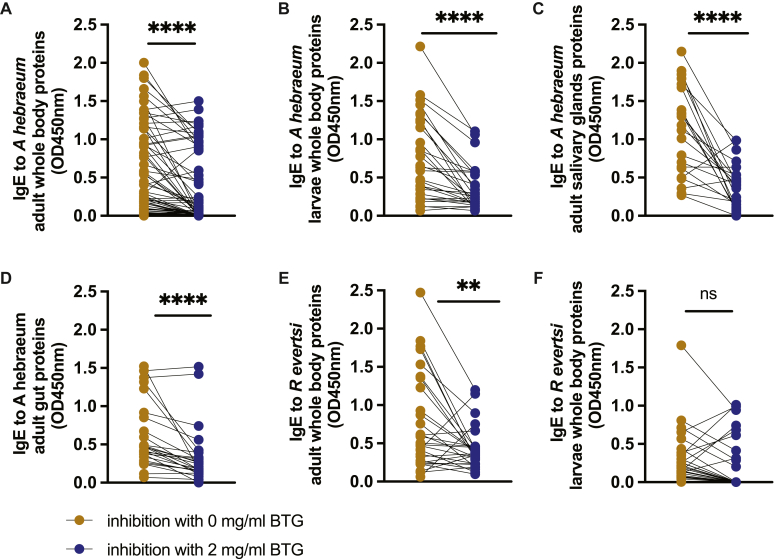 Figure 6
Peer Reviews
No public reviews on file for this paper yet. If you reviewed it on a platform where reviews are public (OpenReview, ICLR, NeurIPS, ICML), you can paste yours below so the community can read it here.
Videos
No videos yet. Explain this paper in a talk, walkthrough, or lecture? Add one.
Taxonomy
TopicsVector-borne infectious diseases · Trypanosoma species research and implications · Invertebrate Immune Response Mechanisms