A Core Effector MoPce1 Is Required for the Pathogenicity of Magnaporthe oryzae by Modulating Catalase‐Mediated H2O2 Homeostasis in Rice
Jianqiang Huang, Xiaomin Chen, Huimin Bai, Dao Zhou, Hongxia Zhang, Lifan Ke, Shuhui Lin, Xiuxiu Li, Zhenhui Zhong, Zonghua Wang, Huakun Zheng

TL;DR
A key protein from a rice fungus helps it infect plants by disrupting the plant's oxygen balance, making the plant more vulnerable.
Contribution
MoPce1 is identified as a novel core effector that modulates catalase-mediated ROS homeostasis to promote pathogenicity.
Findings
MoPce1 is essential for pathogenicity but not for asexual development in Magnaporthe oryzae.
MoPce1 interacts with rice catalase OsCATC to suppress reactive oxygen species (ROS) burst in rice.
Disruption of OsCATC enhances rice blast resistance and increases ROS production.
Abstract
Plant pathogens employ a diverse array of effectors to facilitate host colonisation, including evolutionarily conserved core effectors. In this study, we identified MoPce1, a CAP/PR‐1 domain‐containing protein widely distributed among fungal species, as a key virulence factor in Magnaporthe oryzae. Among 72 putative core effectors (PCEs), MoPce1 was found to be essential for pathogenicity but dispensable for asexual development. It localises to biotrophic interfacial complex (BIC) in invasive hyphae (IHs) and to the cytoplasm in Nicotiana benthamiana leaves and rice protoplasts. Ectopic expression of a signal peptide‐deleted variant of MoPCE1 (MoPCE1 Δsp ) in rice compromised blast resistance and suppressed the reactive oxygen species (ROS) burst. Notably, MoPce1 lacks the conserved cysteine residues essential for sterol‐binding in the CAP domain, suggesting its potential association…
Genes, proteins, chemicals, diseases, species, mutations and cell lines named across the full text — each resolved to its canonical identifier and authoritative record.
Click any figure to enlarge with its caption.
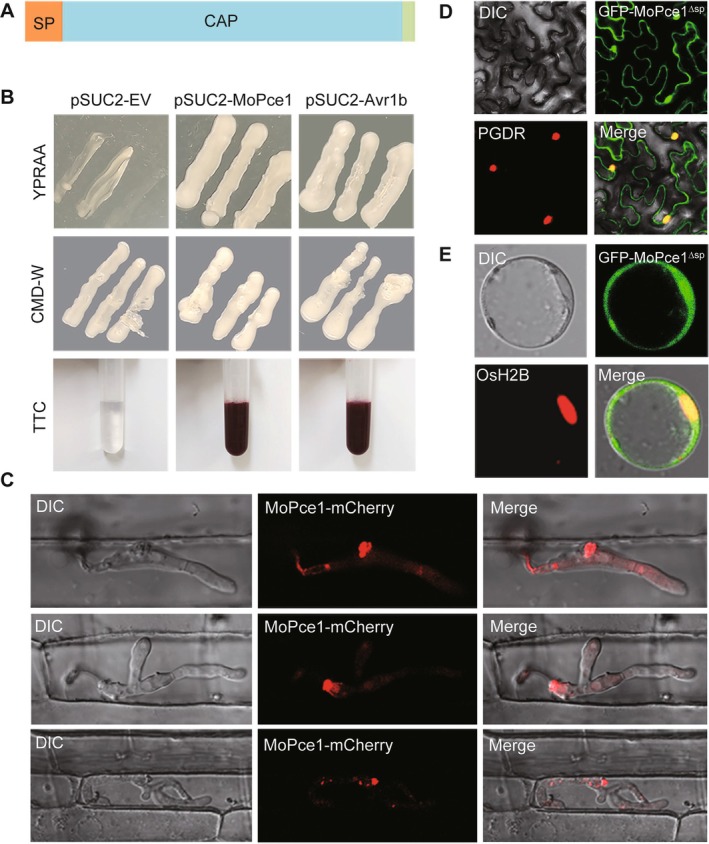 Figure 1
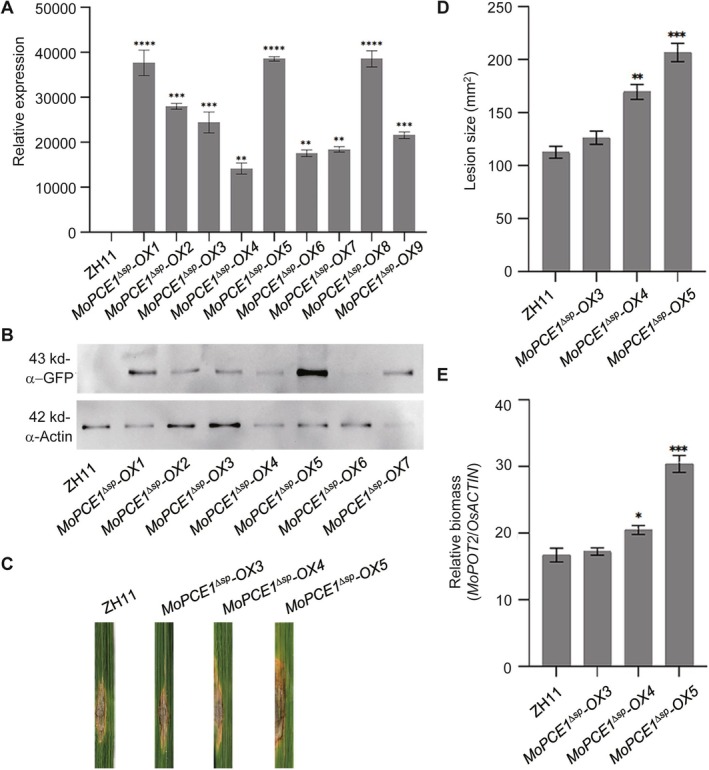 Figure 2
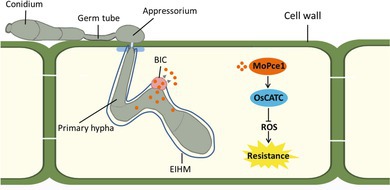 Figure 3
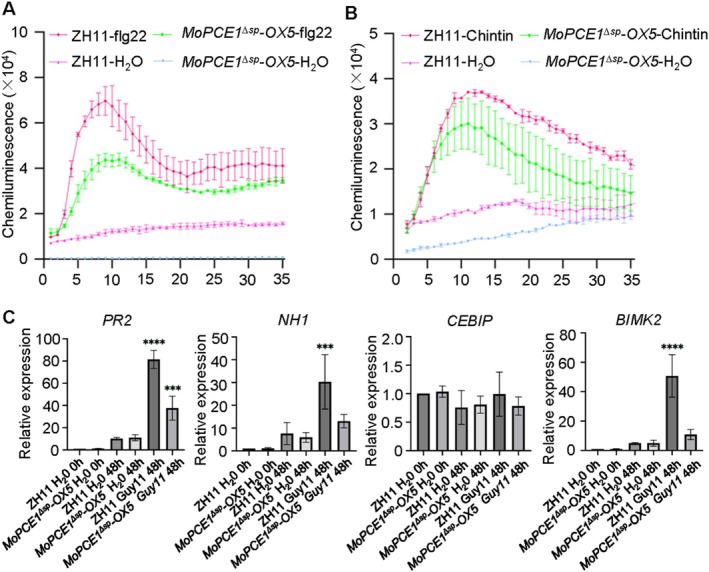 Figure 4
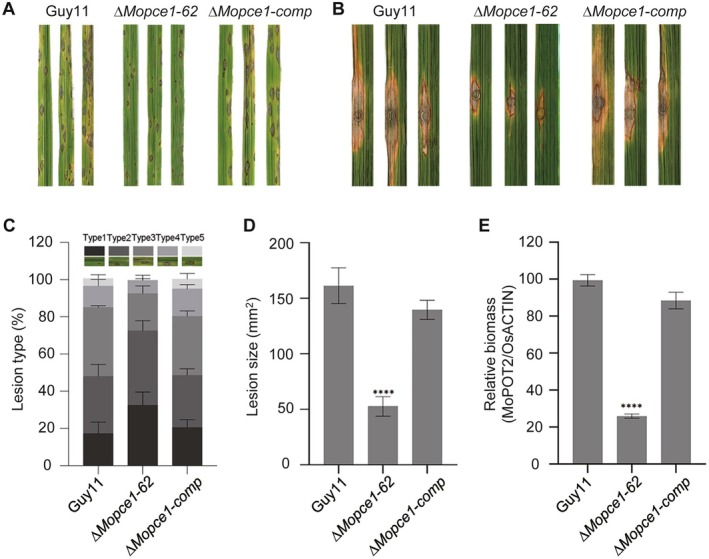 Figure 5
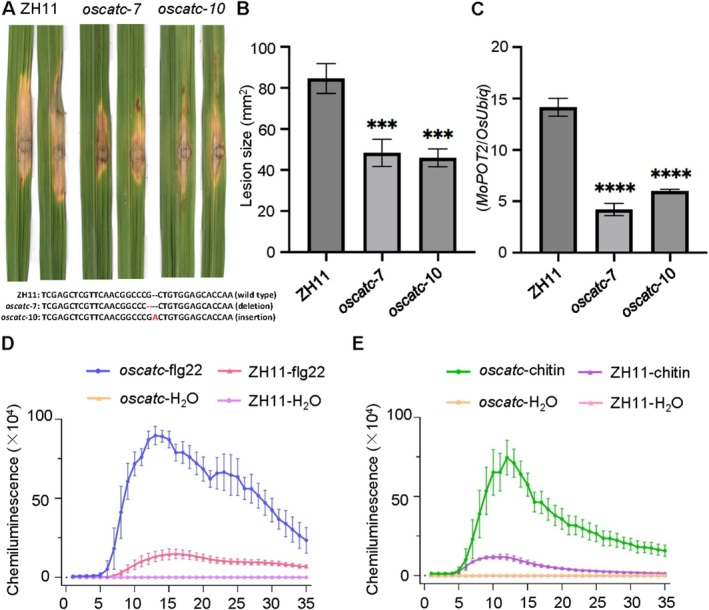 Figure 6
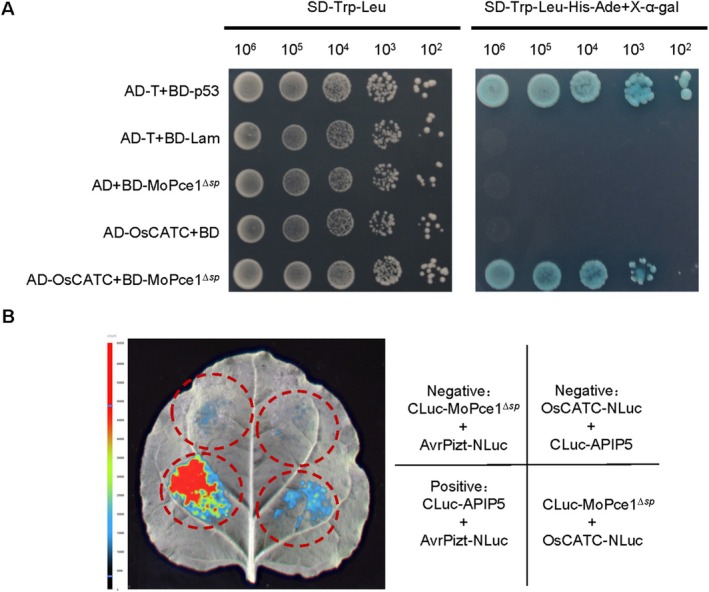 Figure 7
Peer Reviews
No public reviews on file for this paper yet. If you reviewed it on a platform where reviews are public (OpenReview, ICLR, NeurIPS, ICML), you can paste yours below so the community can read it here.
Videos
No videos yet. Explain this paper in a talk, walkthrough, or lecture? Add one.
Taxonomy
TopicsFungal and yeast genetics research · Plant-Microbe Interactions and Immunity · Microbial Natural Products and Biosynthesis