Risk factors to guide Terson syndrome screening after aneurysmal subarachnoid Hemorrhage
Ilies Djebbara, Sune Munthe, Troels Halfeld Nielsen, Lejla Islamagič

TL;DR
This study identifies risk factors for Terson syndrome after brain aneurysm rupture and creates a tool to help doctors decide who needs eye exams.
Contribution
A new risk score using three predictors improves early detection of Terson syndrome after aneurysmal subarachnoid hemorrhage.
Findings
Male sex, higher Hunt-Hess grade, and anterior communicating artery aneurysm are strong predictors of Terson syndrome.
The new risk score outperformed existing models in predicting Terson syndrome with high accuracy.
The model stratifies risk from <25% to >80%, aiding targeted screening and reducing visual complications.
Abstract
Terson syndrome is defined as intraocular hemorrhage secondary to aneurysmal subarachnoid hemorrhage (aSAH). Despite clinical relevance, it remains under-recognized and is associated with poorer neurological and visual outcomes. Early detection is difficult in critically ill patients unable to report symptoms. We aimed to identify independent predictors and develop a clinically usable risk score for targeted ophthalmologic screening. We conducted a retrospective cohort study of 220 adult aSAH patients admitted to Odense University Hospital (Sept 1, 2018-Jan 21, 2025), of whom 89 underwent ophthalmologic screening. Terson syndrome was defined as any intraocular hemorrhage on examination. Predictors were selected using least absolute shrinkage and selection operator (LASSO) logistic regression, with multivariable analysis and internal validation via bootstrapping. A point-based risk score…
Genes, proteins, chemicals, diseases, species, mutations and cell lines named across the full text — each resolved to its canonical identifier and authoritative record.
Click any figure to enlarge with its caption.
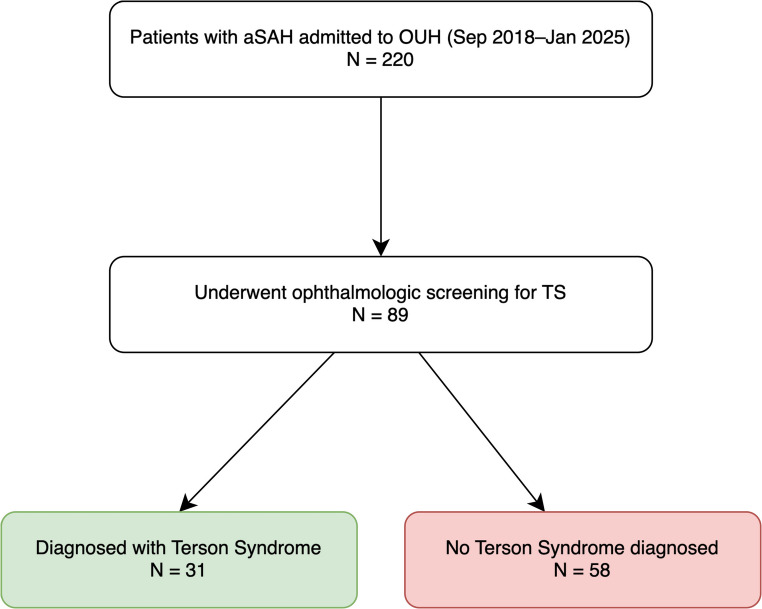 Figure 1
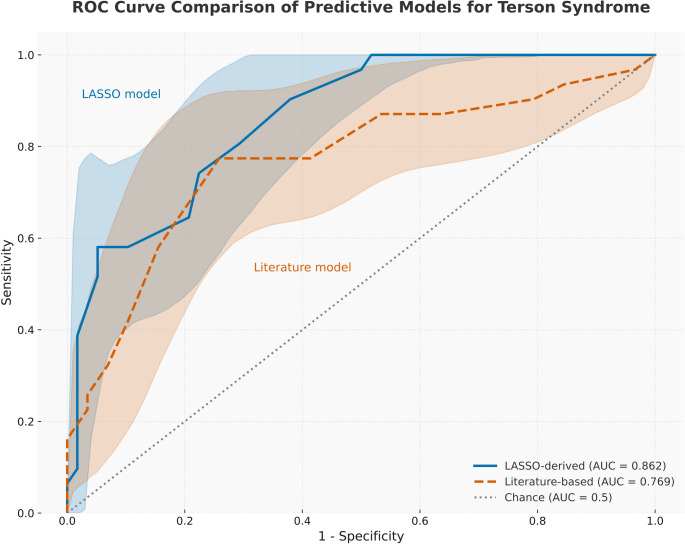 Figure 2
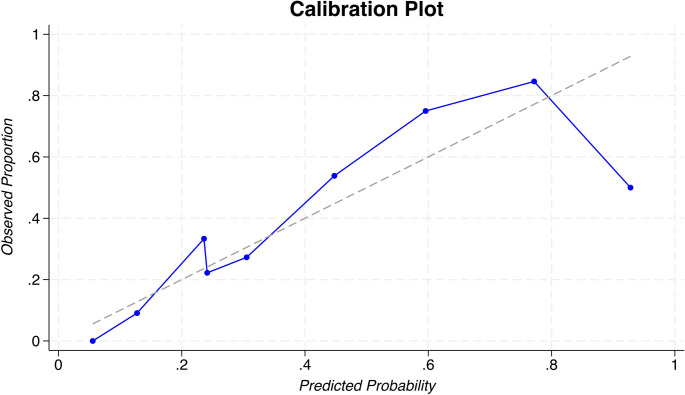 Figure 3
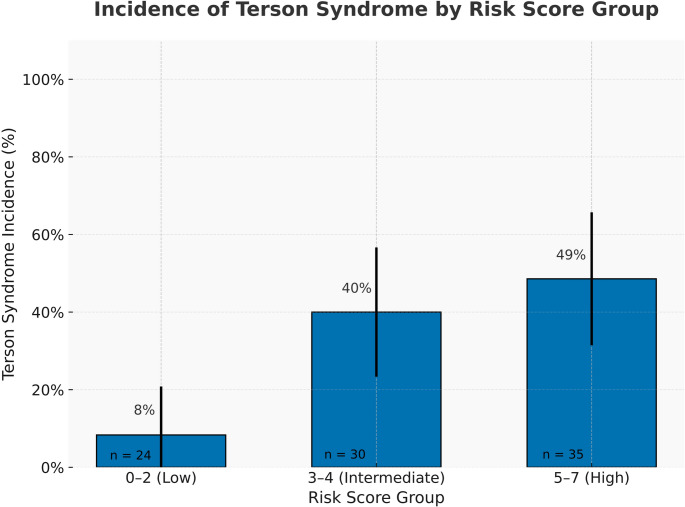 Figure 4
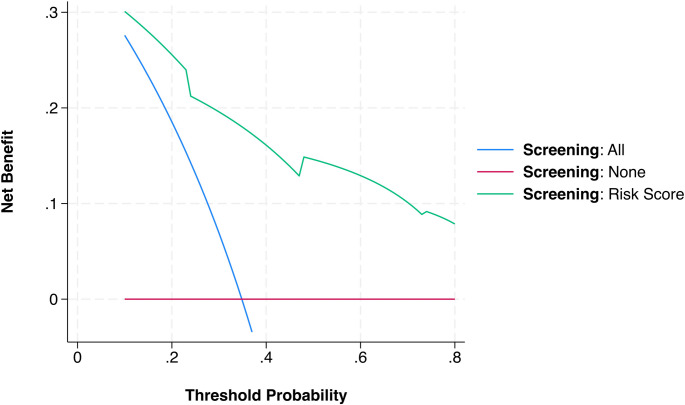 Figure 5
Peer Reviews
No public reviews on file for this paper yet. If you reviewed it on a platform where reviews are public (OpenReview, ICLR, NeurIPS, ICML), you can paste yours below so the community can read it here.
Videos
No videos yet. Explain this paper in a talk, walkthrough, or lecture? Add one.
Taxonomy
TopicsChild Abuse and Related Trauma · Connective tissue disorders research · Traumatic Ocular and Foreign Body Injuries