Particle background characterization and prediction for the NUCLEUS reactor CEνNS experiment
H. Abele, G. Angloher, B. Arnold, M. Atzori Corona, A. Bento, E. Bossio, F. Buchsteiner, J. Burkhart, F. Cappella, M. Cappelli, N. Casali, R. Cerulli, A. Cruciani, G. Del Castello, M. del Gallo Roccagiovine, S. Dorer, A. Erhart, M. Friedl, S. Fichtinger, V. M. Ghete, M. Giammei

TL;DR
The NUCLEUS experiment predicts and characterizes background particles to detect neutrino interactions at a nuclear power plant.
Contribution
A detailed prediction of sub-keV particle-induced backgrounds for CEνNS detection using Monte Carlo simulations.
Findings
The experiment predicts a residual background rate of ∼250 d−1 kg−1 keV−1 in CaWO4 detectors.
Cosmic ray-induced neutrons dominate the residual background.
The setup achieves a signal-to-background ratio of ≳1 in the CEνNS signal region.
Abstract
NUCLEUS is a cryogenic detection experiment which aims to measure Coherent Elastic Neutrino–Nucleus Scattering (CE\documentclass[12pt]{minimal} \usepackage{amsmath} \usepackage{wasysym} \usepackage{amsfonts} \usepackage{amssymb} \usepackage{amsbsy} \usepackage{mathrsfs} \usepackage{upgreek} \setlength{\oddsidemargin}{-69pt} \begin{document}\end{document}νNS) and to search for new physics at the Chooz nuclear power plant in France. This article reports on the prediction of particle-induced backgrounds, especially focusing on the sub-keV energy range, which is a poorly known region where most of the CE\documentclass[12pt]{minimal} \usepackage{amsmath} \usepackage{wasysym} \usepackage{amsfonts} \usepackage{amssymb} \usepackage{amsbsy} \usepackage{mathrsfs} \usepackage{upgreek}…
Genes, proteins, chemicals, diseases, species, mutations and cell lines named across the full text — each resolved to its canonical identifier and authoritative record.
Click any figure to enlarge with its caption.
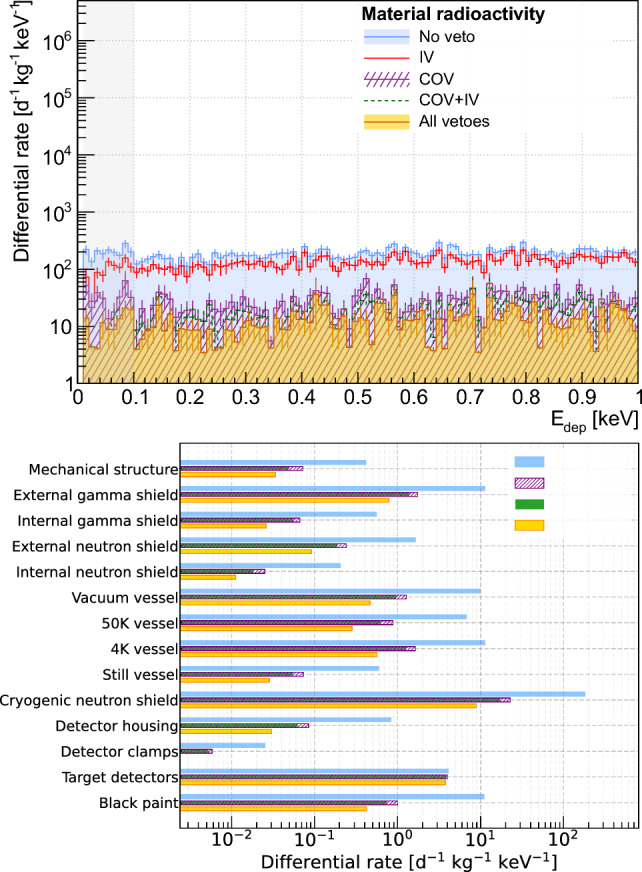 Figure 10
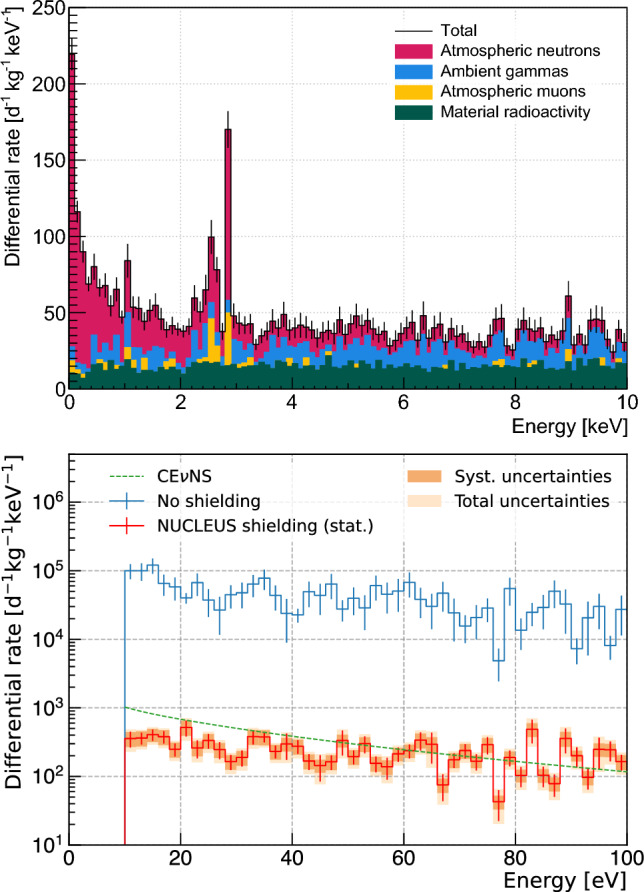 Figure 11
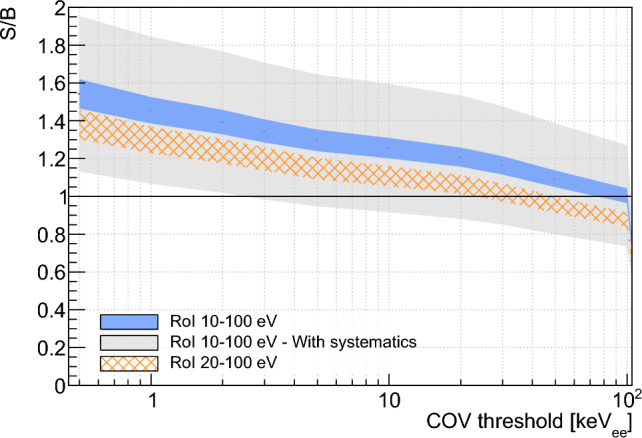 Figure 12
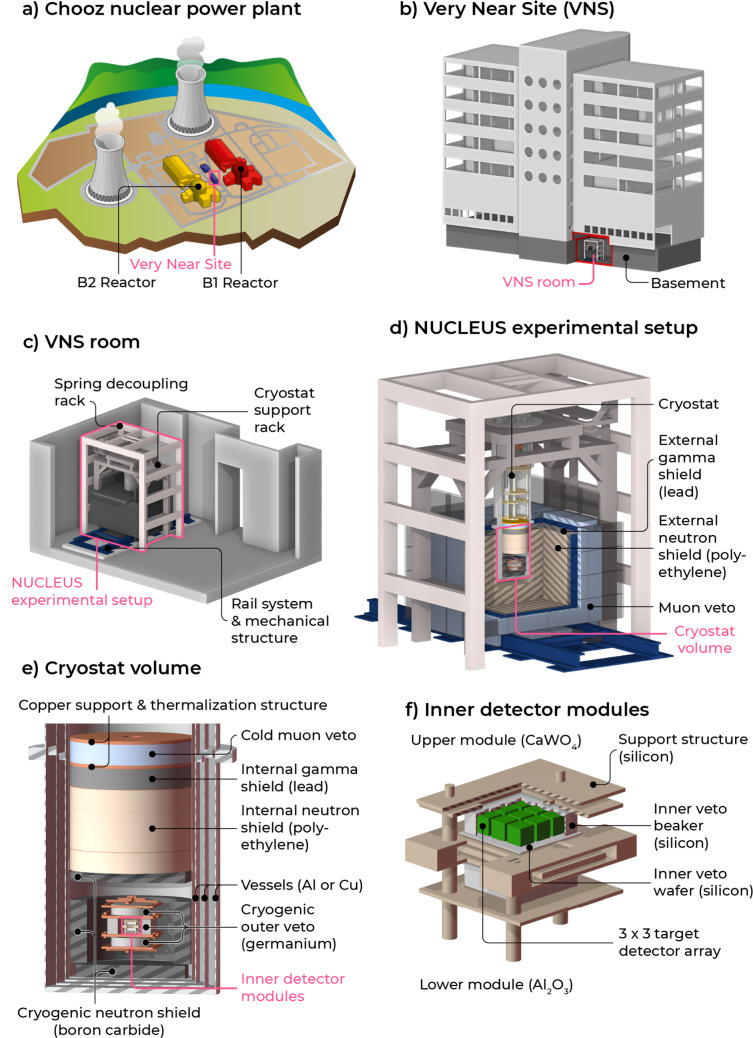 Figure 1
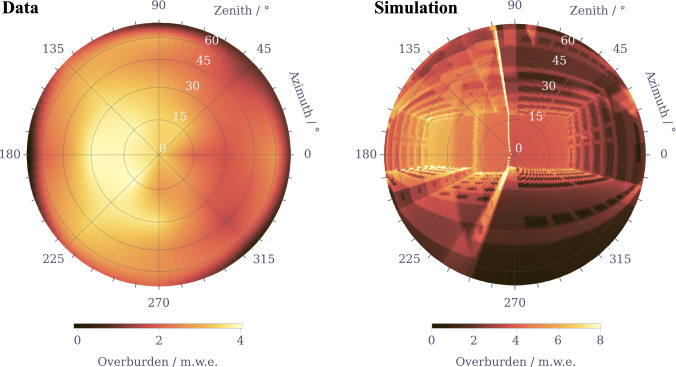 Figure 2
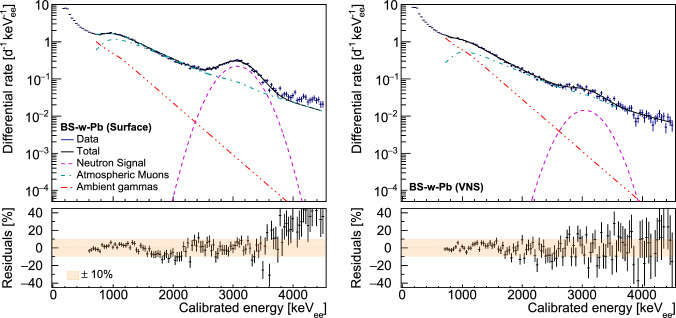 Figure 3
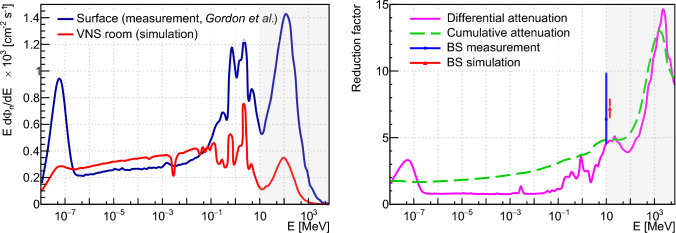 Figure 4
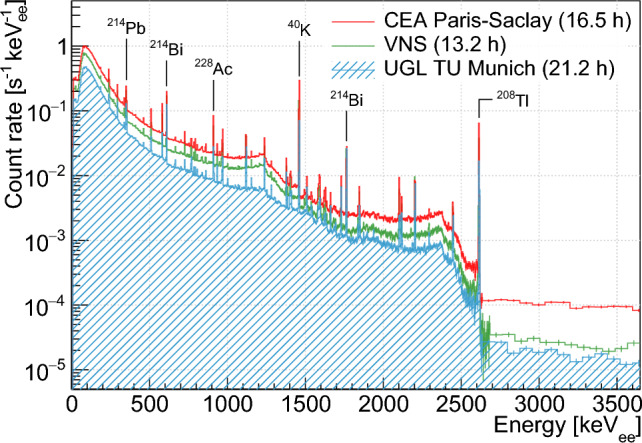 Figure 5
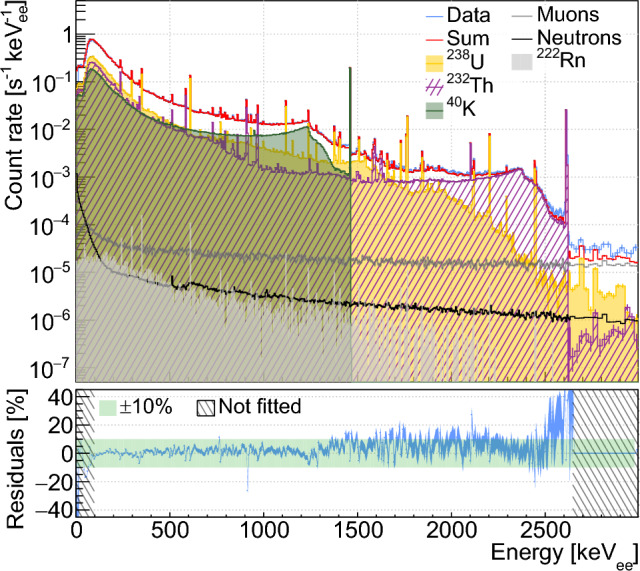 Figure 6
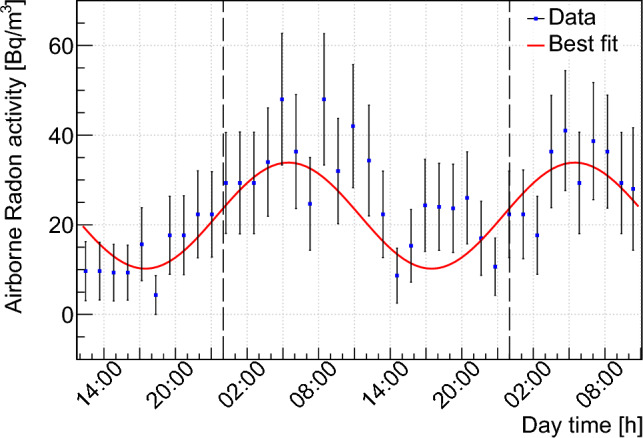 Figure 7
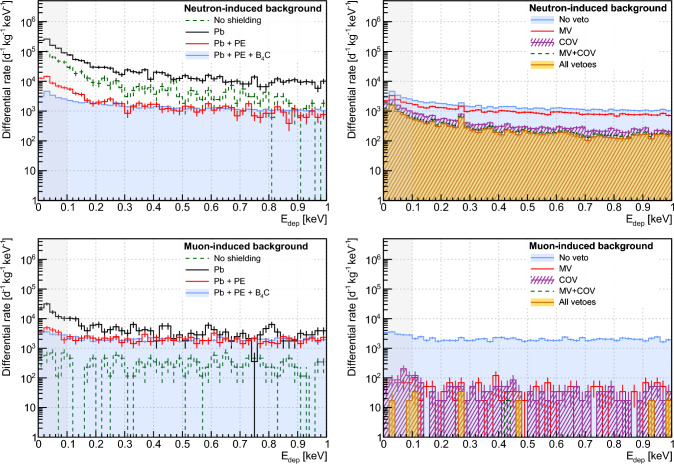 Figure 8
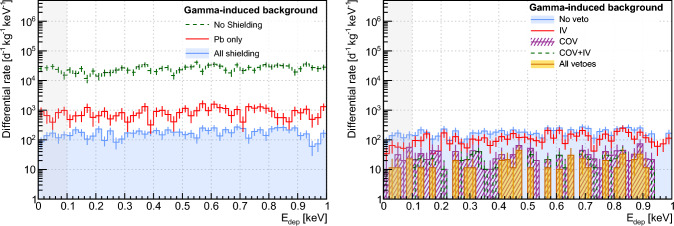 Figure 9
Peer Reviews
No public reviews on file for this paper yet. If you reviewed it on a platform where reviews are public (OpenReview, ICLR, NeurIPS, ICML), you can paste yours below so the community can read it here.
Videos
No videos yet. Explain this paper in a talk, walkthrough, or lecture? Add one.
Taxonomy
TopicsNeutrino Physics Research · Dark Matter and Cosmic Phenomena · Radiation Detection and Scintillator Technologies