Unraveling T-cell decoding strategy: a step forward
Philippe Robert, Pierre Bongrand

TL;DR
This paper explores how T-cells activate in response to antigens, revealing that receptor-antigen affinity is a key predictor of activation strength.
Contribution
The study introduces a new understanding of T-cell activation by linking it directly to antigen-receptor affinity rather than complex surface-bound interactions.
Findings
T-cell activation potency is strongly predicted by the affinity between soluble antigens and the OT-I T-cell receptor.
Previously assumed complex interactions between surface-bound antigens and receptors are not the main determinant of activation.
Abstract
Elucidation of the mechanisms by which T-cells discriminate between self and foreign antigens has been a major challenge in immunology. In this issue of The EMBO Journal, Huhn and colleagues (Huhn et al, 2025) show that the affinity between soluble antigens and the widely-studied OT-I T-cell receptor is a good predictor of T-cell activation potency, which was previously thought to be determined by complex properties of the interactions between surface-bound antigens and receptors. A new study in The EMBO Journal provides new insights into T-cell activation potency upon receptor-antigen interaction.
Genes, proteins, chemicals, diseases, species, mutations and cell lines named across the full text — each resolved to its canonical identifier and authoritative record.
Click any figure to enlarge with its caption.
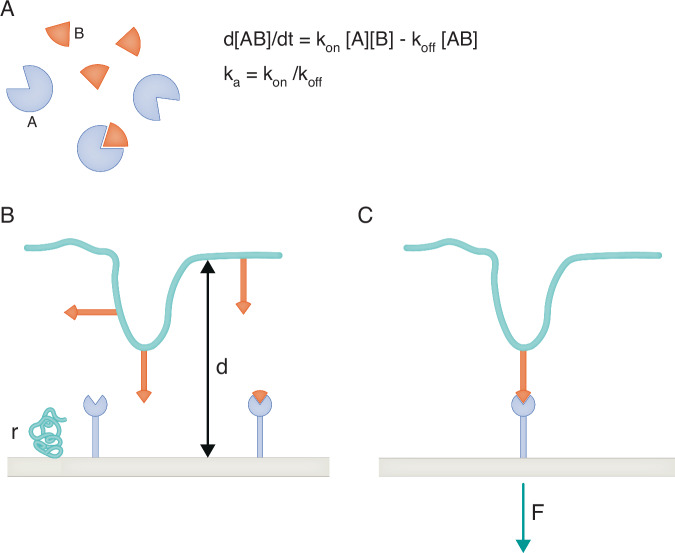 Figure 1
 Figure 2
Peer Reviews
No public reviews on file for this paper yet. If you reviewed it on a platform where reviews are public (OpenReview, ICLR, NeurIPS, ICML), you can paste yours below so the community can read it here.
Videos
No videos yet. Explain this paper in a talk, walkthrough, or lecture? Add one.
Taxonomy
TopicsCAR-T cell therapy research · Single-cell and spatial transcriptomics · T-cell and B-cell Immunology