Targeting Hypercalciuria in SLC34A1-Related Disorders: Impact of Oral Phosphate Therapy and Novel Genetic Insights in Pediatric Case Series
Ihsan Turan, Muge Atar, Mehmet Eltan, Ahmet Anik, Eda Celebi Bitkin, Semine Ozdemir Dilek, Mevra Cay, Sevcan Tuğ Bozdogan, Hakan Döneray, Damla Kotan, Serap Turan, Bilgin Yüksel, Ali Kemal Topaloglu

TL;DR
This study examines 11 patients with SLC34A1-related disorders and shows that oral phosphate therapy effectively reduces hypercalciuria and improves growth.
Contribution
The study expands the genetic and clinical understanding of SLC34A1-related disorders and confirms the efficacy of oral phosphate therapy.
Findings
Oral phosphate supplementation normalized urinary calcium in 10 out of 11 patients.
Mutations clustered in functional domains of the NaPi-IIa protein, suggesting key pathogenic regions.
Linear growth improved in all but one patient following treatment.
Abstract
Pathogenic variants in the SLC34A1 gene, which encodes the sodium-phosphate cotransporter NaPi-IIa, lead to a spectrum of renal tubular disorders, including infantile hypercalcemia type 2, nephrolithiasis/osteoporosis-hypophosphatemia type 2, and Fanconi renotubular syndrome type 2. Despite increasing recognition of SLC34A1-related disorders, data on genotype–phenotype correlations and treatment response remain limited due to the rarity of the condition. We retrospectively analyzed the clinical, biochemical, and molecular features of 11 patients from unrelated families carrying 12 pathogenic or likely pathogenic SLC34A1 variants, three of which were novel. Next-generation sequencing and ACMG-AMP criteria were used for variant classification. Biochemical parameters including serum phosphate, calcium, parathyroid hormone, urinary calcium, and TmP/GFR were evaluated. Treatment response to…
Genes, proteins, chemicals, diseases, species, mutations and cell lines named across the full text — each resolved to its canonical identifier and authoritative record.
Click any figure to enlarge with its caption.
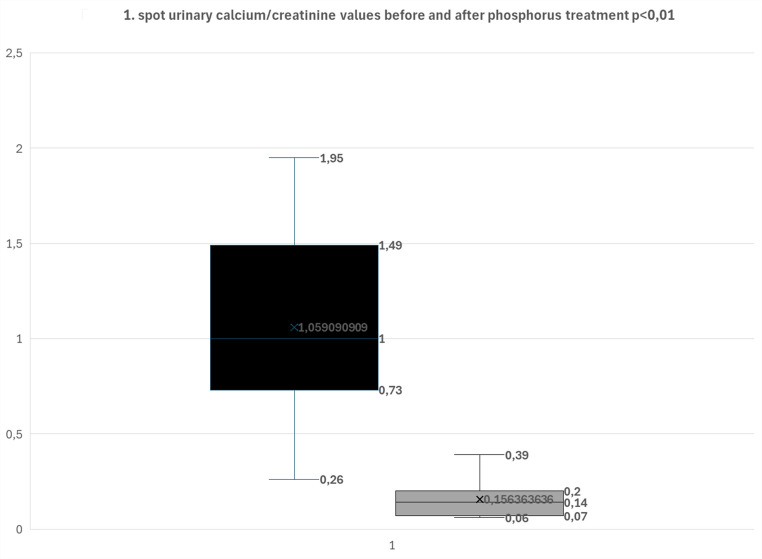 Figure 1
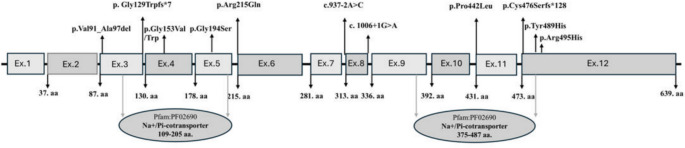 Figure 2
Peer Reviews
No public reviews on file for this paper yet. If you reviewed it on a platform where reviews are public (OpenReview, ICLR, NeurIPS, ICML), you can paste yours below so the community can read it here.
Videos
No videos yet. Explain this paper in a talk, walkthrough, or lecture? Add one.
Taxonomy
TopicsParathyroid Disorders and Treatments · Ion Transport and Channel Regulation · Biomedical Research and Pathophysiology