Current status of primary hyperoxaluria type 1 in Japan
Tomohide Ogawa, Keita Okamoto, Mao Yamamoto, Yuya Sato, Kei Ushijima, Daisuke Numahata, Hideki Takeshita, Hiromu Inai, Mizuki Onozawa, Jun Miyazaki, Tatsuya Takayama

TL;DR
This paper reviews the current status of PH1 in Japan, finding that younger diagnosis ages and improved survival rates suggest better outcomes with early intervention.
Contribution
The study provides updated insights into PH1 in Japan, highlighting recent trends in diagnosis age and survival rates.
Findings
The median ages at symptom onset and diagnosis of PH1 in Japan have significantly decreased over the past 20 years.
The overall survival rate for PH1 patients in Japan is 81% at 5, 10, and 20 years post-diagnosis.
Early diagnosis and intervention may improve outcomes for PH1 patients.
Abstract
Primary hyperoxaluria (PH) is a rare autosomal recessive disorder characterized by an abnormal increase in urinary oxalate excretion. Primary hyperoxaluria type 1 (PH1), the most common PH subtype, is caused by a deficiency of the liver-specific enzyme alanine:glyoxylate aminotransferase, which is localized to peroxisomes. In Japan, the status of PH1 has not been studied in two decades, and few longitudinal studies of PH1 patients have been conducted worldwide. This study aims to analyze the present situation regarding PH1 in Japan. We conducted a literature review of PH1 cases reported in Japan between 2003 and 2023. Twenty patients were diagnosed with PH1 during the study period, including 7 males, 12 females, and 1 patient with an unspecified sex. The median ages at symptom onset and diagnosis were 4.21 years (range: 0.17–47) and 5.5 years (range: 0.17–43), respectively. Ten patients…
Genes, proteins, chemicals, diseases, species, mutations and cell lines named across the full text — each resolved to its canonical identifier and authoritative record.
Click any figure to enlarge with its caption.
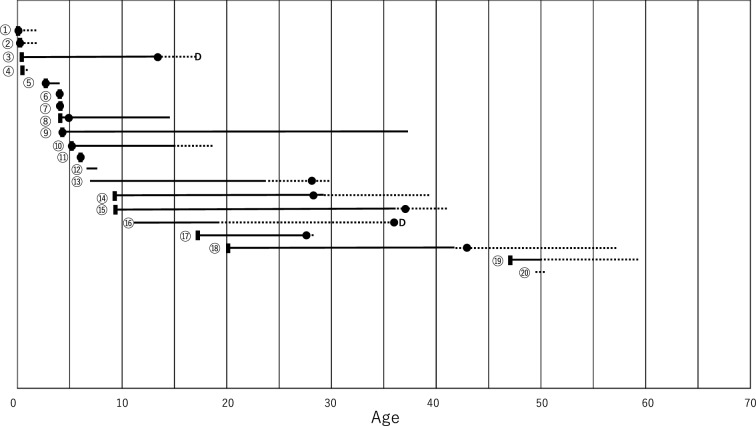 Figure 1
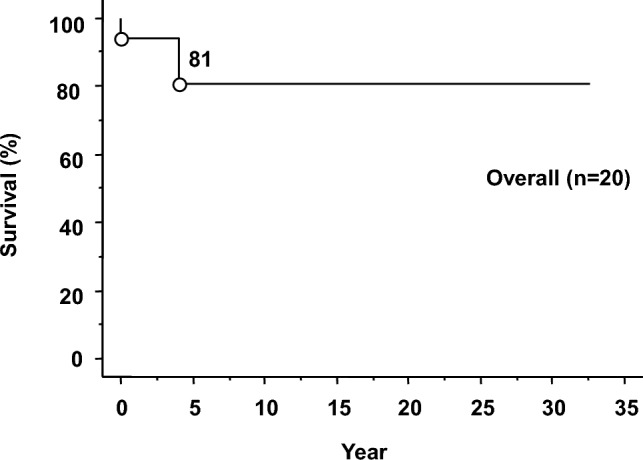 Figure 2
Peer Reviews
No public reviews on file for this paper yet. If you reviewed it on a platform where reviews are public (OpenReview, ICLR, NeurIPS, ICML), you can paste yours below so the community can read it here.
Videos
No videos yet. Explain this paper in a talk, walkthrough, or lecture? Add one.
Taxonomy
TopicsKidney Stones and Urolithiasis Treatments · Biomedical Research and Pathophysiology · Gout, Hyperuricemia, Uric Acid