Beyond depression symptoms: the default mode network as a predictor of antidepressant response
Kaizhong Zheng, Liangjun Chen, Huaning Wang, Li-Ping Cao, Li-Ping Cao, Guan-Mao Chen, Jian-Shan Chen, Tao Chen, Tao-Lin Chen, Yu-Qi Cheng, Zhao-Song Chu, Shi-Xian Cui, Xi-Long Cui, Zhao-Yu Deng, Qi-Yong Gong, Wen-Bin Guo, Can-Can He, Zheng-Jia-Yi Hu, Qian Huang, Xin-Lei Ji

TL;DR
This study shows that brain connectivity in the default mode network can predict how well antidepressants work for people with depression.
Contribution
The study validates the default mode network's connectivity as a potential biomarker for antidepressant treatment response in major depressive disorder.
Findings
Recurrent MDD patients showed reduced connectivity from mPFC to PCC compared to healthy controls and first-episode patients.
Reduced connectivity from mPFC to PCC predicted antidepressant treatment response and was linked to medication use and illness duration.
SVM classifiers using this connectivity achieved high accuracy in predicting therapeutic outcomes.
Abstract
Antidepressant efficacy for major depressive disorder (MDD) remains limited, with the neural mechanisms underlying treatment response poorly understood. The default mode network (DMN), particularly the connectivity between the medial prefrontal cortex (mPFC) and posterior cingulate cortex (PCC), has been implicated in MDD pathophysiology and may be linked to treatment outcomes. However, its potential as a biomarker for antidepressant response has not been validated. Here, we investigate the relationship between DMN connectivity and antidepressant treatment response in MDD. Resting-state fMRI data from four large MDD cohorts (n = 4271) were analyzed using Granger causality to examine directional effective connectivity (EC) within the DMN. Linear mixed-effects models compared EC between recurrent MDD patients, first-episode drug-naïve patients, and healthy controls. We also examined…
Genes, proteins, chemicals, diseases, species, mutations and cell lines named across the full text — each resolved to its canonical identifier and authoritative record.
Click any figure to enlarge with its caption.
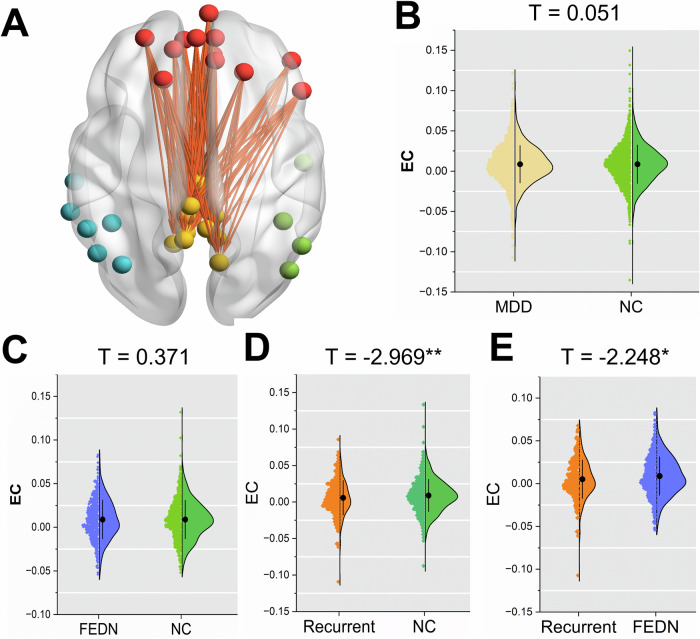 Figure 1
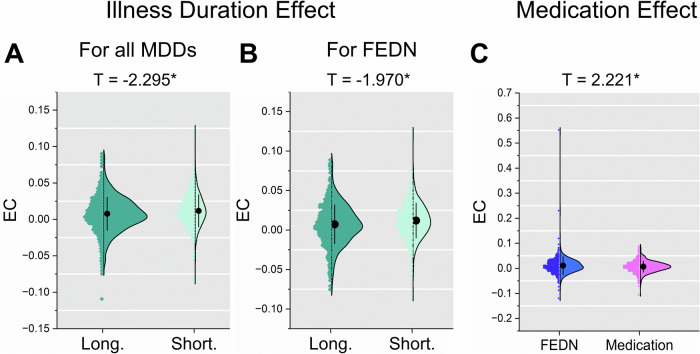 Figure 2
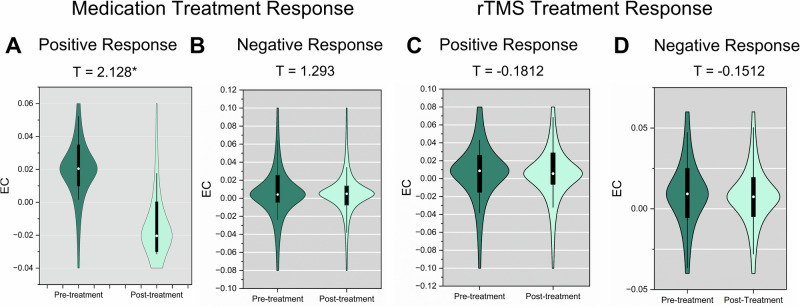 Figure 3
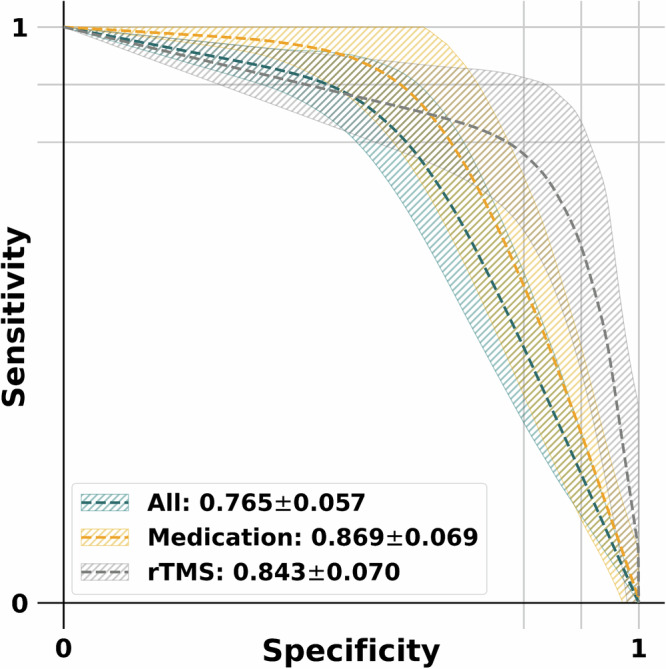 Figure 4
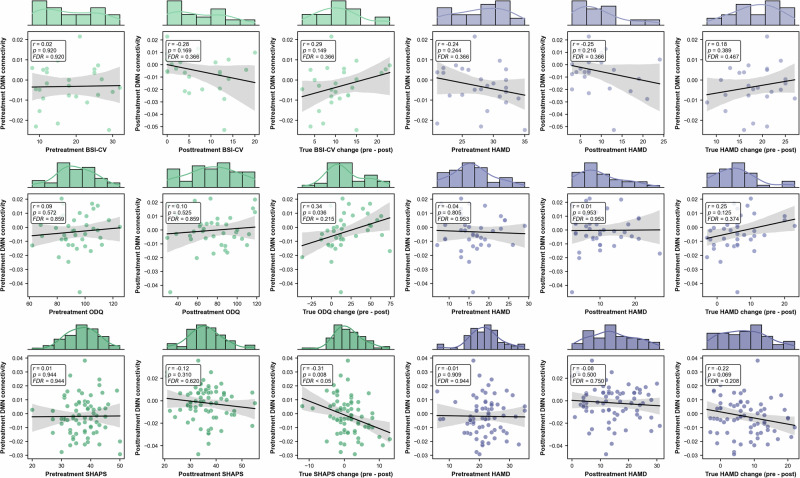 Figure 5
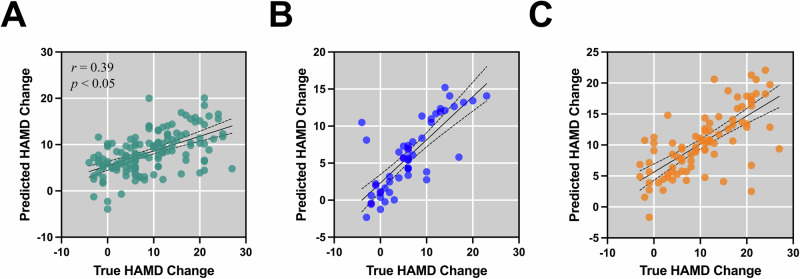 Figure 6
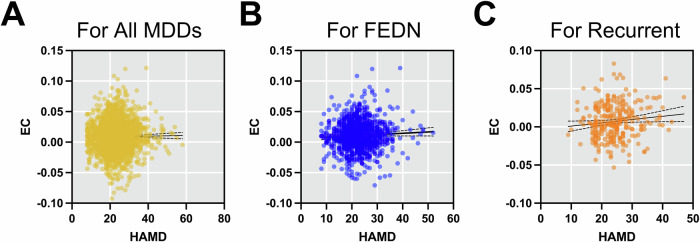 Figure 7
Peer Reviews
No public reviews on file for this paper yet. If you reviewed it on a platform where reviews are public (OpenReview, ICLR, NeurIPS, ICML), you can paste yours below so the community can read it here.
Videos
No videos yet. Explain this paper in a talk, walkthrough, or lecture? Add one.
Taxonomy
TopicsFunctional Brain Connectivity Studies · Mental Health Research Topics · Treatment of Major Depression