KRAS ‐G12C: The neglected biomarker to detect patients with MUTYH ‐associated polyposis
Ana Beatriz Deleame Medeiros, Gabriel Oliveira dos Santos, José Claudio Casali‐da‐Rocha, Samuel Aguiar Junior, Virgilio Souza e Silva, Gustavo Nóriz Berardinelli, Augusto Perazzolo Antoniazzi, Rui Manuel Reis, Dirce Maria Carraro, Giovana Tardin Torrezan

TL;DR
KRAS-G12C mutations are linked to MUTYH-associated polyposis, a rare colorectal cancer syndrome, suggesting they can help identify patients needing genetic testing.
Contribution
KRAS-G12C mutations are proposed as a biomarker for identifying MUTYH-associated polyposis patients.
Findings
11.4% of KRAS-G12C CRC patients carried at least one MUTYH germline pathogenic variant.
MAP patients had earlier cancer onset, more polyps, and fewer metastases compared to non-carriers.
11 out of 15 MAP cases were previously undiagnosed, highlighting the potential of KRAS-G12C as a screening tool.
Abstract
MUTYH‐associated polyposis (MAP) is an underdiagnosed recessive syndrome that predisposes individuals to colorectal cancer (CRC) and exhibits phenotypic variability. Biallelic MUTYH inactivation leads to a somatic mutational signature with frequent KRAS‐G12C mutations; however, despite being proposed as a marker for MAP, germline MUTYH testing in these patients remains limited. We assessed the utility of screening germline pathogenic variants (GPVs) in MUTYH among CRC cases with KRAS‐G12C. A cohort of 220 KRAS‐G12C CRC patients from two Brazilian oncology centers underwent targeted amplicon sequencing for the most prevalent MUTYH GPVs in Brazil. Comprehensive MUTYH sequencing was subsequently performed for monoallelic carriers. Overall, 25 (11.4%) patients carried at least one MUTYH GPV; among these, 15 (6.8%) were biallelic and classified as MAP and 10 (4.5%) were monoallelic. The MAP…
Genes, proteins, chemicals, diseases, species, mutations and cell lines named across the full text — each resolved to its canonical identifier and authoritative record.
Click any figure to enlarge with its caption.
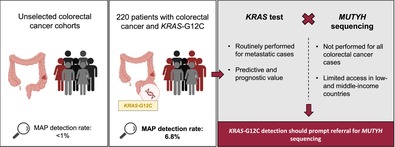 Figure 1
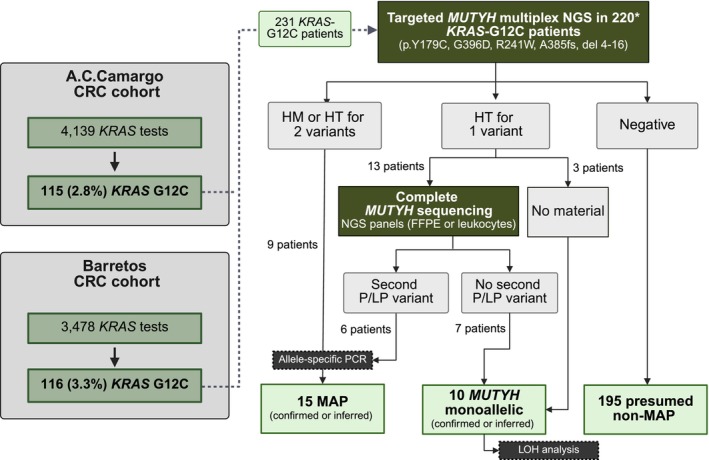 Figure 2
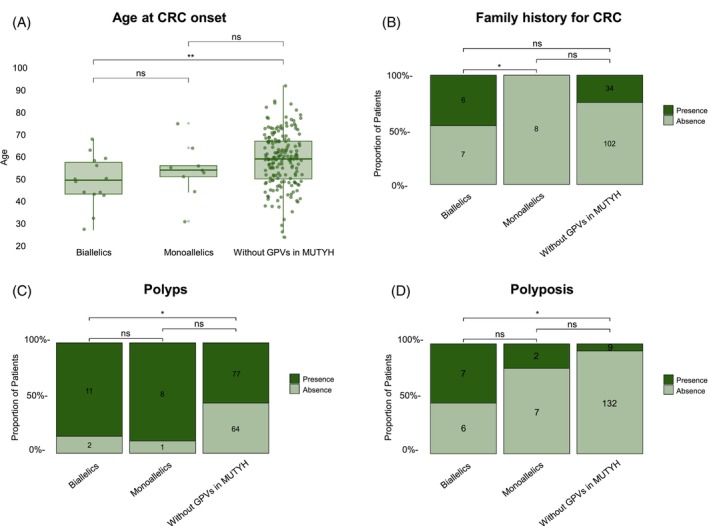 Figure 3
Peer Reviews
No public reviews on file for this paper yet. If you reviewed it on a platform where reviews are public (OpenReview, ICLR, NeurIPS, ICML), you can paste yours below so the community can read it here.
Videos
No videos yet. Explain this paper in a talk, walkthrough, or lecture? Add one.
Taxonomy
TopicsGenetic factors in colorectal cancer · Colorectal Cancer Screening and Detection · Colorectal Cancer Treatments and Studies