Doppel as an early‐stage biomarker promoting EMT and dissemination in ovarian cancers
Zulfikar Azam, Xiaojun Zhang, Riajul Wahab, Md Mahedi Hasan, Shivaniben Dhadhal, Bowon Kang, Md Mynul Hassan, Mazharul Karim, Jeong Uk Choi, Muhit Rana, Jian‐Ying Zhang, Sourav Roy, Youngro Byun, In‐San Kim, Jae Yun Song, Eugene P. Toy, Sireesha Y. Reddy, Farzana Alam

TL;DR
Doppel, a protein normally found in male testes, is a promising early biomarker for ovarian cancer that helps detect cancer and promote its spread.
Contribution
Doppel is shown to be a specific and sensitive biomarker for early-stage ovarian cancer and is linked to cancer progression through epithelial-mesenchymal transition.
Findings
Doppel levels in serum and ascites can detect ovarian cancer with high sensitivity and specificity.
Doppel induces epithelial–mesenchymal transition and correlates with circulating tumor cell dissemination.
Doppel is expressed in most epithelial ovarian cancer subtypes but not in clear cell OC.
Abstract
Detecting ovarian cancer (OC) early using existing biomarkers, for example, cancer antigen 125 (CA125), is challenging due to its ubiquitous expression in many tissues. Doppel, a prion‐like protein, expresses in the male reproductive organ but is absent in female reproductive systems and healthy tissues, but plays an important role in neo‐angiogenesis. Here, we have shown two platforms, soluble Doppel in sera/ascites and Doppel expressed in circulating tumor cells (Dpl+CTC) in the whole blood, to detect subsets of epithelial OC (EOC). Increased levels of Doppel in the sera of OC patients, in three different cohorts, confirm Doppel as an OC‐specific biomarker. Serum Doppel levels can distinguish OC with high sensitivity and specificity (sensitivity = 0.91 and specificity = 0.89) and can also detect early‐stage HGSOCs (FIGO stages I and II) from non‐cancerous conditions with high…
Genes, proteins, chemicals, diseases, species, mutations and cell lines named across the full text — each resolved to its canonical identifier and authoritative record.
Click any figure to enlarge with its caption.
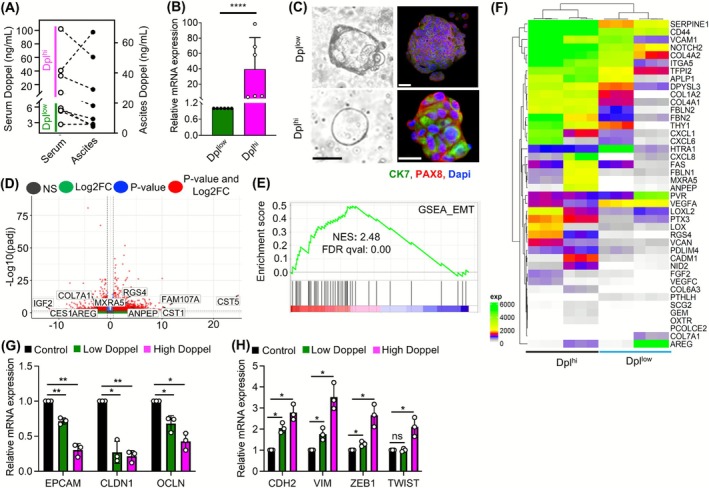 Figure 1
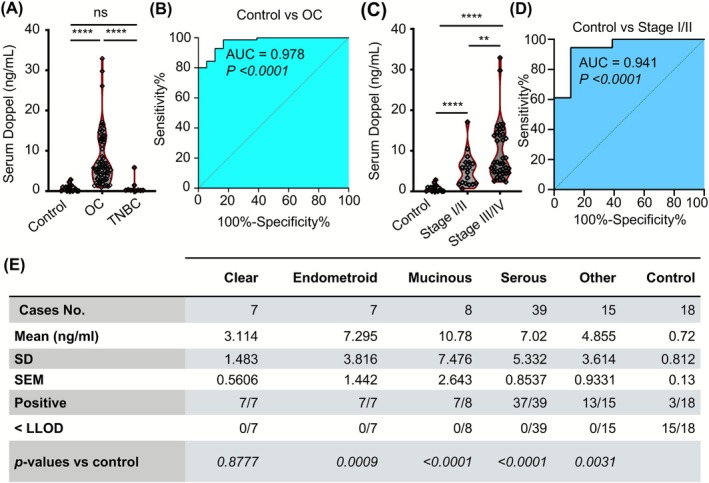 Figure 2
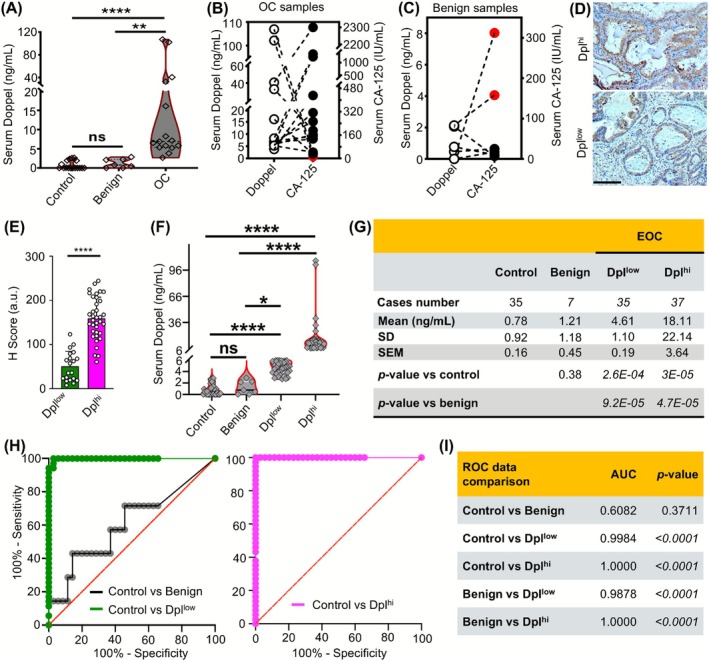 Figure 3
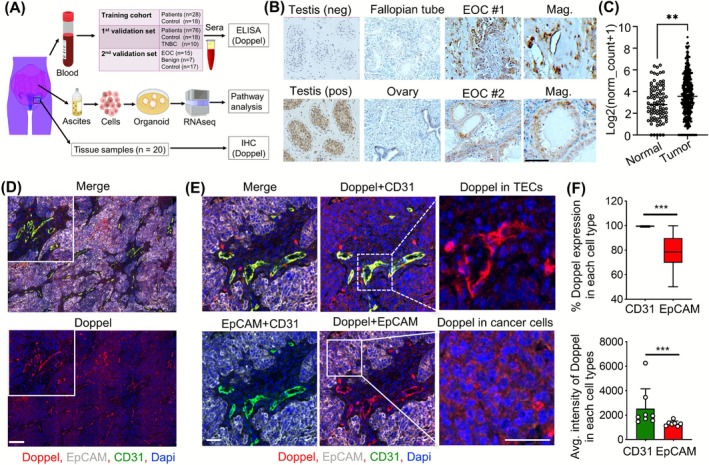 Figure 4
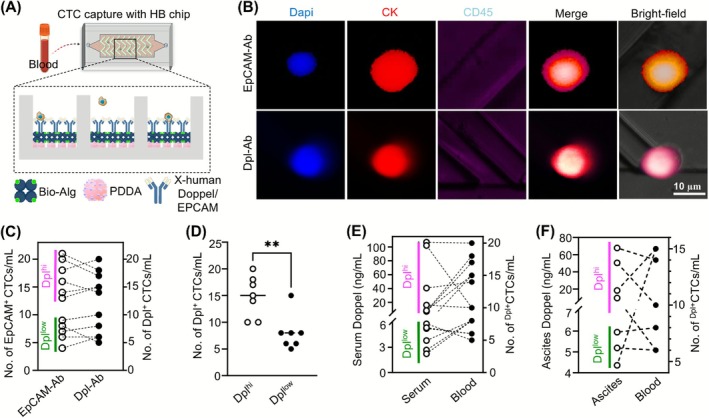 Figure 5
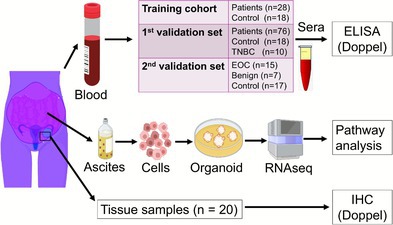 Figure 6
Peer Reviews
No public reviews on file for this paper yet. If you reviewed it on a platform where reviews are public (OpenReview, ICLR, NeurIPS, ICML), you can paste yours below so the community can read it here.
Videos
No videos yet. Explain this paper in a talk, walkthrough, or lecture? Add one.
Taxonomy
TopicsPrion Diseases and Protein Misfolding · Mast cells and histamine · Animal Genetics and Reproduction