Optimizing colonoscopy‐based colorectal cancer screening by low‐barrier, low‐threshold pretesting
Thomas Heisser, Rafael Cardoso, Tobias Niedermaier, Michael Hoffmeister, Hermann Brenner

TL;DR
A new approach to colorectal cancer screening uses a low-threshold fecal test to better target colonoscopies, potentially reducing cancer cases and deaths more effectively than traditional methods.
Contribution
The study introduces and evaluates a 'gateopener' screening strategy using low-threshold fecal tests to optimize colonoscopy-based colorectal cancer screening.
Findings
Gateopener screening with low hemoglobin cut-offs (3–6 μg/g) significantly reduces colorectal cancer incidence and mortality compared to conventional methods.
Lower cut-offs (3 μg/g) prevent up to 72% more cases and more than double the number of prevented deaths compared to conventional colonoscopy.
Gateopener screening outperforms biennial FIT in preventing cancer cases and deaths, with higher gains at lower cut-offs.
Abstract
‘Gateopener’ colonoscopy‐based screening is an innovative concept to better target colonoscopy to those who are most likely to benefit from it. It combines invitations to screening colonoscopy with the offer of pretesting with a single ‘gateopener’ fecal immunochemical test (FIT) which is applied with a lower positivity threshold than in conventional FIT‐based screening. We explored optimized use of this approach for reducing CRC incidence and mortality. Using COSIMO, a previously validated simulation tool, we compared outcomes of gateopener screening to those of conventional FIT‐ or colonoscopy‐based screening strategies. Gateopener screening was modelled using SENTiFIT‐FOB Gold as exemplary ‘gateopener’ FIT at various low hemoglobin cut‐offs (10, 8, 6, 4, and 3 μg/g feces). We found that Gateopener screening at cut‐offs of 6, 4, or 3 μg/g outperformed conventional screening…
Genes, proteins, chemicals, diseases, species, mutations and cell lines named across the full text — each resolved to its canonical identifier and authoritative record.
Click any figure to enlarge with its caption.
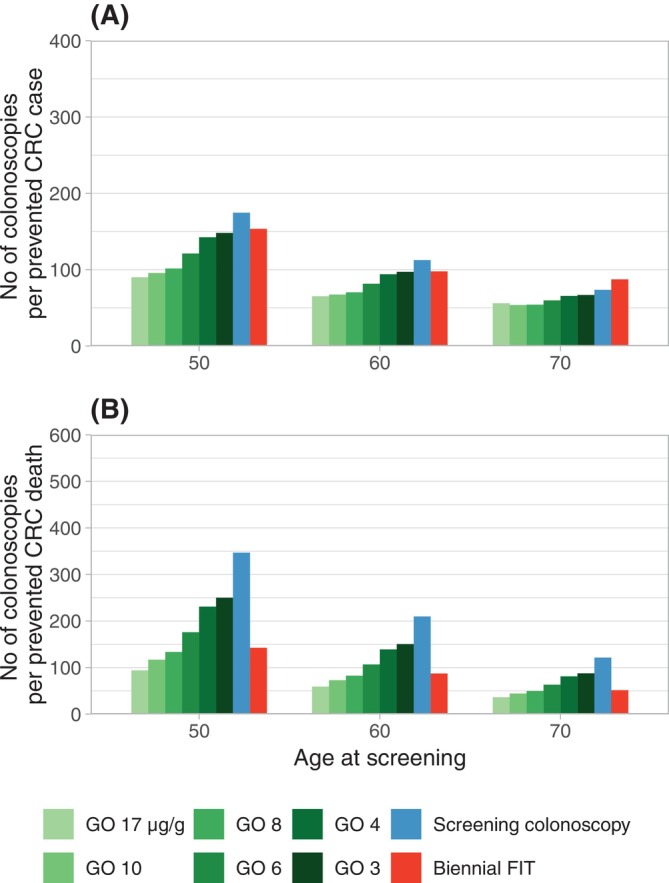 Figure 1
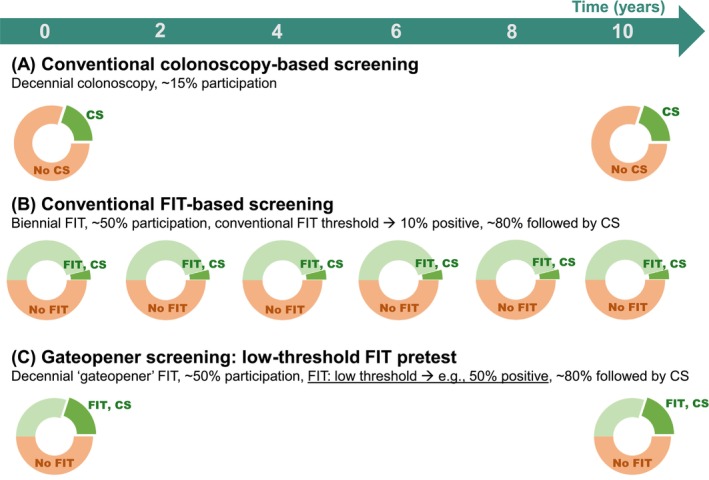 Figure 2
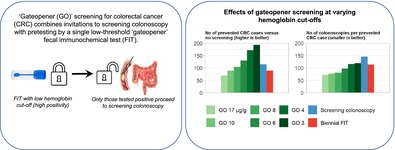 Figure 3
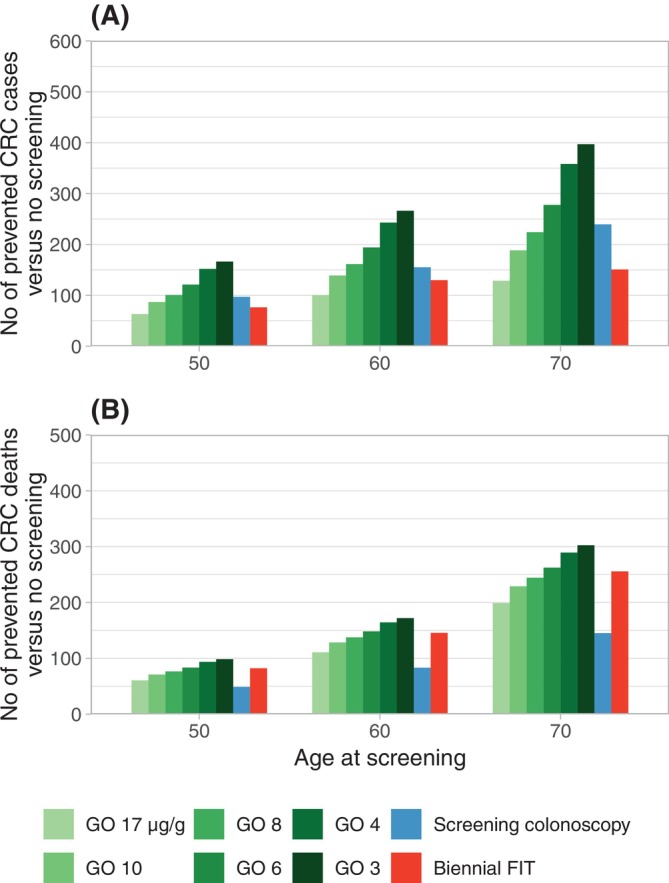 Figure 4
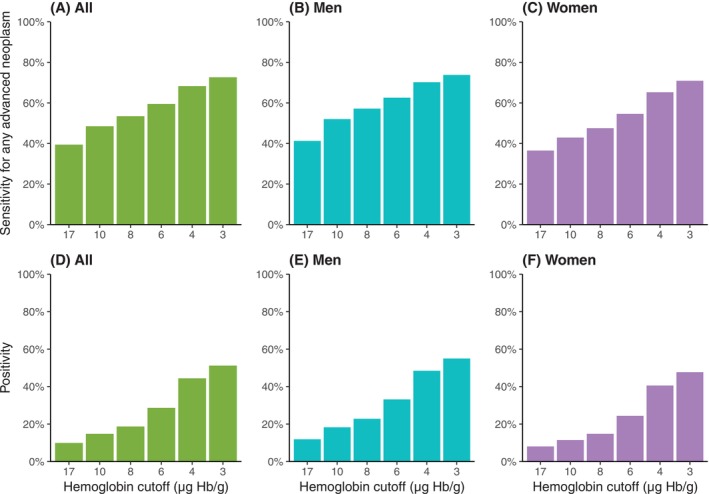 Figure 5
Peer Reviews
No public reviews on file for this paper yet. If you reviewed it on a platform where reviews are public (OpenReview, ICLR, NeurIPS, ICML), you can paste yours below so the community can read it here.
Videos
No videos yet. Explain this paper in a talk, walkthrough, or lecture? Add one.
Taxonomy
TopicsColorectal Cancer Screening and Detection · Gastric Cancer Management and Outcomes · Helicobacter pylori-related gastroenterology studies