QTc interval prolongation in ICU patients: risk assessment and predictors
Muhammad Arsalan Sharif Awan, Bhavna Singla, Areeba Hasan, Mohamed Omer W. Abdalla, Rabia Altaf, Shivam Singla, Samia Afaq, Mian Waqar Mustafa, Fahad Asim

TL;DR
This study found that one-third of ICU patients in Pakistan had prolonged QTc intervals, which were linked to sepsis, kidney issues, and certain medications, increasing the risk of complications and death.
Contribution
This is the first multicenter study in Pakistan to investigate QTc prolongation in ICU patients and identify its predictors.
Findings
QTc prolongation occurred in 32% of ICU patients, with higher rates of sepsis and kidney injury in affected individuals.
Prolonged QTc was associated with longer ICU stays and significantly higher mortality rates.
Septic shock, renal dysfunction, and haloperidol use were identified as independent predictors of QTc prolongation.
Abstract
Prolonged corrected QTcs are a frequent and potentially life-threatening finding In ICU patients, the presence of prolonged QTc is a prevalent and potentially life-threatening condition, as it increases the risk of TdP and sudden cardiac death. Risk factors include sepsis, electrolyte imbalances, and QTc-prolonging drugs. However, data from South Asian ICUs remain limited. We conducted a 12-month prospective observational study in two tertiary care ICUs in Lahore and Karachi, enrolling 812 adult patients without pre-existing QTc abnormalities. QTc was calculated using Bazett’s formula, with prolongation defined as QTc ≥ 450ms (men) or QTc ≥ 470 ms (women). Clinical, biochemical, and pharmacologic data were collected. Multivariate logistic regression identified independent predictors of ICU-acquired QTc prolongation. QTc prolongation occurred in 260 (32.0%) patients. These individuals…
Genes, proteins, chemicals, diseases, species, mutations and cell lines named across the full text — each resolved to its canonical identifier and authoritative record.
Click any figure to enlarge with its caption.
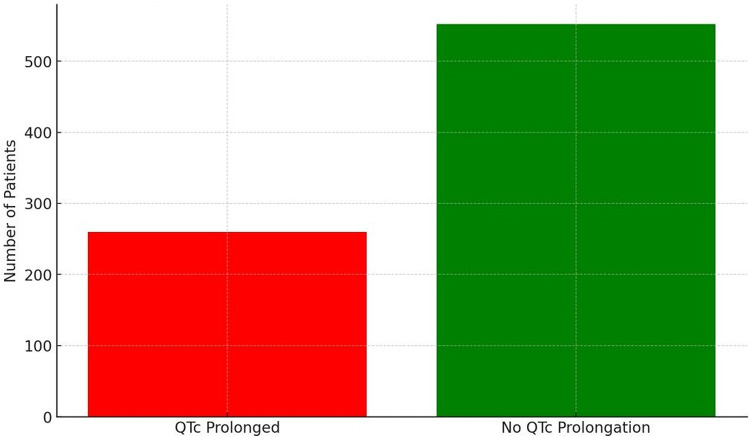 Figure 1
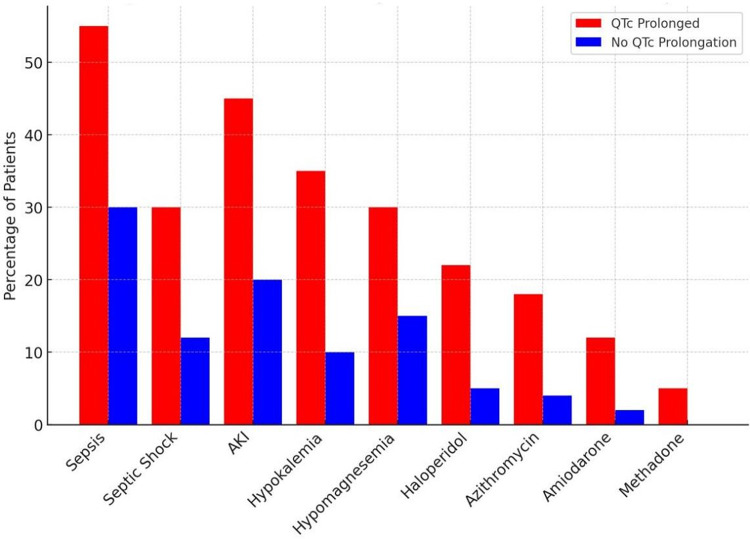 Figure 2
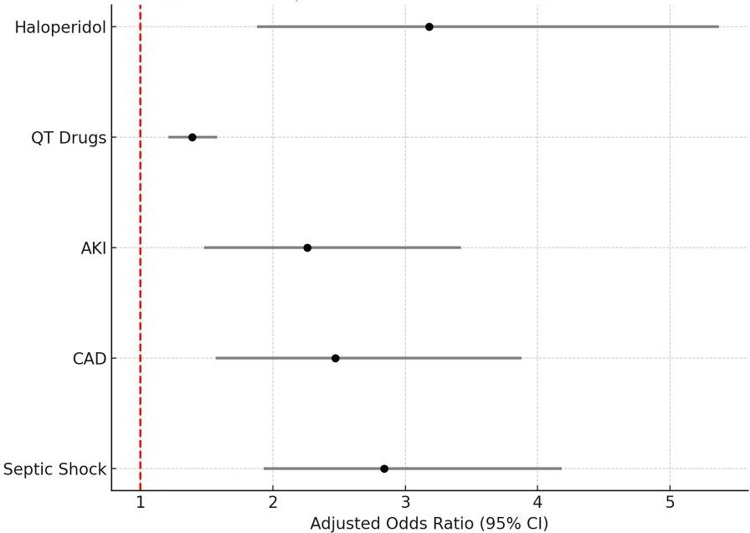 Figure 3
Peer Reviews
No public reviews on file for this paper yet. If you reviewed it on a platform where reviews are public (OpenReview, ICLR, NeurIPS, ICML), you can paste yours below so the community can read it here.
Videos
No videos yet. Explain this paper in a talk, walkthrough, or lecture? Add one.
Taxonomy
TopicsCardiac electrophysiology and arrhythmias · Takotsubo Cardiomyopathy and Associated Phenomena · Atrial Fibrillation Management and Outcomes