Self-induced superradiant masing
Wenzel Kersten, Nikolaus de Zordo, Oliver Diekmann, Elena S. Redchenko, Andrew N. Kanagin, Andreas Angerer, William J. Munro, Kae Nemoto, Igor E. Mazets, Stefan Rotter, Thomas Pohl, Jörg Schmiedmayer

TL;DR
This paper shows that direct spin interactions in diamond can drive superradiant masing, leading to pulsed and continuous microwave emissions.
Contribution
The study demonstrates that dipole–dipole interactions, not light-mediated ones, can drive superradiance in a spin-cavity system.
Findings
A train of emission pulses followed by quasi-continuous masing was observed after an initial superradiant burst.
Spectral hole refilling redistributes spin inversion into the cavity-resonant superradiant window.
Microscopic simulations confirm that dipole–dipole interactions drive the observed superradiant behavior.
Abstract
In cavity quantum electrodynamics and particularly superradiance, emitters are typically assumed to be independent, interacting only through light shared via a common mode. Although such photon-mediated interactions lead to a wide range of collective optical effects, direct dipole–dipole interactions within the emitter ensemble are generally viewed as a source of decoherence. Here we report the role of direct spin–spin interactions as a drive for the superradiant dynamics of a hybrid system of nitrogen-vacancy centre spins in a diamond coupled to a superconducting microwave cavity. After an initial fast superradiant burst, we observe a train of subsequent emission pulses followed by quasi-continuous masing for up to one millisecond. We show that this behaviour arises from spectral hole refilling, where spin inversion is redistributed into the superradiant window of spins resonant with…
Genes, proteins, chemicals, diseases, species, mutations and cell lines named across the full text — each resolved to its canonical identifier and authoritative record.
Click any figure to enlarge with its caption.
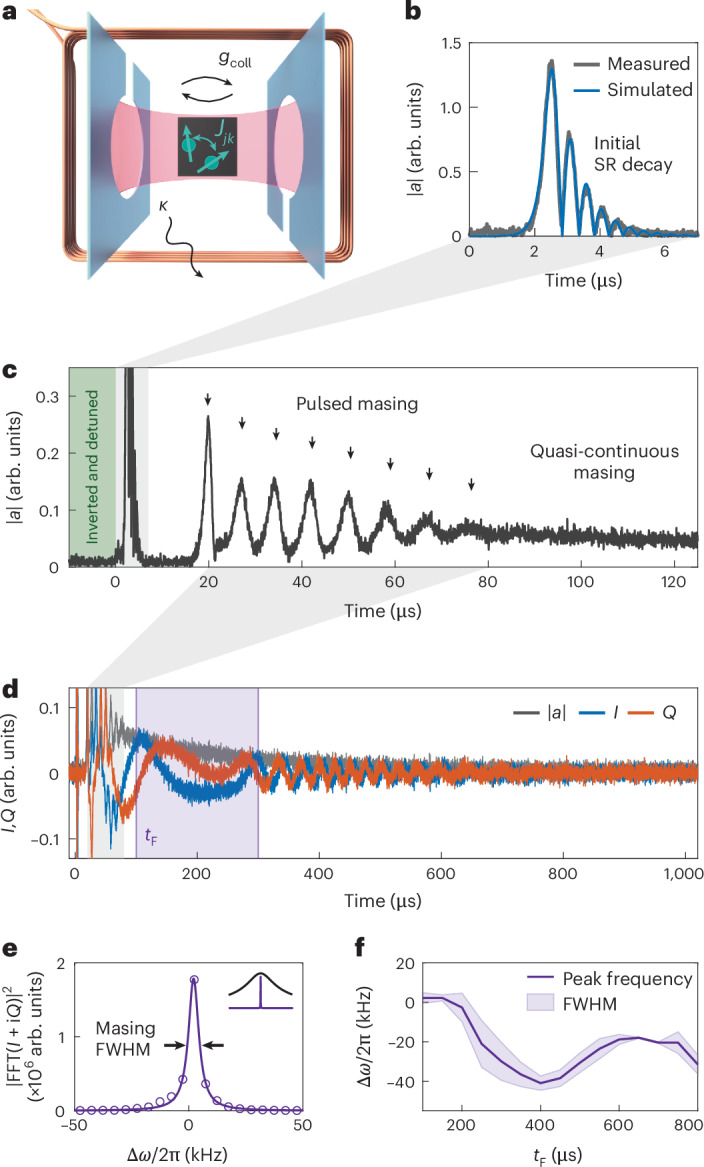 Figure 1
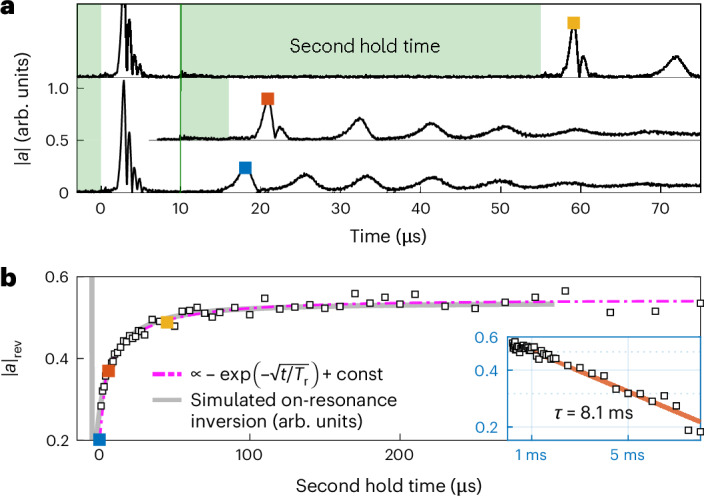 Figure 2
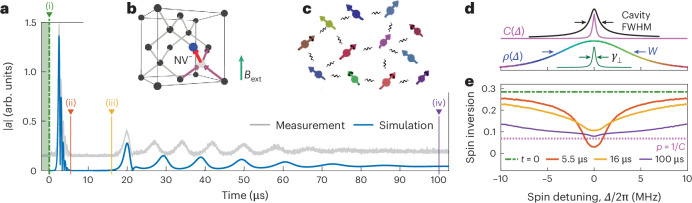 Figure 3
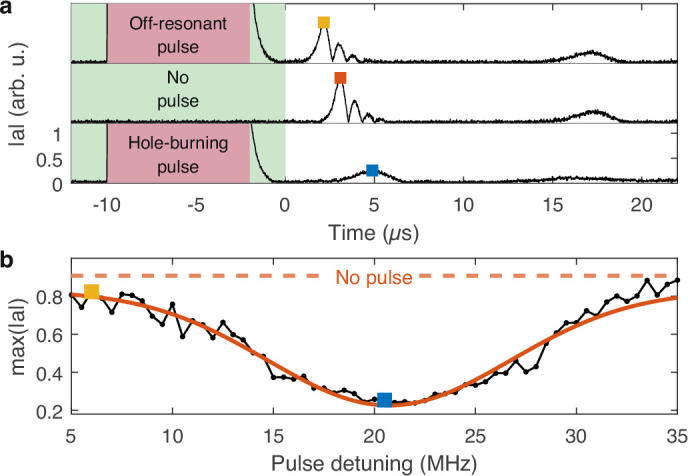 Figure 4
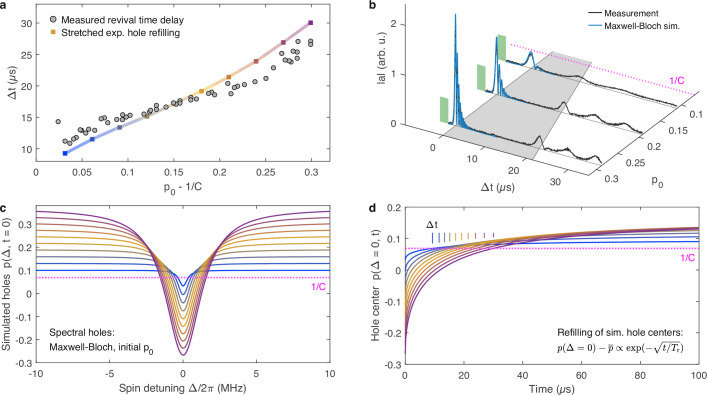 Figure 5
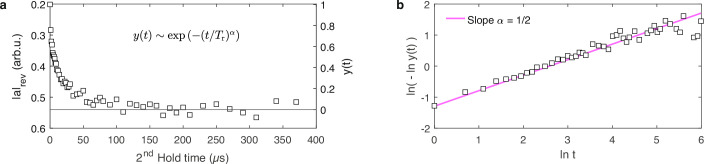 Figure 6
 Figure 7
Peer Reviews
No public reviews on file for this paper yet. If you reviewed it on a platform where reviews are public (OpenReview, ICLR, NeurIPS, ICML), you can paste yours below so the community can read it here.
Videos
No videos yet. Explain this paper in a talk, walkthrough, or lecture? Add one.
Taxonomy
TopicsMast cells and histamine · Breast Lesions and Carcinomas