Atkinsonella hypoxylon virus capsid structure highlights the diversity of capsid proteins among the Partitiviridae
Micol Venturi, Matthew Calthorpe-Byrne, Beate Aftret, Donna McNeale, Bernd H.A. Rehm, Frank Sainsbury

TL;DR
This paper reveals the unique structure of a virus that infects fungi, showing how its protein shell evolved and diversified.
Contribution
The study reveals a conserved helical core and a unique protrusion domain in the capsid protein of Atkinsonella hypoxylon virus, highlighting structural diversity in partitiviruses.
Findings
AhV capsid has a conserved helical core shared across partitiviruses.
The protrusion domain in AhV has unique hydrophobic interactions at the dimerization interface.
Structural analysis suggests the protrusion domain enables capsid protein diversification in partitiviruses.
Abstract
Atkinsonella hypoxylon virus (AhV) is a fungi-infecting betapartitivirus and the typical member of the Partitiviridae, a family of persistent viruses that infect a broad range of organisms. Partitiviruses have been largely overlooked following their designation as cryptic viruses. However, evidence is accumulating that they play an important role in the ecology of their hosts. Since the capsid proteins of partitiviruses have been implicated in virus–host interactions, exploring their structural biology may give clues into the evolution, horizontal transmission and host adaptation of partitiviruses. The capsid of AhV shares the same organization of other partitiviruses with 60 dimeric capsid protein protomers arranged with T=1 icosahedral symmetry. The structure, determined by cryo-electron microscopy to 2.4 Å, shows that AhV has a unique iteration on the protrusion domain with an…
Genes, proteins, chemicals, diseases, species, mutations and cell lines named across the full text — each resolved to its canonical identifier and authoritative record.
Click any figure to enlarge with its caption.
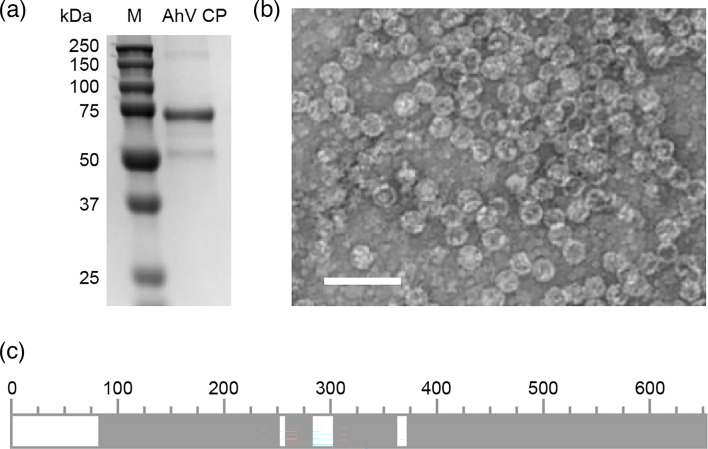 Figure 1
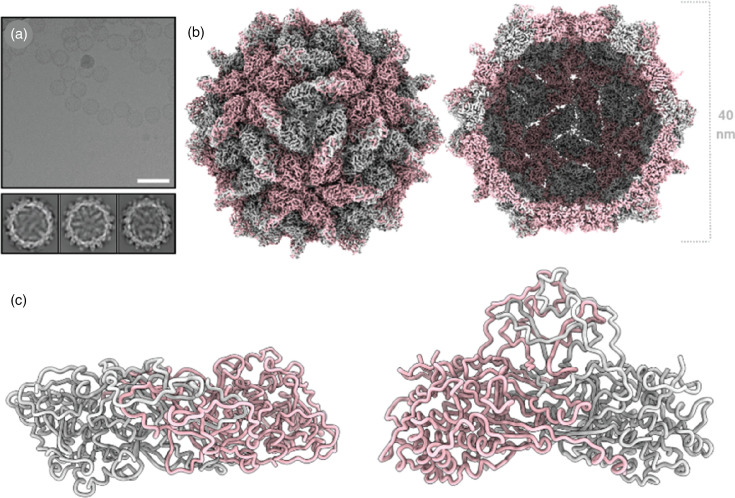 Figure 2
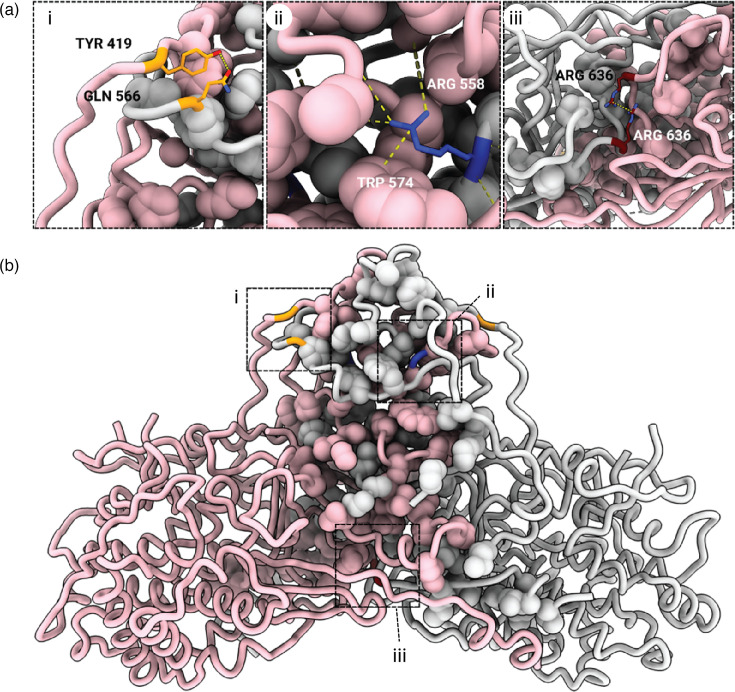 Figure 3
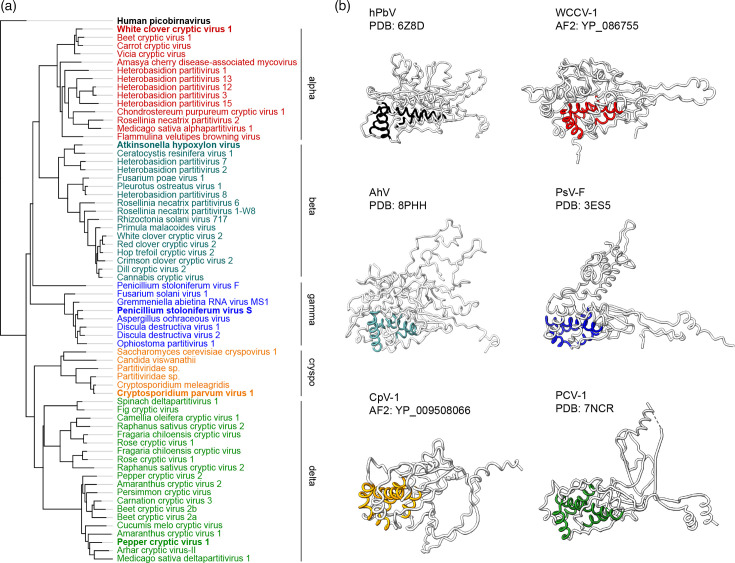 Figure 4
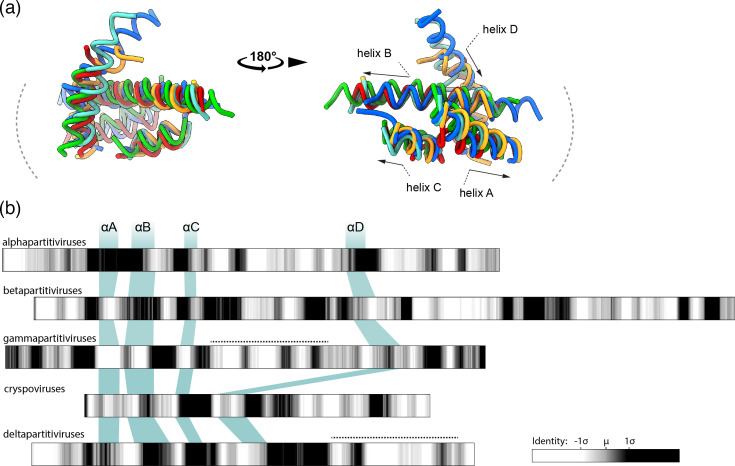 Figure 5
Peer Reviews
No public reviews on file for this paper yet. If you reviewed it on a platform where reviews are public (OpenReview, ICLR, NeurIPS, ICML), you can paste yours below so the community can read it here.
Videos
No videos yet. Explain this paper in a talk, walkthrough, or lecture? Add one.
Taxonomy
TopicsPlant and Fungal Interactions Research · Bacteriophages and microbial interactions · Plant Virus Research Studies