Rothia similimucilaginosa sp. nov., isolated from the human nasal cavity
Mercedes Pérez Pérez, Jacobey King, Paul A. Lawson, Reed M. Stubbendieck

TL;DR
Scientists discovered a new bacterial species, Rothia similimucilaginosa, from nasal samples of children in Wisconsin.
Contribution
The paper introduces a new species in the Rothia genus, distinct from R. mucilaginosa based on genomic and biochemical data.
Findings
The new species shares high 16S rRNA similarity but falls below species demarcation thresholds for ANI and DDH.
RSM42T can use fructose-6-phosphate as a carbon source, a unique trait among Rothia species.
Distinct enzyme activity and fatty acid profiles further differentiate R. similimucilaginosa from R. mucilaginosa.
Abstract
Four strains of a Gram-stain-positive, coccoid, catalase-positive, non-motile bacterium were recovered from nasal lavage samples collected from children in Wisconsin during the Spring of 2008. These strains, designated RSM42T, RSM292, RSM386 and RSM407, were subjected to a comprehensive biochemical and polyphasic taxonomic investigation. Despite the novel bacterium sharing 99.6% 16S rRNA gene sequence identity with Rothia mucilaginosa 5762/67T, BLAST+ average nucleotide identity, MUMmer3 average nucleotide identity and digital DNA–DNA hybridization values of 91.3%, 91.9% and 43.1%, respectively, were below the cut-off values routinely used for species demarcation. Consistent with these findings, phylogenetic and pangenomic comparisons indicated that RSM42T, RSM292, RSM386 and RSM407 form a separate lineage within the genus Rothia. Strain RSM42T is further distinguished from R.…
Genes, proteins, chemicals, diseases, species, mutations and cell lines named across the full text — each resolved to its canonical identifier and authoritative record.
Click any figure to enlarge with its caption.
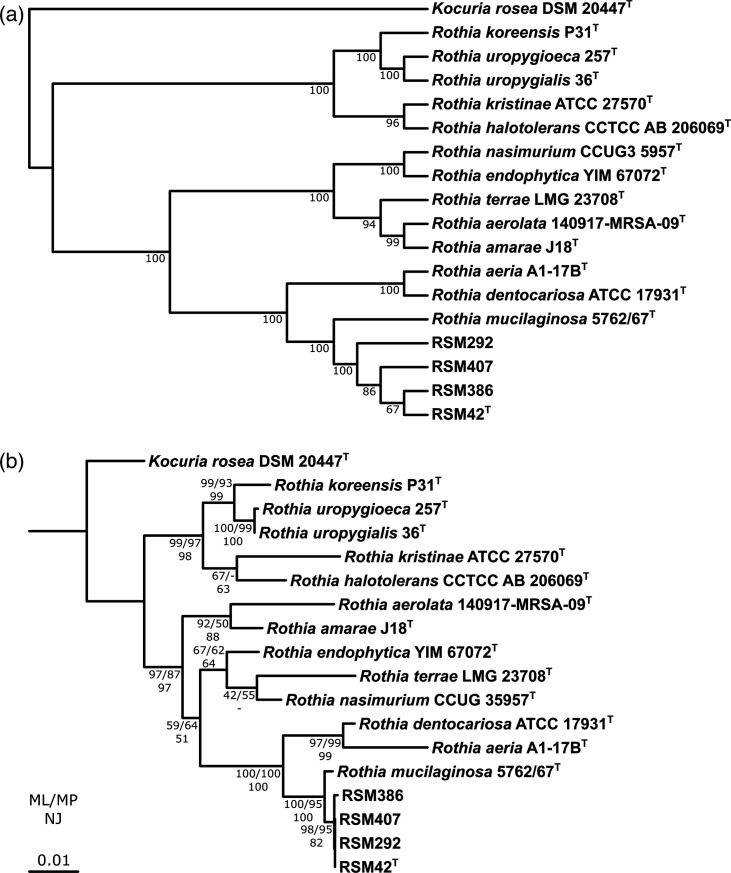 Figure 1
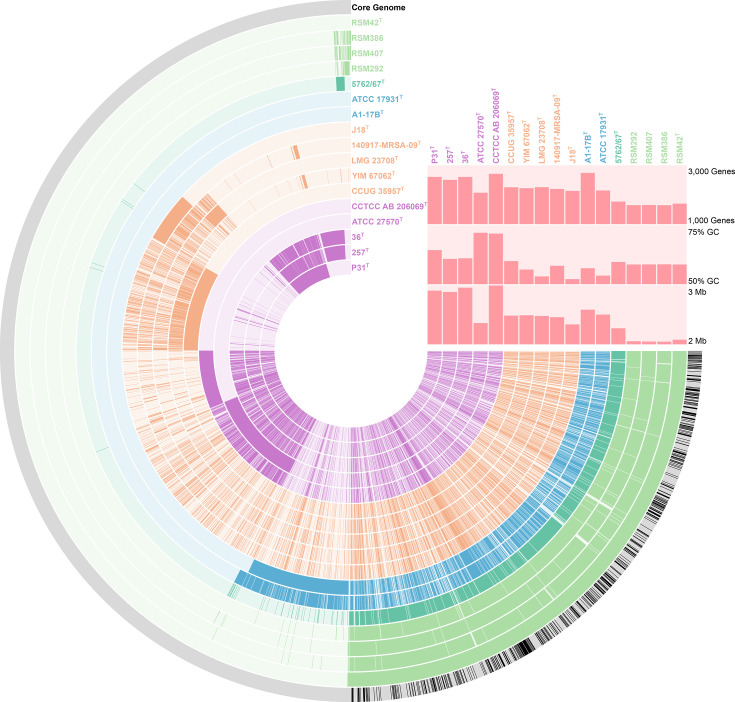 Figure 2
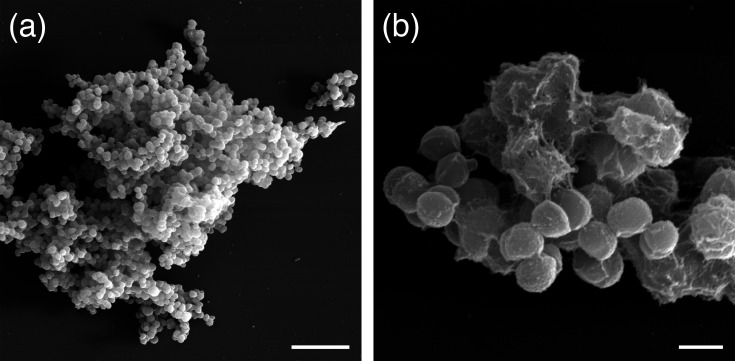 Figure 3
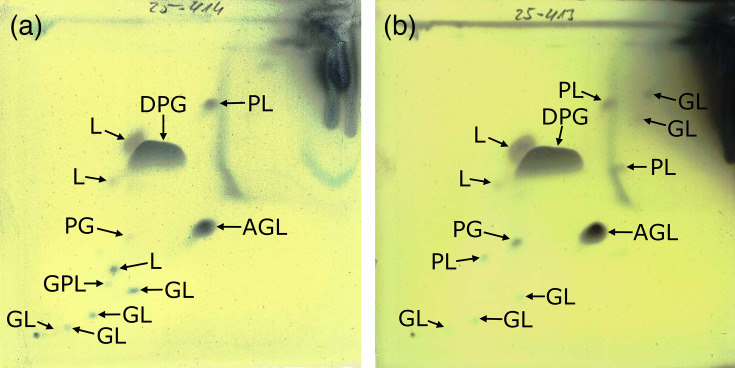 Figure 4
Peer Reviews
No public reviews on file for this paper yet. If you reviewed it on a platform where reviews are public (OpenReview, ICLR, NeurIPS, ICML), you can paste yours below so the community can read it here.
Videos
No videos yet. Explain this paper in a talk, walkthrough, or lecture? Add one.
Taxonomy
TopicsDiphtheria, Corynebacterium, and Tetanus · Genomics and Phylogenetic Studies · Enterobacteriaceae and Cronobacter Research