Integrated Proteomic and Metabolomic Profiling for Developing Novel Plasma‐Based Diagnostic Models of Sarcopenia
Dongqin Xu, Haoran Jin, Jinlin Yang, Zhiliang Zuo, Rui Ou, Fengjuan Hu, Lu Pu, Yuxing Dong, Meng Wu, Birong Dong, Hao Jiang

TL;DR
Researchers developed blood-based diagnostic models for sarcopenia by combining protein and metabolite profiles, achieving high accuracy for potential clinical use.
Contribution
A novel plasma-based diagnostic model for sarcopenia using integrated proteomic and metabolomic data, showing superior performance over single-omics approaches.
Findings
A combined model using top biomarkers from proteomic and metabolomic data achieved high AUCs (0.951 in discovery and 0.911 in validation).
The four-biomarker model (Combined Model 2) showed sensitivity of 86.7% and specificity of 80.0% in validation.
Proteomic and metabolomic signatures were identified as significant contributors to sarcopenia diagnosis.
Abstract
Sarcopenia is a progressive, age‐related condition characterized by a decline in skeletal muscle mass, strength and performance. Diagnosis remains challenging because current consensus criteria are difficult to scale and existing biomarkers lack accuracy. This study aimed to develop high‐performance plasma‐based diagnostic models for sarcopenia by integrating proteomic and metabolomic profiles. Participants were selected from the West China Health and Aging Trend study. Sarcopenia was defined according to the 2019 Asian Working Group for Sarcopenia (AWGS) criteria. Two independent 1:1 age‐ and sex‐matched cohorts were constructed: a discovery cohort (40 sarcopenic, 40 non‐sarcopenic) and a validation cohort (30 sarcopenic, 30 non‐sarcopenic). Fasting plasma samples were profiled using the Olink Explore 384 Inflammation Panel and liquid chromatography–mass spectrometry‐based untargeted…
Genes, proteins, chemicals, diseases, species, mutations and cell lines named across the full text — each resolved to its canonical identifier and authoritative record.
Click any figure to enlarge with its caption.
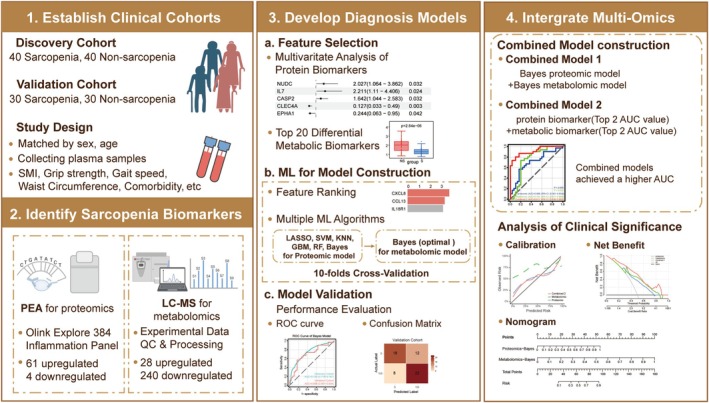 Figure 1
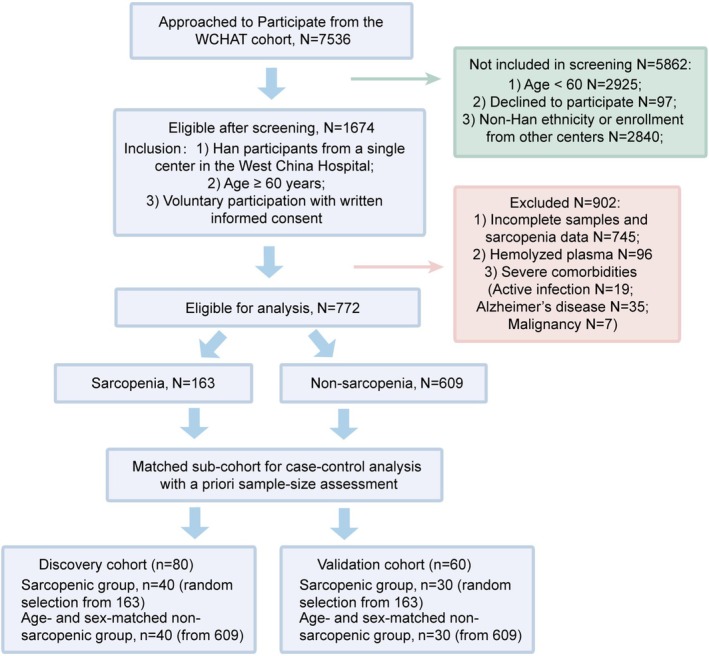 Figure 2
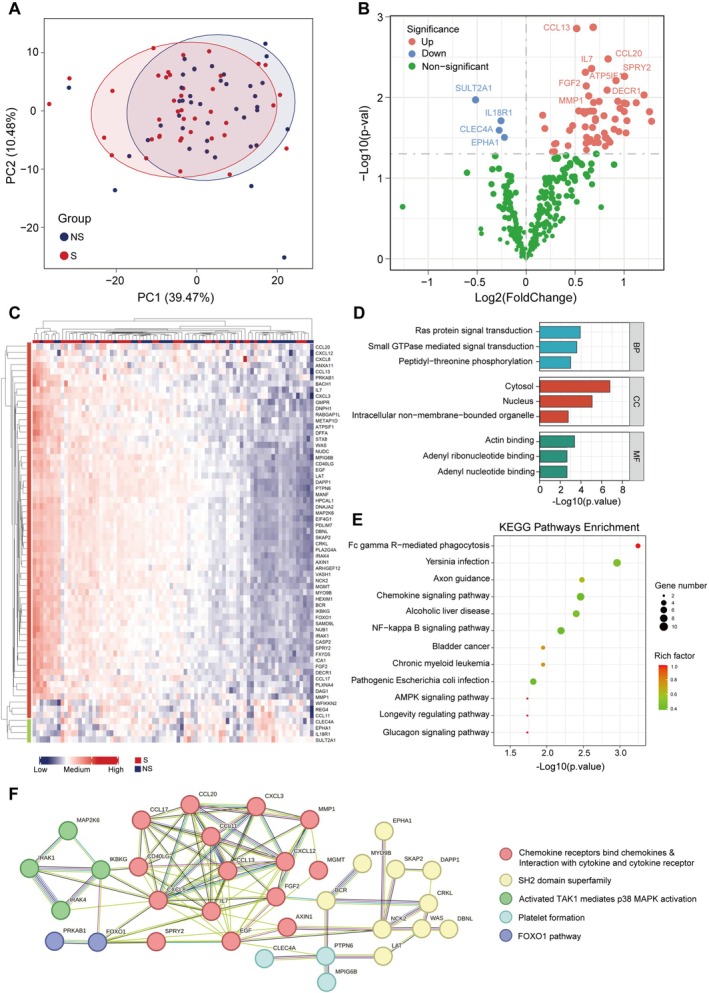 Figure 3
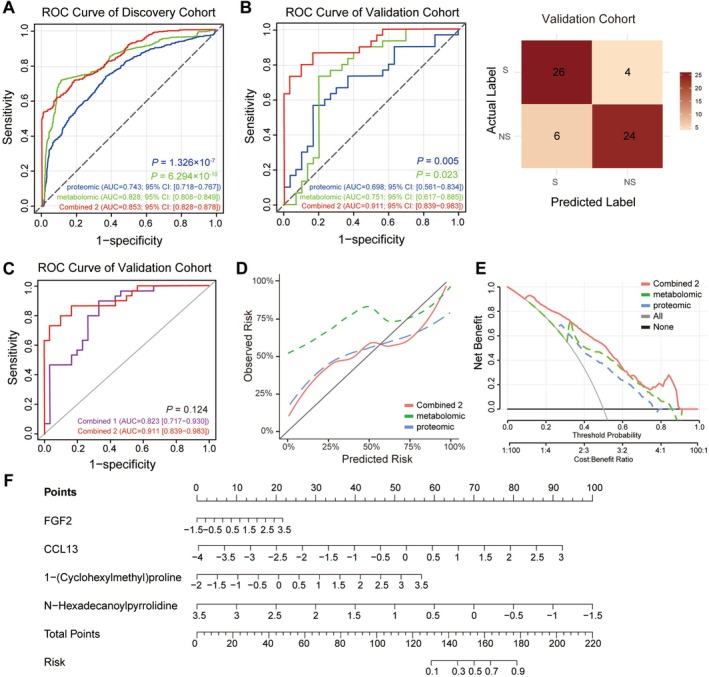 Figure 4
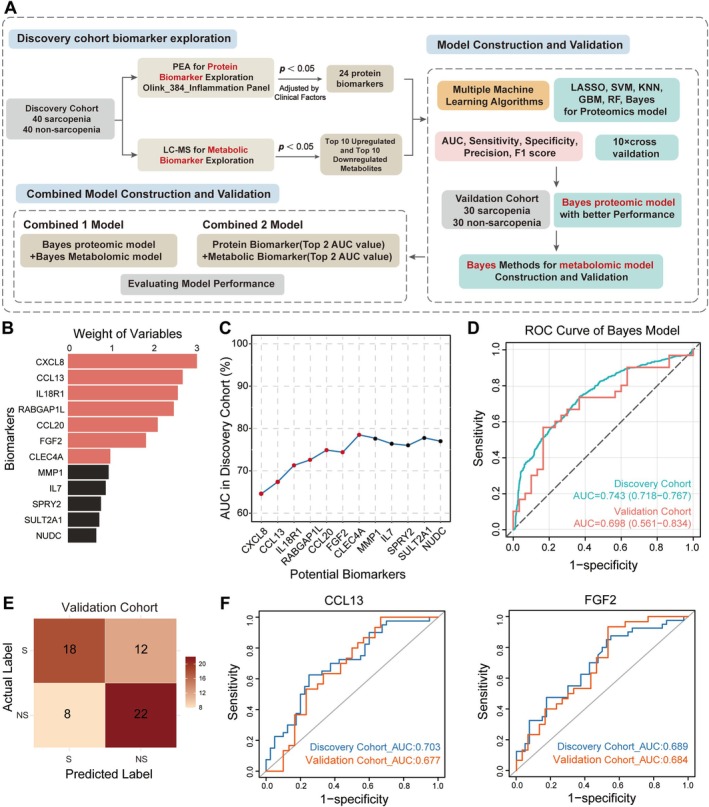 Figure 5
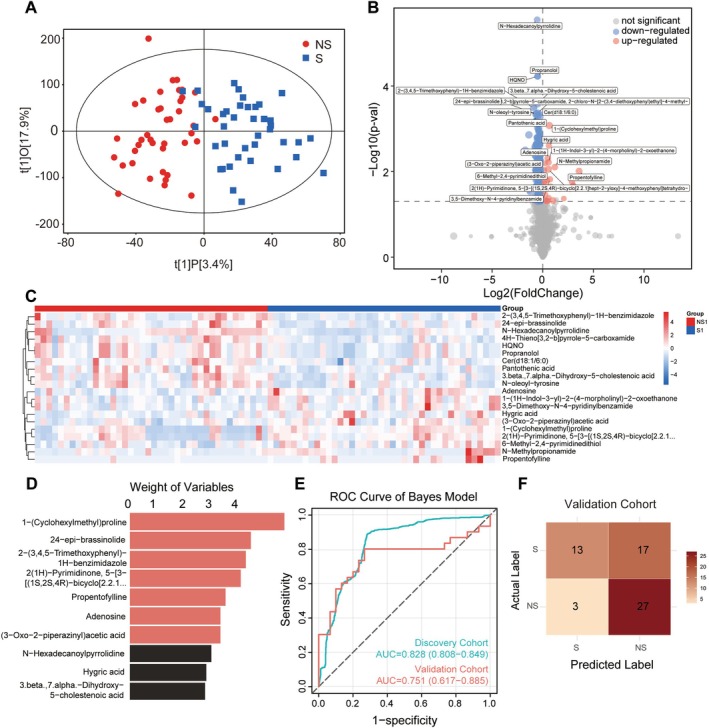 Figure 6
Peer Reviews
No public reviews on file for this paper yet. If you reviewed it on a platform where reviews are public (OpenReview, ICLR, NeurIPS, ICML), you can paste yours below so the community can read it here.
Videos
No videos yet. Explain this paper in a talk, walkthrough, or lecture? Add one.
Taxonomy
TopicsNutrition and Health in Aging · Body Composition Measurement Techniques · Metabolomics and Mass Spectrometry Studies