Evaluation of Few-Shot AI-Generated Feedback on Case Reports in Physical Therapy Education: Mixed Methods Study
Hisaya Sudo, Yoko Noborimoto, Jun Takahashi

TL;DR
Japanese physical therapy students preferred AI feedback with examples over no examples, as it felt fairer and more useful for learning.
Contribution
Demonstrates that few-shot AI feedback can reduce algorithm aversion and improve perceived fairness and usefulness in health profession education.
Findings
74% of students preferred few-shot feedback over zero-shot feedback for overall usefulness.
Few-shot feedback scored significantly higher on fairness and willingness to invest effort.
Algorithm aversion increased for zero-shot feedback after identity disclosure, but not for few-shot feedback.
Abstract
While artificial intelligence (AI)–generated feedback offers significant potential to overcome constraints on faculty time and resources associated with providing personalized feedback, its perceived usefulness can be undermined by algorithm aversion. In-context learning, particularly the few-shot approach, has emerged as a promising paradigm for enhancing AI performance. However, there is limited research investigating its usefulness, especially in health profession education. This study aimed to compare the quality of AI-generated formative feedback from 2 settings, feedback generated in a zero-shot setting (hereafter, “zero-shot feedback”) and feedback generated in a few-shot setting (hereafter, “few-shot feedback”), using a mixed methods approach in Japanese physical therapy education. Additionally, we examined the effect of algorithm aversion on these 2 feedback types. A mixed…
Genes, proteins, chemicals, diseases, species, mutations and cell lines named across the full text — each resolved to its canonical identifier and authoritative record.
Click any figure to enlarge with its caption.
 Figure 1
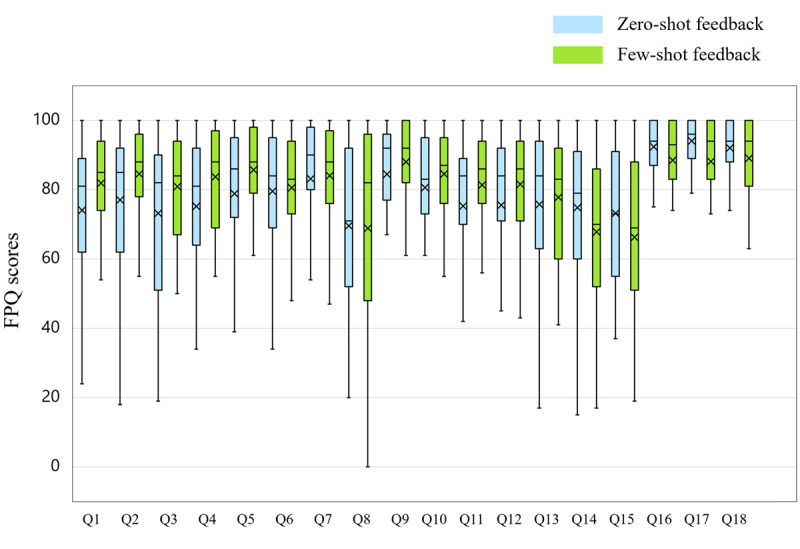 Figure 2
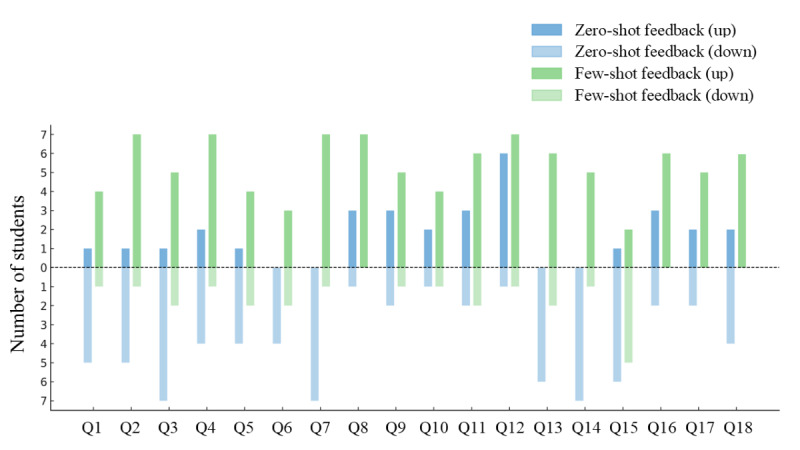 Figure 3
Peer Reviews
No public reviews on file for this paper yet. If you reviewed it on a platform where reviews are public (OpenReview, ICLR, NeurIPS, ICML), you can paste yours below so the community can read it here.
Videos
No videos yet. Explain this paper in a talk, walkthrough, or lecture? Add one.
Taxonomy
TopicsClinical Reasoning and Diagnostic Skills · Artificial Intelligence in Healthcare and Education · Simulation-Based Education in Healthcare