Intracranial aneurysm segmentation with nnU-net: utilizing loss functions and automated vessel extraction
Maysam Orouskhani, Negar Firoozeh, Huayu Wang, Yan Wang, Hanrui Shi, Weijing Li, Beibei Sun, Jianjian Zhang, Xiao Li, Huilin Zhao, Mahmud Mossa-Basha, Jenq-Neng Hwang, Chengcheng Zhu

TL;DR
This paper introduces a new method for accurately segmenting intracranial aneurysms in MRI scans using advanced neural networks and loss functions.
Contribution
The novel integration of hybrid loss functions and automated vessel extraction improves segmentation accuracy for intracranial aneurysms.
Findings
The model achieved a Dice coefficient of 0.72 on the RENJI dataset and 0.54 on the ADAM dataset.
Sensitivity scores reached 0.69 on RENJI and 0.53 on ADAM, showing improved detection performance.
Combining vessel information with hybrid loss functions enhanced the model's focus on critical aneurysm regions.
Abstract
Intracranial aneurysms pose significant challenges in diagnosis and treatment, emphasizing the need for accurate segmentation methods to assist clinicians in their management. In this paper, we present a novel approach for segmenting intracranial aneurysms using three-dimensional time-of-flight magnetic resonance angiography (TOF-MRA) images and the no-new-U-net framework. We aim to improve segmentation accuracy and efficiency through the integration of hybrid loss functions and additional vessel information. The model was conducted on Aneurysm Detection And SegMentation (ADAM) and Renji Hospital (RENJI) datasets. The TOF-MRA ADAM dataset contains data from 113 cases, where 89 have at least one aneurysm with a median maximum diameter of 3.6 mm and range from 1.0 to 15.9 mm. The RENJI private TOF-MRA dataset comprises 213 cases including both ruptured and unruptured aneurysms with a…
Genes, proteins, chemicals, diseases, species, mutations and cell lines named across the full text — each resolved to its canonical identifier and authoritative record.
Click any figure to enlarge with its caption.
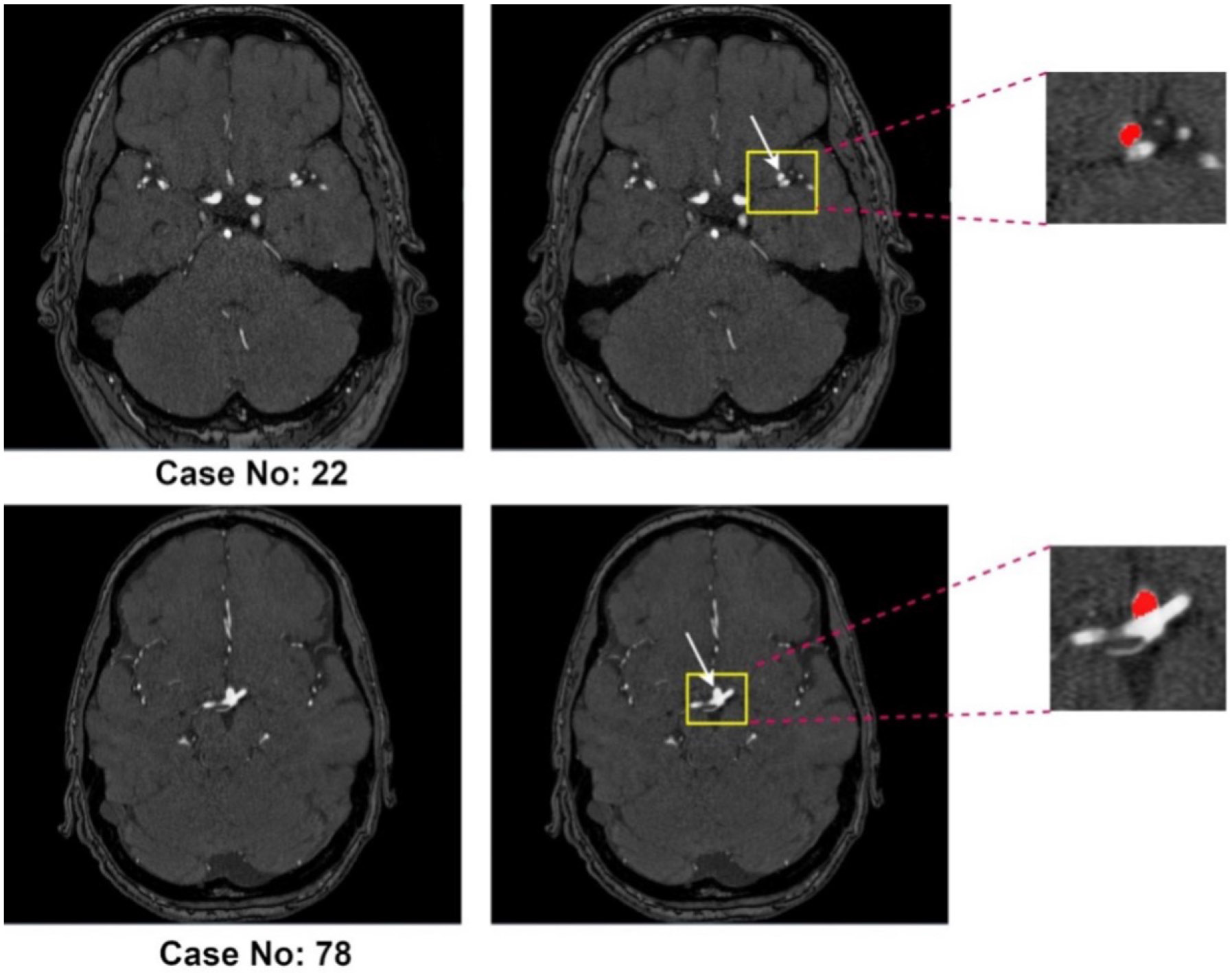 Figure 1
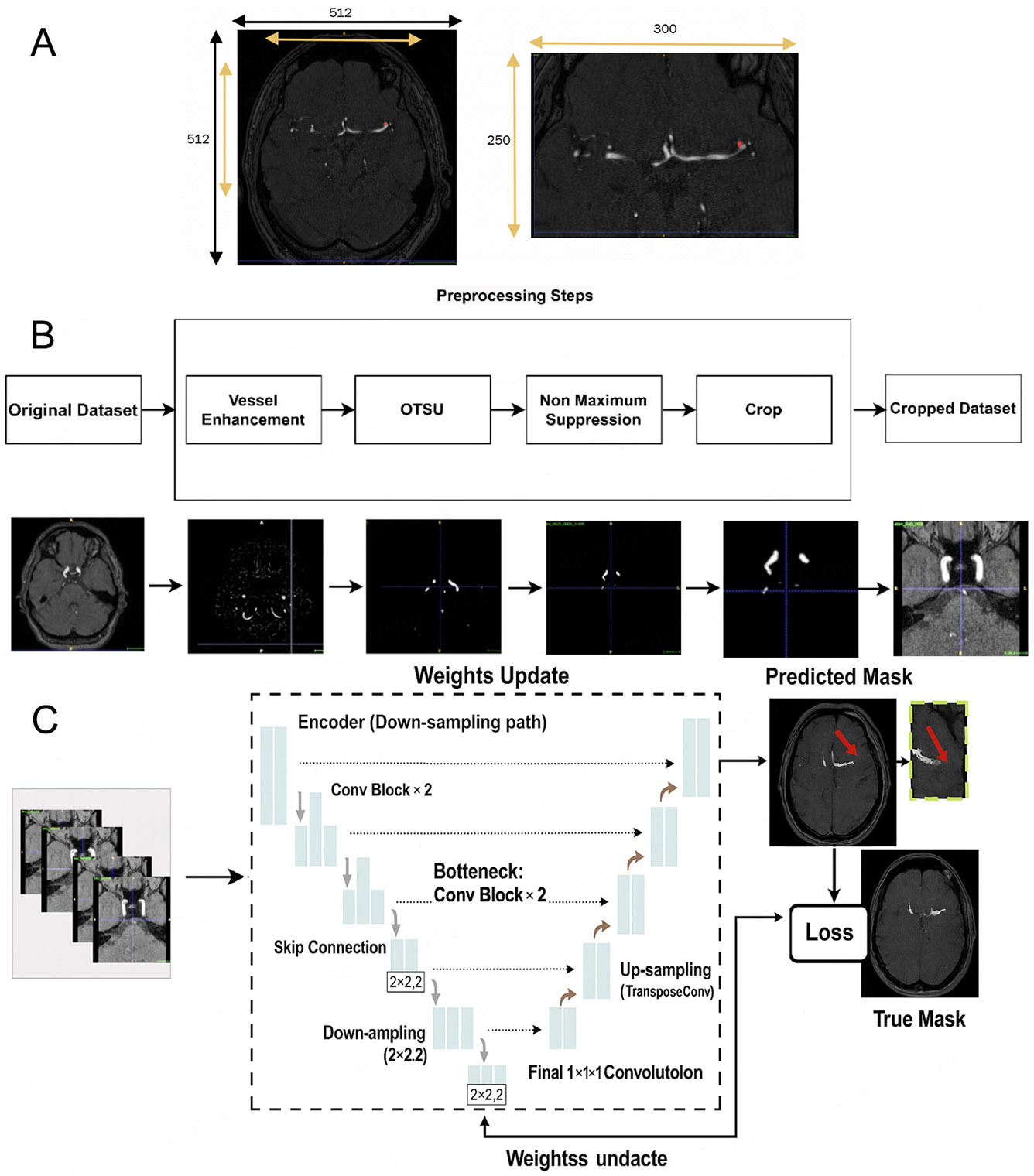 Figure 2
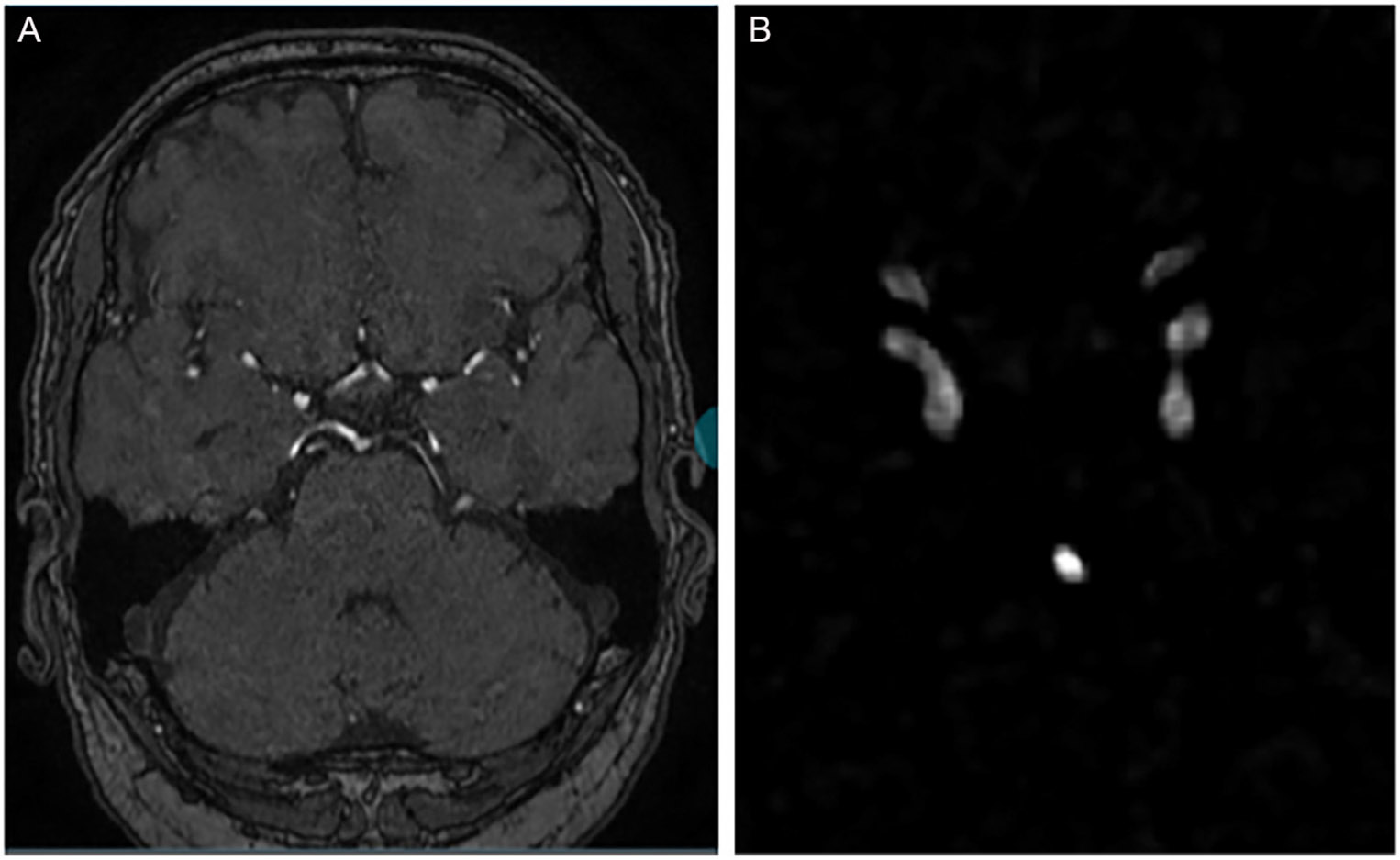 Figure 3
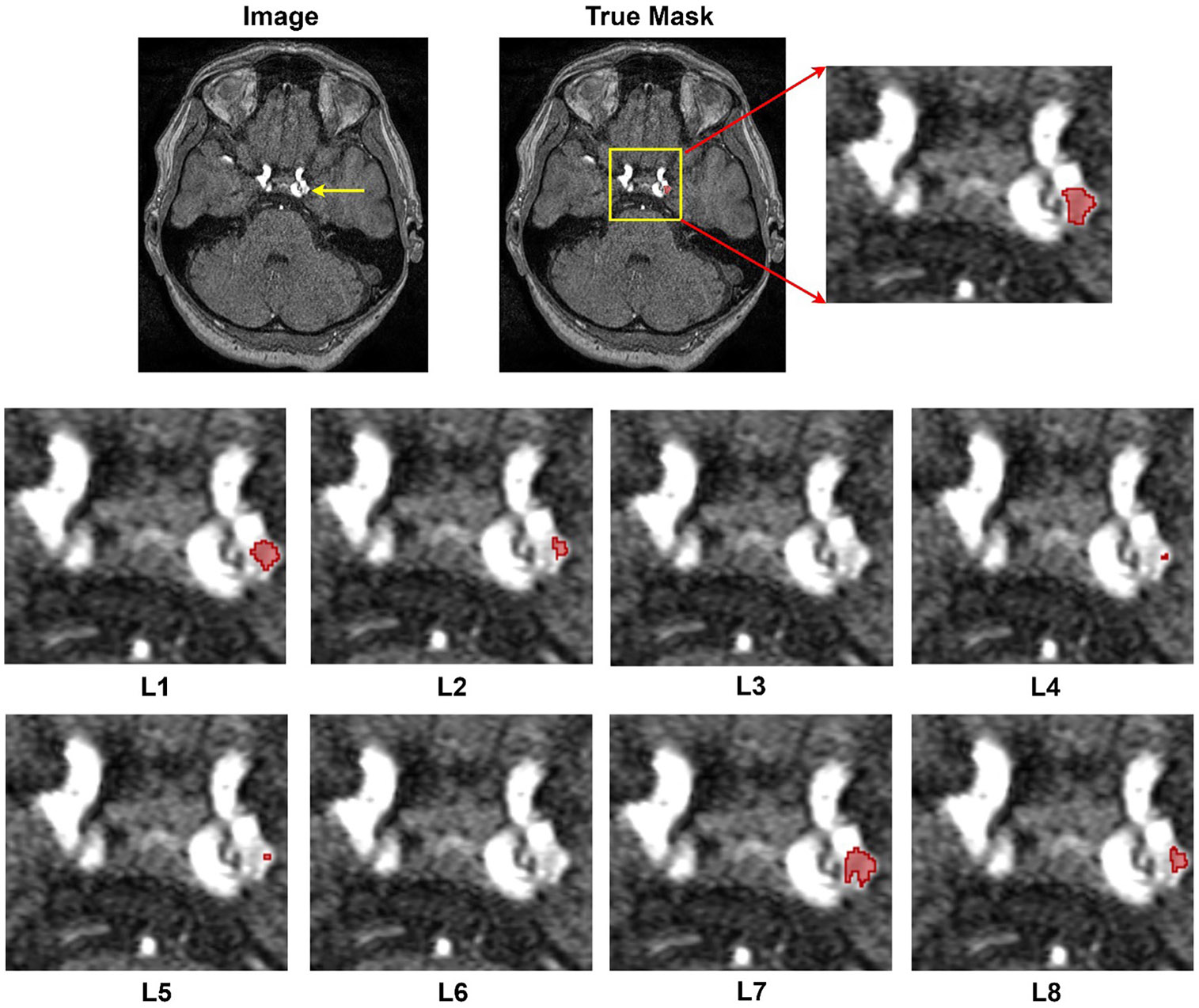 Figure 4
Peer Reviews
No public reviews on file for this paper yet. If you reviewed it on a platform where reviews are public (OpenReview, ICLR, NeurIPS, ICML), you can paste yours below so the community can read it here.
Videos
No videos yet. Explain this paper in a talk, walkthrough, or lecture? Add one.
Taxonomy
TopicsIntracranial Aneurysms: Treatment and Complications · Retinal Imaging and Analysis · Medical Image Segmentation Techniques