Halogen bonding and hydrogen bonding fluorescent anion sensing at the solid–liquid interface
Robert Hein, Mohamed Sharafeldin, Edward J. Mitchell, Jason J. Davis, Paul D. Beer

TL;DR
This paper introduces a new method for detecting anions using halogen bonding at a solid-liquid interface, enabling sensor reuse and working in both organic solvents and water.
Contribution
The first XB monolayer architecture for anion detection at the solid-liquid interface via fluorescence is developed.
Findings
A BODIPY-bis(iodo)triazole receptor was immobilized on glass slides for anion detection.
The XB interface outperformed hydrogen bonding interfaces in anion binding and signal response.
The system works in both organic solvents and pure water, enabling sensor reuse.
Abstract
Halogen bonding (XB) has emerged as a powerful non-covalent interaction in anion supramolecular chemistry and is now well-established for the recognition and sensing of various environmentally and biologically relevant anionic species in solution. To translate the significant potential of XB-mediated anion binding to real-world sensor application requires both a consideration of XB material device integration and utilisation in water; key areas that remain noticeably underdeveloped. Addressing this challenge, we herein report the first example of a XB monolayer architecture for the detection of anions at the solid–liquid interface via fluorescence, enabling sensor re-use and detection of various anions in both organic solvent and in pure water. To this end, a BODIPY-bis(iodo)triazole receptor was covalently immobilized onto glass slides via amide bond formation. Detailed unprecedented…
Genes, proteins, chemicals, diseases, species, mutations and cell lines named across the full text — each resolved to its canonical identifier and authoritative record.
Click any figure to enlarge with its caption.
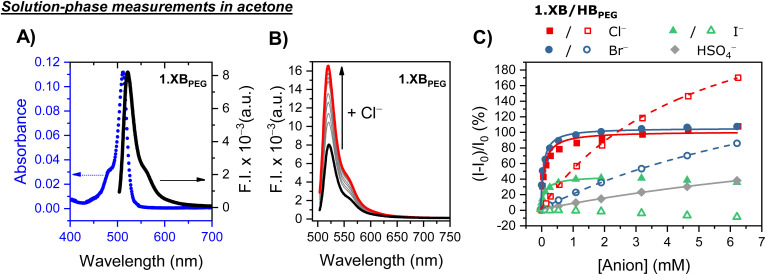 Figure 1
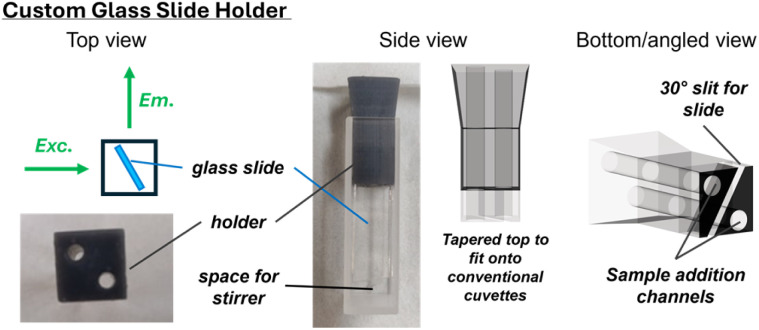 Figure 2
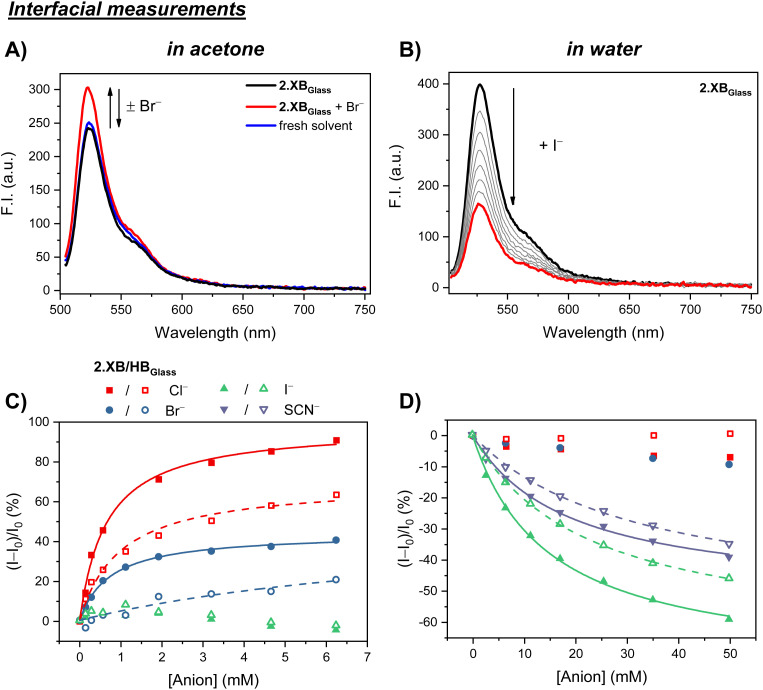 Figure 3
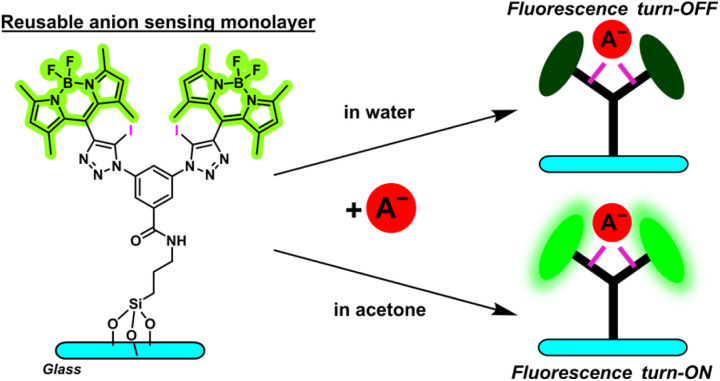 Figure 4
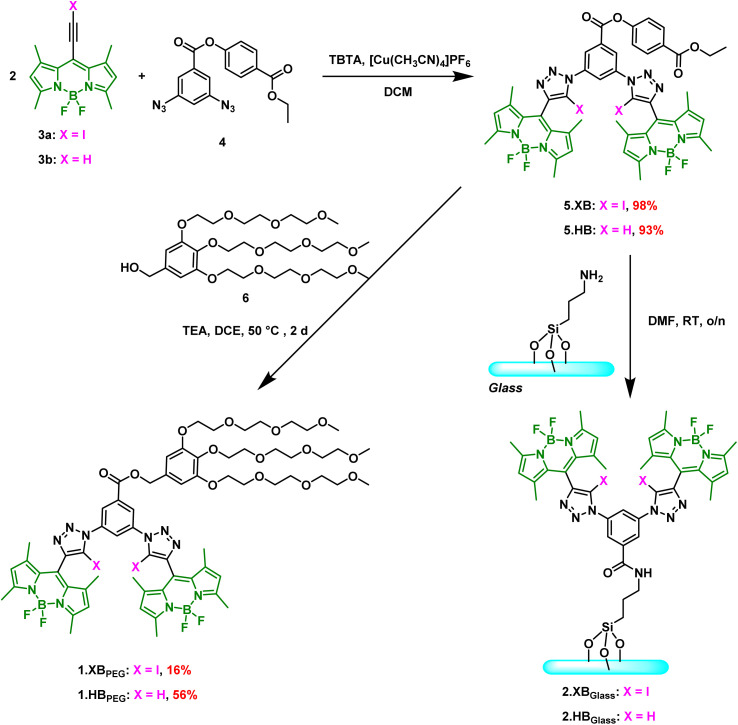 Figure 5
 Figure 6
Peer Reviews
No public reviews on file for this paper yet. If you reviewed it on a platform where reviews are public (OpenReview, ICLR, NeurIPS, ICML), you can paste yours below so the community can read it here.
Videos
No videos yet. Explain this paper in a talk, walkthrough, or lecture? Add one.
Taxonomy
TopicsMolecular Sensors and Ion Detection · Crystallography and molecular interactions · Luminescence and Fluorescent Materials