Treatment Recommendations for Clinical Deterioration on the Wards: Development and Validation of Machine Learning Models
Eric Pulick, Kyle A Carey, Tonela Qyli, Madeline K Oguss, Jamila K Picart, Leena Penumalee, Lily K Nezirova, Sean T Tully, Emily R Gilbert, Nirav S Shah, Urmila Ravichandran, Majid Afshar, Dana P Edelson, Yonatan Mintz, Matthew M Churpek

TL;DR
This study developed and validated machine learning models to recommend treatments for patients at risk of clinical deterioration on general wards.
Contribution
The study establishes ML benchmarks for predicting 10 clinical interventions and compares model performance for treatment recommendations.
Findings
Gradient boosted machines and stacking ensembles showed the best performance for predicting treatment needs.
Antiarrhythmics were the easiest to predict, while anticoagulants were the hardest.
Many patients were untreated at the time of risk detection, suggesting potential for ML to reduce treatment delays.
Abstract
Clinical deterioration in general ward patients is associated with increased morbidity and mortality. Early and appropriate treatments can improve outcomes for such patients. While machine learning (ML) tools have proven successful in the early identification of clinical deterioration risk, little work has explored their effectiveness in providing data-driven treatment recommendations to clinicians for high-risk patients. This study established ML performance benchmarks for predicting the need for 10 common clinical deterioration interventions. This study also compared the performance of various ML models to inform which types of approaches are well-suited to these prediction tasks. We relied on a chart-reviewed, multicenter dataset of general ward patients experiencing clinical deterioration (n=2480 encounters), who were identified as high risk using a Food and Drug…
Genes, proteins, chemicals, diseases, species, mutations and cell lines named across the full text — each resolved to its canonical identifier and authoritative record.
Click any figure to enlarge with its caption.
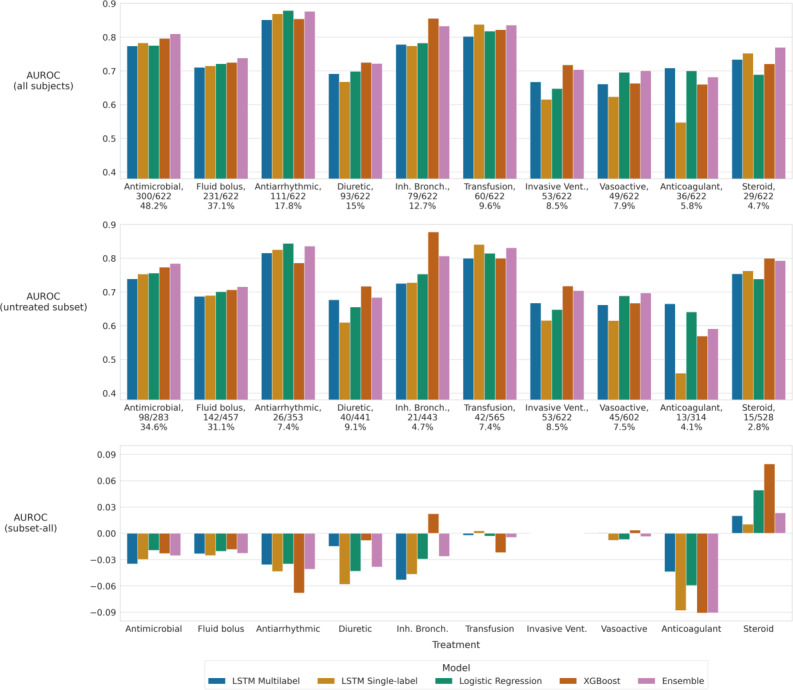 Figure 1
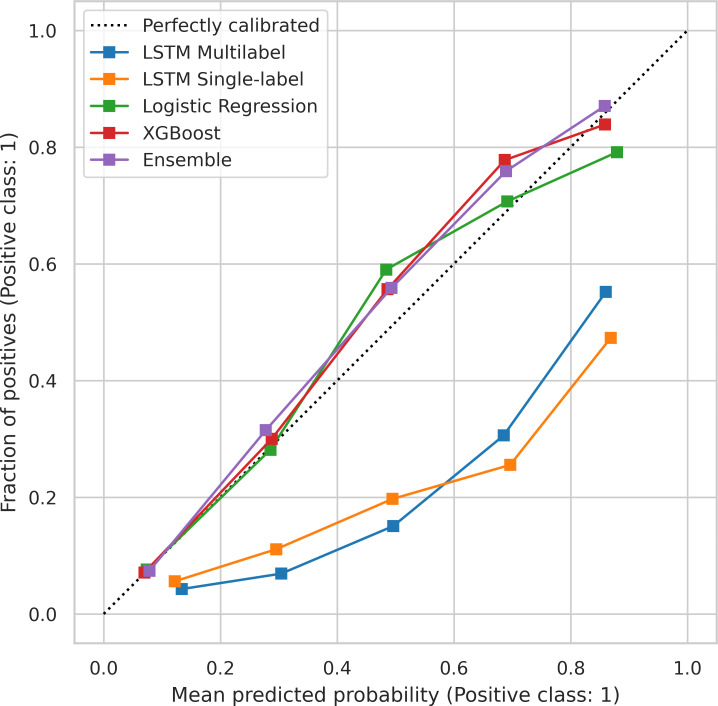 Figure 2
Peer Reviews
No public reviews on file for this paper yet. If you reviewed it on a platform where reviews are public (OpenReview, ICLR, NeurIPS, ICML), you can paste yours below so the community can read it here.
Videos
No videos yet. Explain this paper in a talk, walkthrough, or lecture? Add one.
Taxonomy
TopicsSepsis Diagnosis and Treatment · Artificial Intelligence in Healthcare and Education · Medical Coding and Health Information