Characterization of the heterogeneity in SARS-CoV-2 fitness dynamics via graph representation learning
Zengmiao Wang, Ziqin Zhou, Junfu Wang, Lingyue Yang, Zhirui Zhang, Weina Xu, Zeming Liu, Yuxi Ge, Liang Yang, Xiaoli Wang, Peng Yang, Quanyi Wang, Yunlong Cao, Yuanfang Guo, Huaiyu Tian

TL;DR
The paper introduces Geno-GNN, a deep learning tool that helps understand how SARS-CoV-2 adapts to immunity by predicting its ability to infect cells and evade the immune system.
Contribution
Geno-GNN is a novel graph-based deep learning framework that accurately predicts ACE2 binding and immune escape of SARS-CoV-2.
Findings
SARS-CoV-2 variants predominantly maintain ACE2 binding while achieving moderate immune evasion.
Two distinct fitness trajectories were identified: immune evasion at the cost of infectivity or balanced evasion with maintained infectivity.
Geno-GNN reveals complex evolutionary patterns of SARS-CoV-2 driven by population immunity contexts.
Abstract
Understanding the heterogeneity of population-level viral fitness dynamics, which reflect the interplay between intrinsic viral properties and population immunity, is critical for pandemic preparedness. However, how these dynamics vary across diverse immune backgrounds and mutational landscapes remain poorly characterized. We present Geno-GNN, a graph representation learning approach for retrospectively characterizing the viral fitness dynamics of severe acute respiratory syndrome coronavirus 2 (SARS-CoV-2). Geno-GNN accurately predicts angiotensin-converting enzyme 2 (ACE2) binding affinity and immune escape potential across multiple external datasets. Using Geno-GNN, we identified temporal patterns in SARS-CoV-2 fitness and detected varying rates of fitness change associated with distinct immune backgrounds. Virtual mutation scanning revealed two fitness trajectories: broad immune…
Genes, proteins, chemicals, diseases, species, mutations and cell lines named across the full text — each resolved to its canonical identifier and authoritative record.
Click any figure to enlarge with its caption.
 Figure 1
 Figure 2
 Figure 3
 Figure 4
 Figure 5
 Figure 6
 Figure 7
 Figure 8
 Figure 9
 Figure 10
 Figure 11
 Figure 12
 Figure 13
 Figure 14
 Figure 15
 Figure 16
 Figure 17
 Figure 18
 Figure 19
 Figure 20
 Figure 21
 Figure 22
 Figure 23
 Figure 24
 Figure 25
 Figure 26
 Figure 27
 Figure 28
 Figure 29
 Figure 30
 Figure 31
 Figure 32
 Figure 33
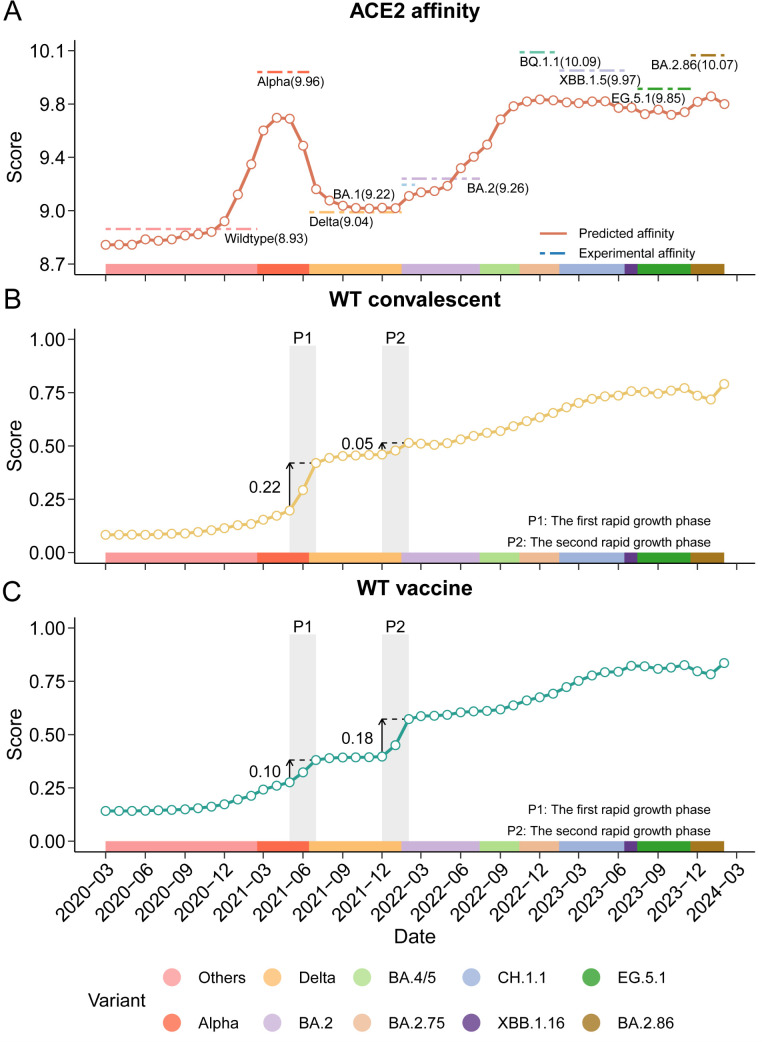 Figure 34
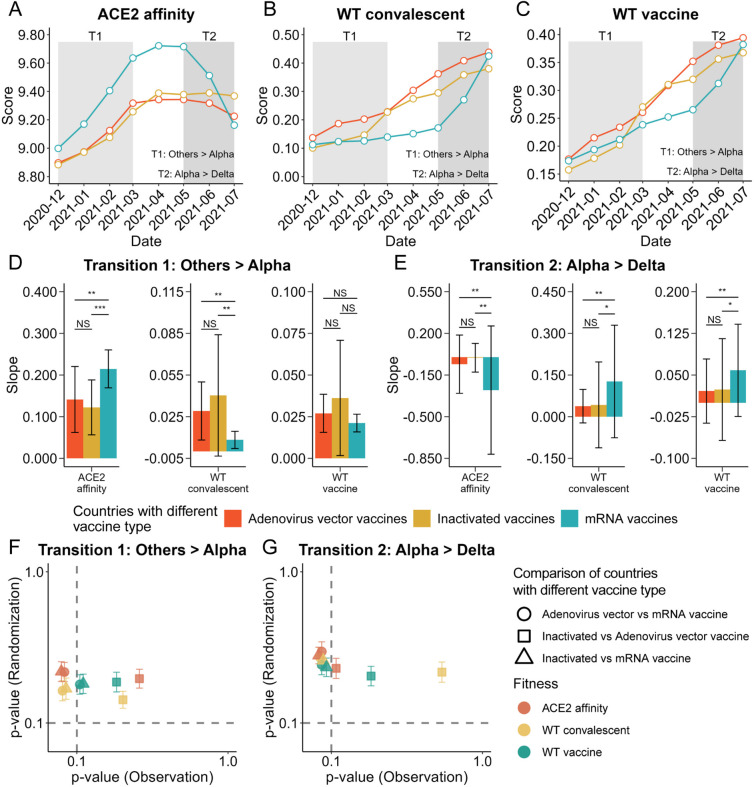 Figure 35
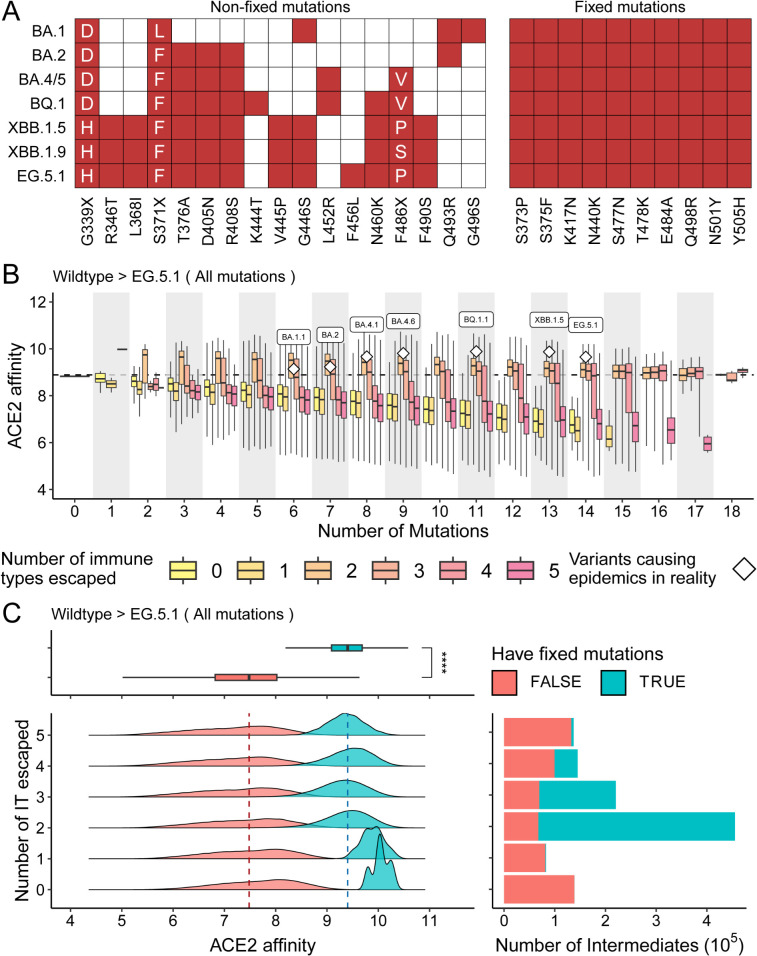 Figure 36
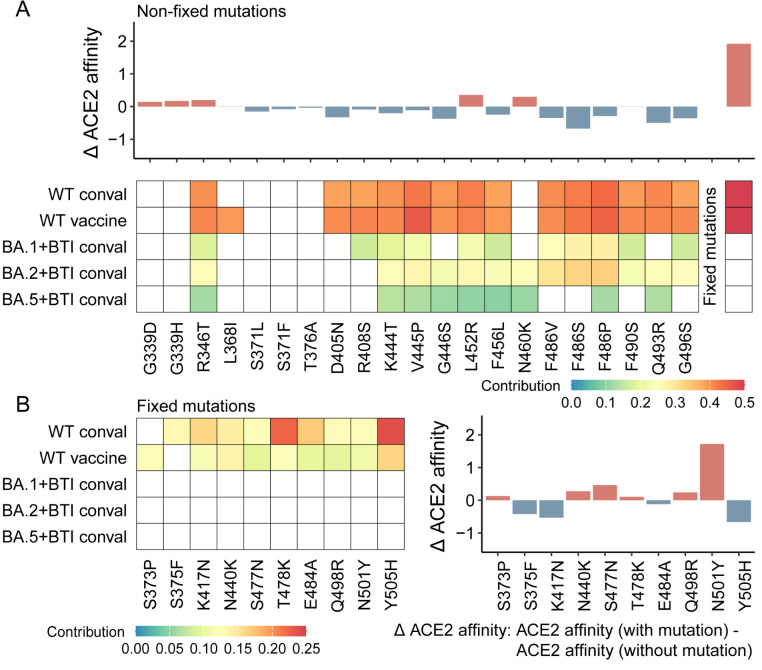 Figure 37
Peer Reviews
No public reviews on file for this paper yet. If you reviewed it on a platform where reviews are public (OpenReview, ICLR, NeurIPS, ICML), you can paste yours below so the community can read it here.
Videos
No videos yet. Explain this paper in a talk, walkthrough, or lecture? Add one.
Taxonomy
Topicsvaccines and immunoinformatics approaches · SARS-CoV-2 and COVID-19 Research · interferon and immune responses