Arginine metabolism has a pivotal function for the encystation of Giardia duodenalis
Christian Klotz, Ricarda Leisering, Kari D. Hagen, Hannah N. Starcevich, Antonia Müller, Christoph Ewald, Samuel Türken, Malte Marquardt, Saskia Schramm, Totta Ehret Kasemo, Stefanie Marek, Frank Seeber, Ralf Ignatius, Scott C. Dawson, Toni Aebischer

TL;DR
Giardia parasites use arginine metabolism for energy, and a specific enzyme variant in human-specific parasites reduces their ability to form infectious cysts.
Contribution
The study identifies amino acid changes in ADI that affect Giardia's encystation efficiency, linking enzyme function to parasite life cycle progression.
Findings
ADI from human-specific Giardia AII has ~5-fold lower arginine affinity than zoonotic genotypes.
ADI is essential for efficient encystation, and its reduced activity in AII correlates with lower cyst formation.
Arginine is required for encystation, and ADI mediates this dependency.
Abstract
Arginine metabolism plays a key role in the energy metabolism of the intestinal parasite Giardia duodenalis, an amitochondrial protozoan that infects humans and animals and causes significant morbidity. Despite that an arginine deiminase (ADI) has been implicated in virulence, it remains unknown if ADI allele variants from the different genetic G. duodenalis subgroups (assemblages) differ in function. Here, the hypothesis was tested that sequence variation detected between G. duodenalis ADI alleles from the two G. duodenalis assemblage types found in humans affects functional parameters of the enzyme with potential consequences in life cycle progression. The ADI enzyme’s affinity for arginine was ~ 5fold reduced in sub-assemblage AII isolates, a human specific assemblage, in comparison to zoonotic sub-assemblage AI and B isolates. We identified the two amino acid residues responsible…
Genes, proteins, chemicals, diseases, species, mutations and cell lines named across the full text — each resolved to its canonical identifier and authoritative record.
Click any figure to enlarge with its caption.
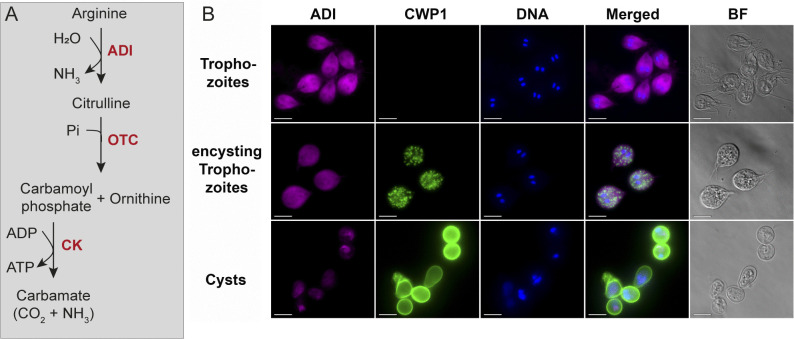 Figure 1
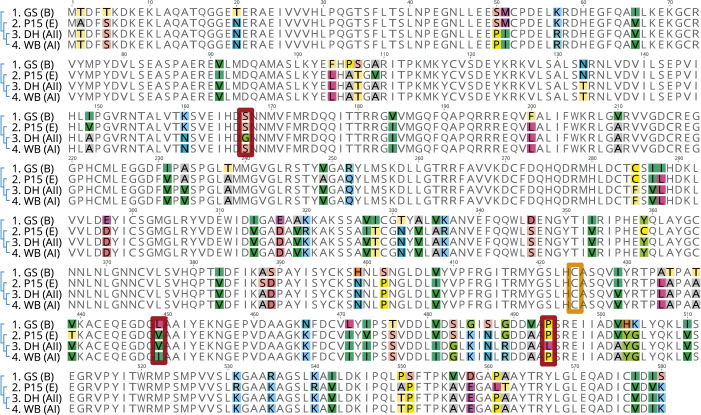 Figure 2
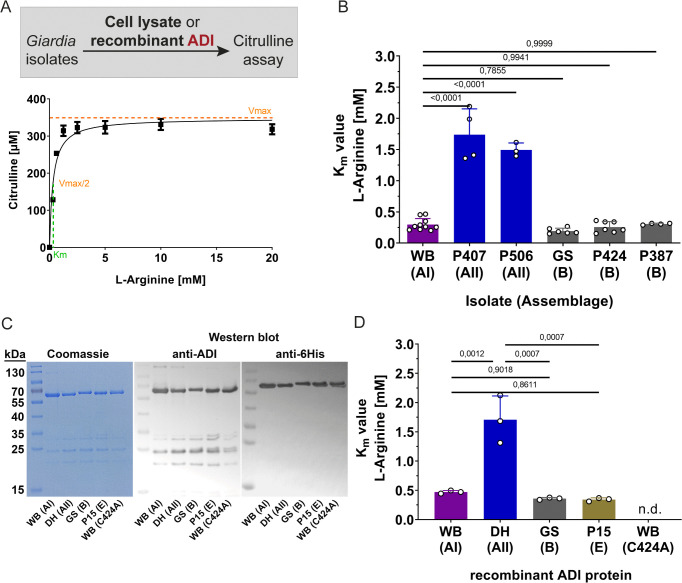 Figure 3
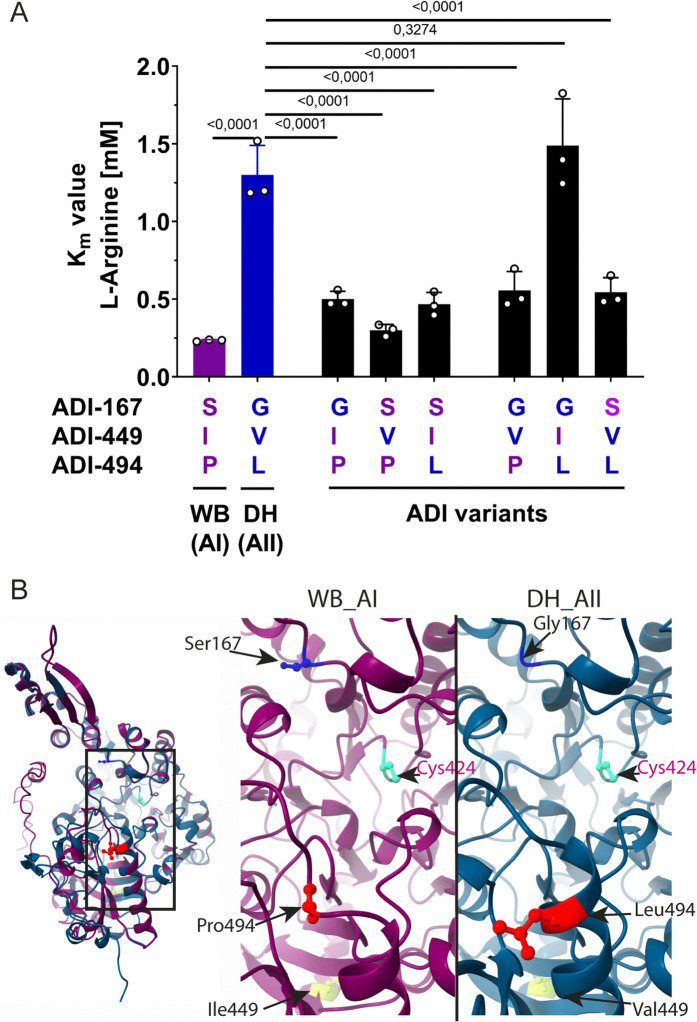 Figure 4
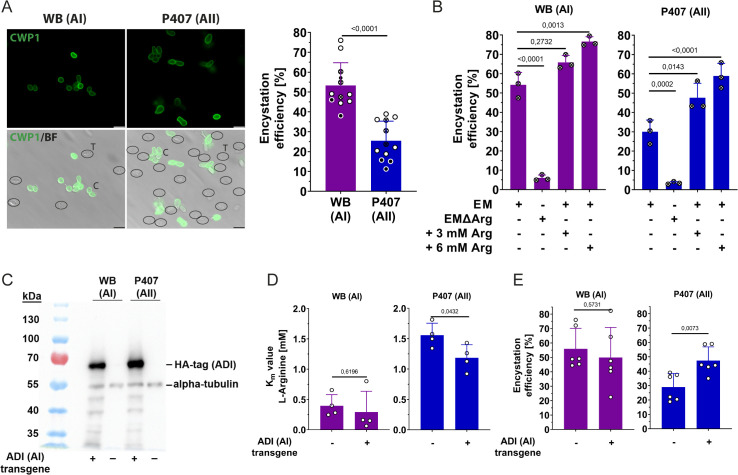 Figure 5
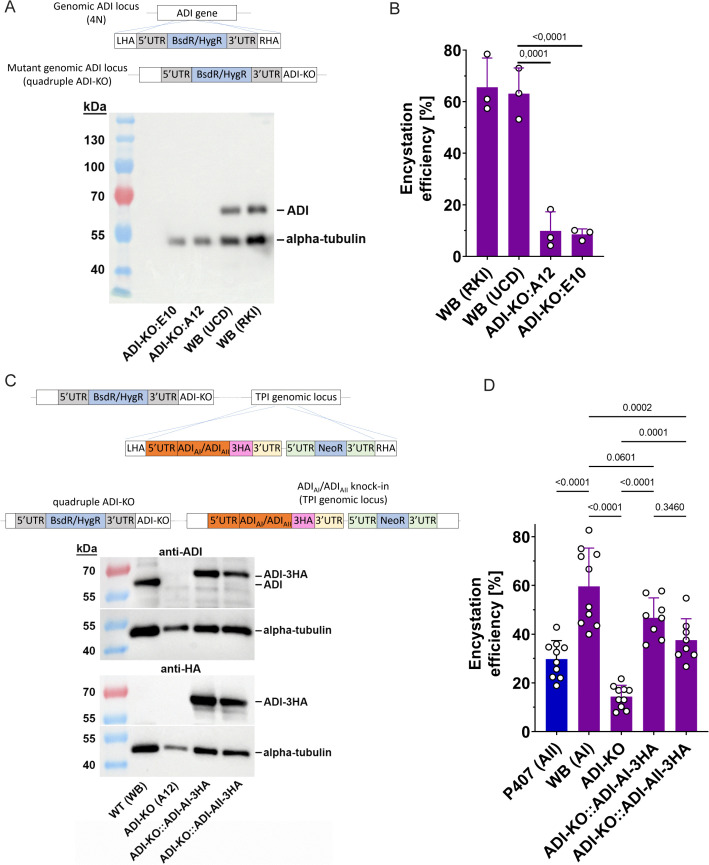 Figure 6
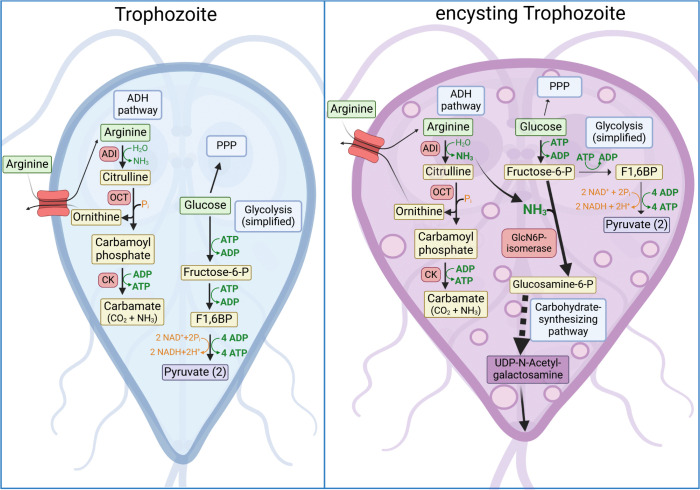 Figure 7
Peer Reviews
No public reviews on file for this paper yet. If you reviewed it on a platform where reviews are public (OpenReview, ICLR, NeurIPS, ICML), you can paste yours below so the community can read it here.
Videos
No videos yet. Explain this paper in a talk, walkthrough, or lecture? Add one.
Taxonomy
TopicsParasitic Infections and Diagnostics · Amoebic Infections and Treatments · Parasites and Host Interactions