Serine protease-driven entry and S2 ′ cleavage flexibility of feline coronavirus during feline enterocyte infections
Bixia Chen, Luna Vanden Buijs, Nathalie Vanderheijden, Lowiese Desmarets, Jolien Van Cleemput, Hans J. Nauwynck

TL;DR
The study shows how feline coronavirus uses intestinal enzymes to activate its spike protein and enter cells, highlighting a potential antiviral strategy.
Contribution
The study identifies serine proteases as critical for feline coronavirus infection and reveals a compensatory cleavage mechanism at the S2′ site.
Findings
Serine proteases like chymotrypsin, trypsin, and elastase enhance FCoV infection and syncytia formation.
The S2′ cleavage site is crucial for spike activation and maintains infectivity even with mutations.
Both free and membrane-bound serine proteases contribute to FCoV spike activation.
Abstract
Coronaviruses not only hijack host cells to serve as viral factories but also exploit host proteolytic systems to activate their spike (S) protein, the key glycoprotein mediating receptor binding and membrane fusion. Feline coronavirus (FCoV), which initially replicates in the intestinal tract, has evolved to utilize local intestinal proteases for S protein activation. This activation occurs through proteolytic cleavage at specific regions on the S protein, known as cleavage sites (CSs). Two putative CSs have been proposed for FCoV: S1/S2 CS and S2′ CS. Through a protease screen, we identified serine proteases as particularly critical for FCoV infection. Notably, three pancreatic serine proteases, chymotrypsin, trypsin, and elastase, enhanced FCoV infection and promoted syncytia formation despite their differing cleavage specificities, suggesting a flexible activation strategy.…
Genes, proteins, chemicals, diseases, species, mutations and cell lines named across the full text — each resolved to its canonical identifier and authoritative record.
Click any figure to enlarge with its caption.
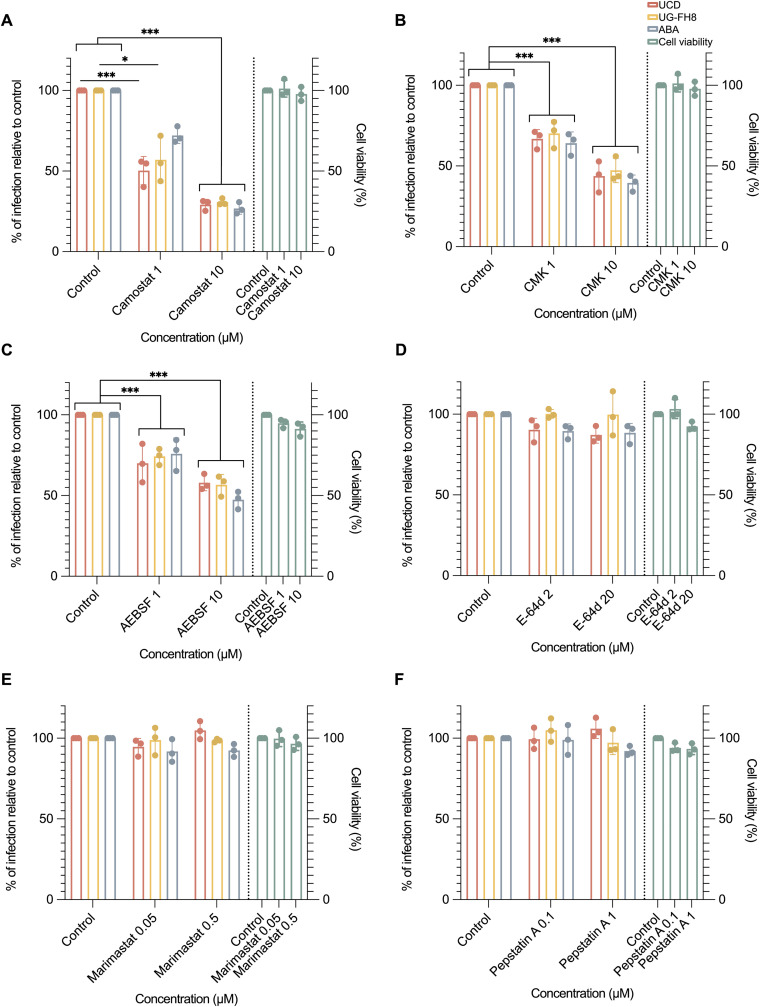 Figure 1
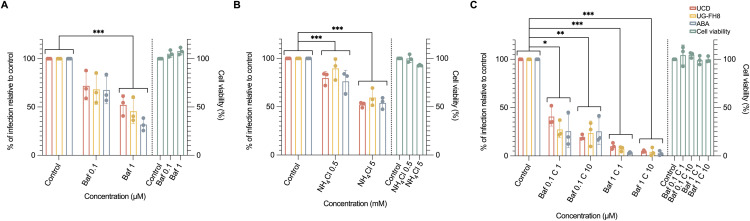 Figure 2
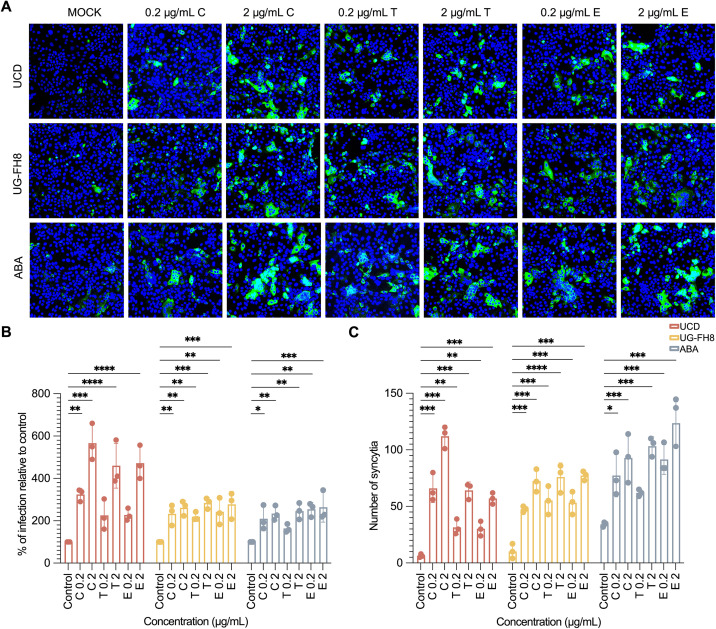 Figure 3
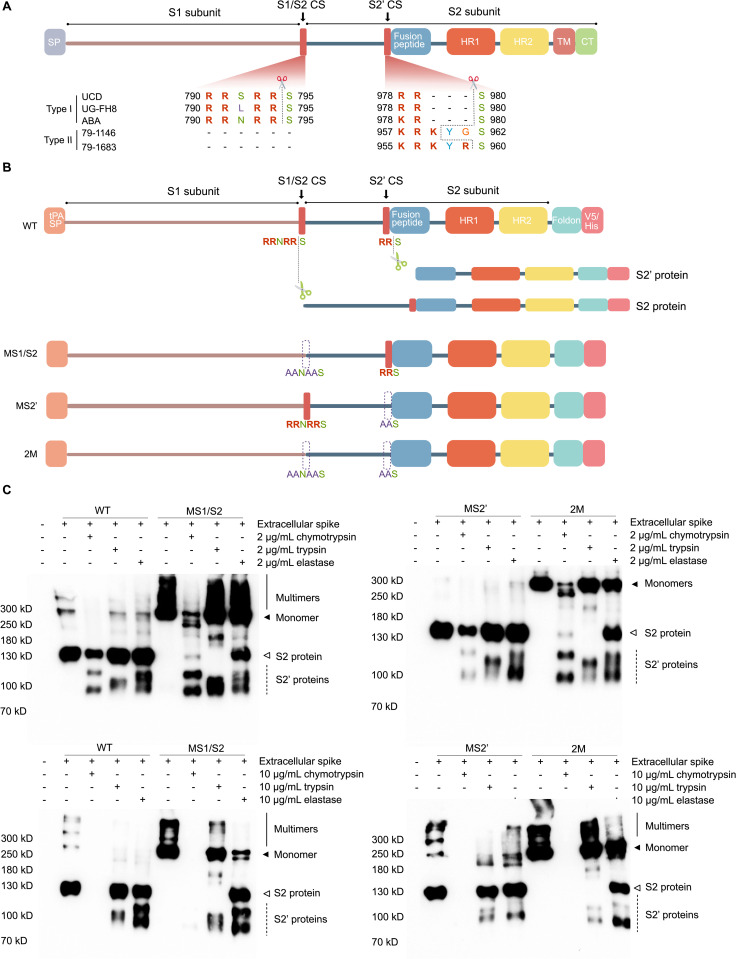 Figure 4
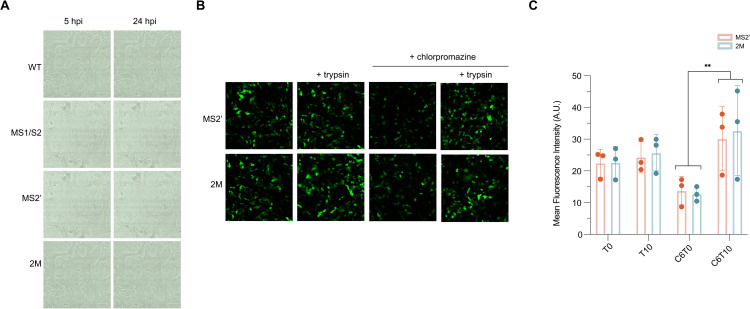 Figure 5
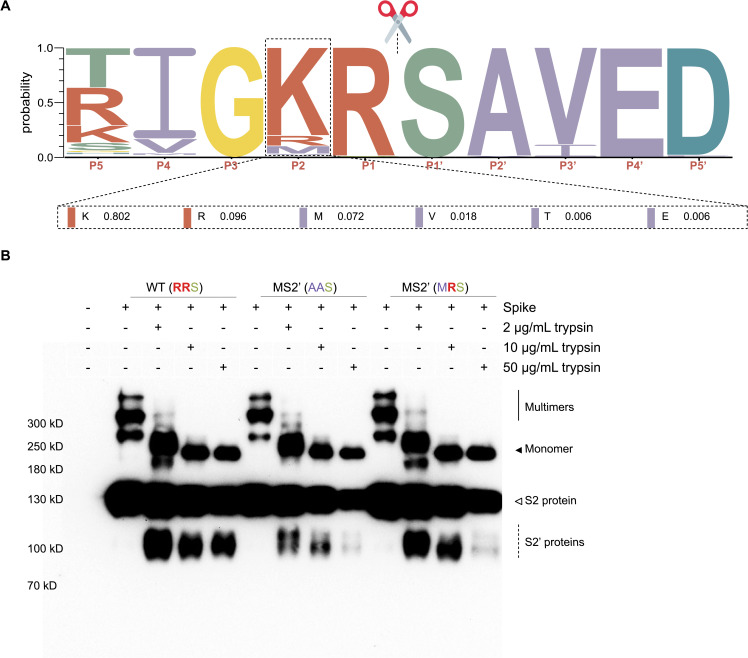 Figure 6
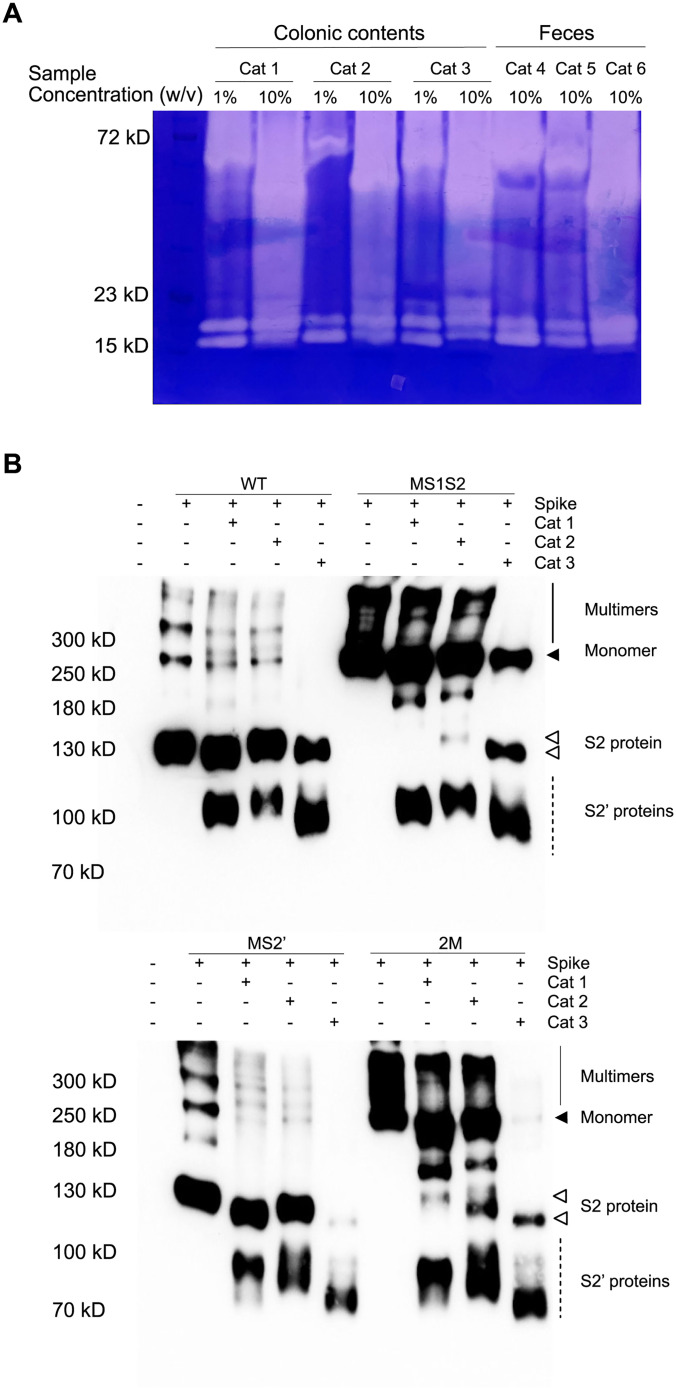 Figure 7
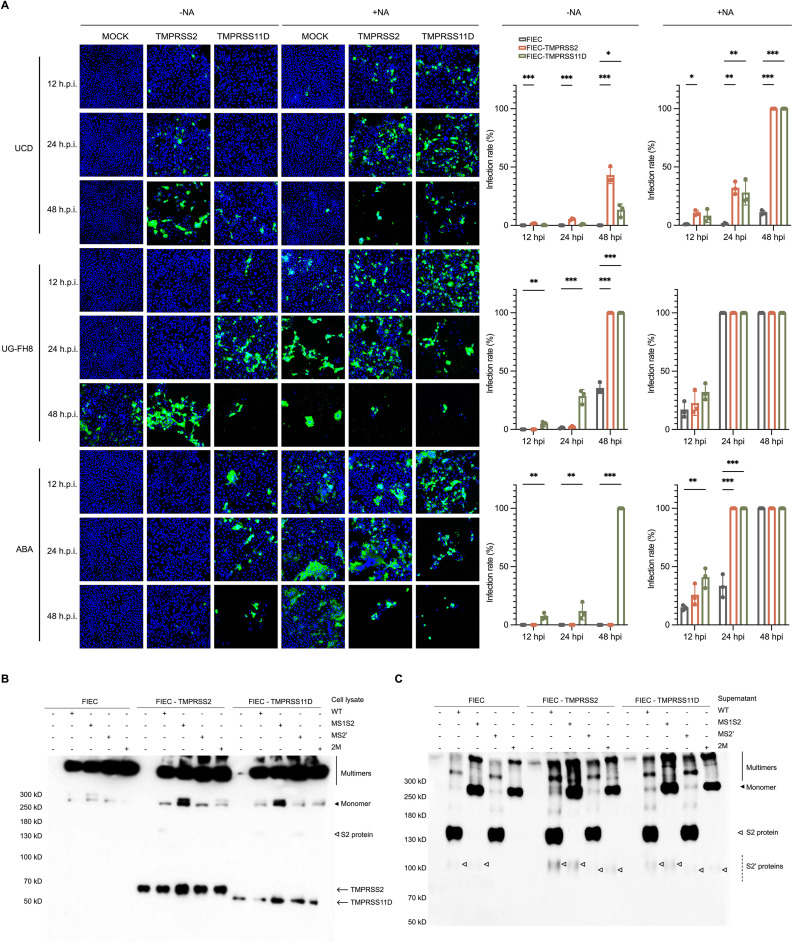 Figure 8
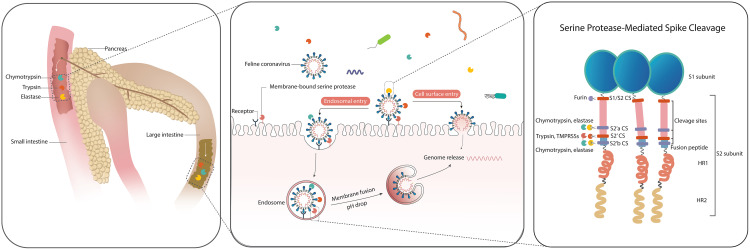 Figure 9
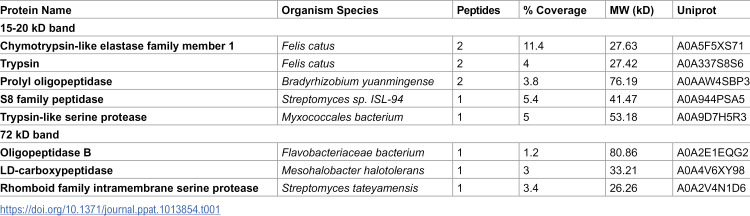 Figure 10
Peer Reviews
No public reviews on file for this paper yet. If you reviewed it on a platform where reviews are public (OpenReview, ICLR, NeurIPS, ICML), you can paste yours below so the community can read it here.
Videos
No videos yet. Explain this paper in a talk, walkthrough, or lecture? Add one.
Taxonomy
TopicsAnimal Virus Infections Studies · SARS-CoV-2 and COVID-19 Research · Virus-based gene therapy research