Zika virus infection in early pregnancy increases the likelihood of persistent neutralizing antibodies
Everton Falcão de Oliveira, Amanda Torrentes de Carvalho, Fabio Antonio Venancio, Maria Eulina Quilião, Sanny Cerqueira de Oliveira Gabeira, Silvia Helena dos Santos Leite, Margarida dos Santos Salú, Sheila Maria Barbosa de Lima, Nathalia dos Santos Alves, Luma da Cruz Moura

TL;DR
Zika virus infection during early pregnancy leads to long-lasting antibodies in mothers but not in their children, suggesting limited postnatal protection.
Contribution
This study reveals the long-term persistence of Zika virus neutralizing antibodies in mothers, particularly those infected in the first trimester, and highlights limited antibody transfer to children.
Findings
66.2% of mothers had detectable Zika virus neutralizing antibodies 3–4 years after infection.
Only 2.8% of children had detectable neutralizing antibodies after maternal antibodies waned.
Maternal antibody titers were not clearly linked to adverse child outcomes.
Abstract
Neutralizing antibodies (nAbs) play a central role in protection against Zika virus (ZIKV) infection. Higher maternal ZIKV nAb titers during pregnancy have been associated with reduced risk of congenital anomalies. However, limited data exist on the long-term persistence of these antibodies in women infected during pregnancy and in children exposed in utero. We conducted a cross-sectional serological study using stored serum samples from a cohort of mother–child pairs with confirmed maternal ZIKV infection during pregnancy in Campo Grande, Brazil. ZIKV nAb titers were measured in samples collected approximately 3–4 years after maternal infection using plaque reduction neutralization testing. Among 77 women, 66.2% (51/77) had ZIKV nAbs above the cutoff point, with higher titers observed in patients with first trimester infection. In contrast, only 2 of 72 children (2.8%) presented…
Genes, proteins, chemicals, diseases, species, mutations and cell lines named across the full text — each resolved to its canonical identifier and authoritative record.
Click any figure to enlarge with its caption.
 Figure 1
 Figure 2
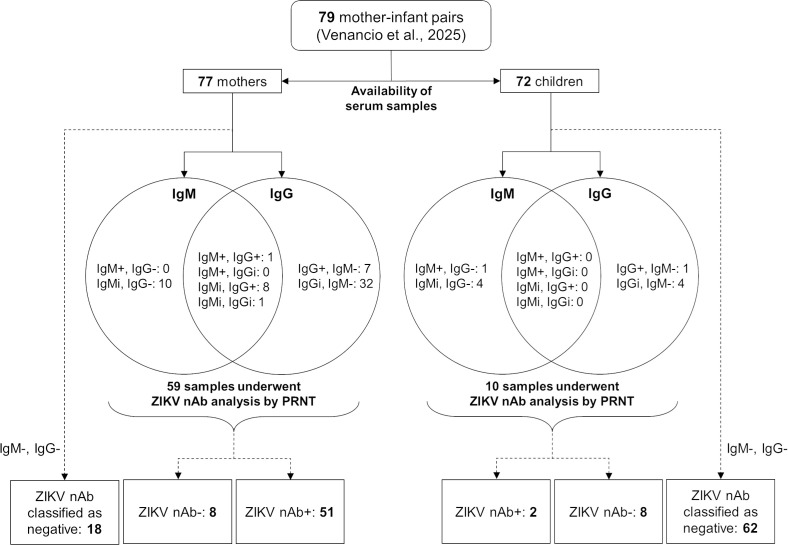 Figure 3
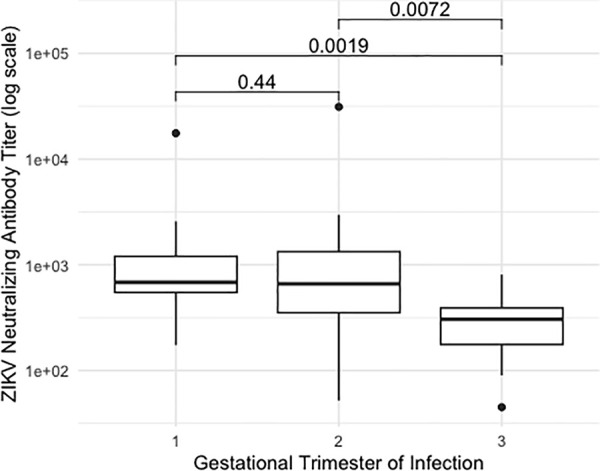 Figure 4
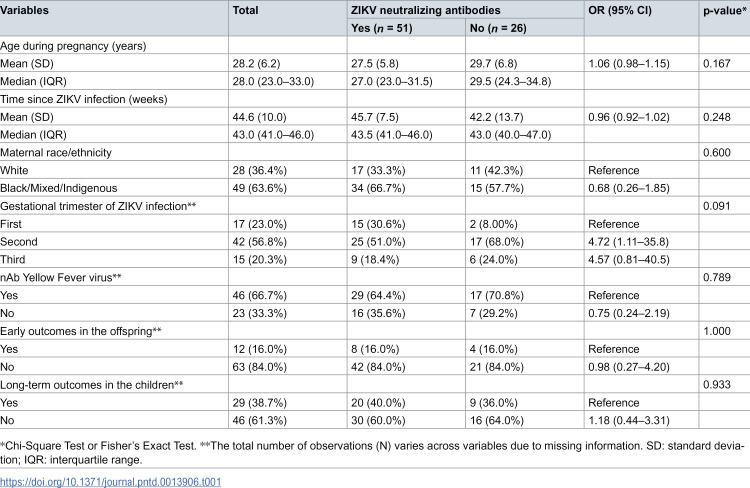 Figure 5
Peer Reviews
No public reviews on file for this paper yet. If you reviewed it on a platform where reviews are public (OpenReview, ICLR, NeurIPS, ICML), you can paste yours below so the community can read it here.
Videos
No videos yet. Explain this paper in a talk, walkthrough, or lecture? Add one.
Taxonomy
TopicsMosquito-borne diseases and control · COVID-19 Impact on Reproduction · Virology and Viral Diseases