Long-term oncological outcomes following percutaneous microwave ablation of T1 renal cell carcinoma
Luke Glover, Joseph John, Alexander Spiers, Richard Guinness, Thomas Dutton, Andrew Gemmell, Rajinder Virdi, Jonathan Skinner, Moira Anderson, Taona Stainer-Smith, Nicholas Campain

TL;DR
This study shows that microwave ablation is a safe and effective treatment for small kidney tumors, with low complication rates and good long-term cancer outcomes.
Contribution
The study provides long-term oncological outcomes for microwave ablation in treating T1 renal cell carcinoma, supporting its use as a treatment option.
Findings
Microwave ablation had low complication rates (0.96% Clavien-Dindo grade ≥III) and short hospital stays.
Local and metastatic recurrence rates were 5.9% and 2.7%, respectively, over a median 37-month follow-up.
MWA is safe and effective for biopsy-proven T1 RCC <5 cm, with favorable oncological outcomes.
Abstract
Incidence of small renal masses (SRMs) including renal cell carcinoma (RCC) is increasing. Standard of care is to offer partial nephrectomy (PN), with tumour ablation (TA) considered an alternative in frail/co-morbid patients. This study aimed to determine whether microwave ablation (MWA) is a safe and effective treatment for selected cases of RCC. All MWAs performed at a regional tertiary care centre between October 2016 and April 2024 were prospectively recorded on a database. Data collected included tumour and patient characteristics, complications, and recurrences. Two hundred and nine MWAs were recorded with median 37 months (interquartile range [IQR] 15.3-59.4 months) follow-up. About 94.7% of patients had ≥12 months of follow-up. The biopsy rate was 92%. Following MWA, 93% of patients had a hospital stay of 1 night. Two Clavien-Dindo grade ≥III complications occurred within 30…
Genes, proteins, chemicals, diseases, species, mutations and cell lines named across the full text — each resolved to its canonical identifier and authoritative record.
Click any figure to enlarge with its caption.
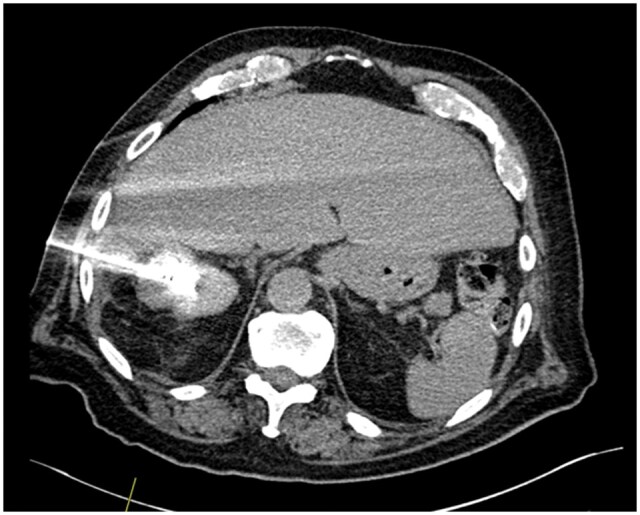 Figure 1
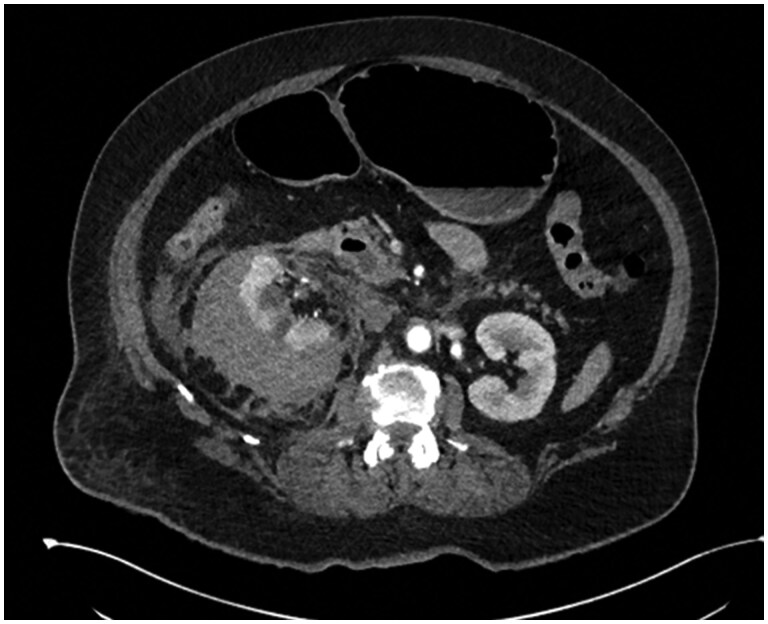 Figure 2
Peer Reviews
No public reviews on file for this paper yet. If you reviewed it on a platform where reviews are public (OpenReview, ICLR, NeurIPS, ICML), you can paste yours below so the community can read it here.
Videos
No videos yet. Explain this paper in a talk, walkthrough, or lecture? Add one.
Taxonomy
TopicsRenal cell carcinoma treatment · Renal and related cancers