Bacterial community associated with the surface and inside of centipede forcipules: Identification and characterization
Yasutaka Tanaka, Daiki Mizushima, Yoshimitsu Izawa, Tomohiro Matsumura, Chikara Yonekawa, Hirotomo Kato, Takashi Mato

TL;DR
This study identifies bacteria on centipede forcipules and finds that while infections are rare, wound cleaning is important to prevent complications.
Contribution
First evidence of bacteria on centipede forcipules linked to previous bite infections.
Findings
A diverse bacterial community was found on centipede forcipules.
Staphylococcus was the only NSTI-associated genus identified in minor populations.
Cleaning bite wounds is emphasized to prevent secondary infections.
Abstract
In tropical to subtropical regions, centipede bites may prompt medical attention, with manifestations largely reflecting venom-related discomfort, although infections, including rare fatal necrotizing soft tissue infection (NSTI), have been reported. However, no reports are available on the commensal bacteria on centipede forcipules. This study aimed to investigate bacterial species residing on and in centipede forcipules and their potential role in post-bite infections. Nine Scolopendra mutilans, three Scolopendra japonica, and two Bothropolys rugosus were collected from three regions in Japan. The bacterial composition of their forcipules was analyzed using 16S ribosomal ribonucleic acid gene sequencing and microbiome analysis. A diverse bacterial community was observed on the centipede forcipules. Among the NSTI-associated genera examined (Escherichia, Staphylococcus, and…
Genes, proteins, chemicals, diseases, species, mutations and cell lines named across the full text — each resolved to its canonical identifier and authoritative record.
Click any figure to enlarge with its caption.
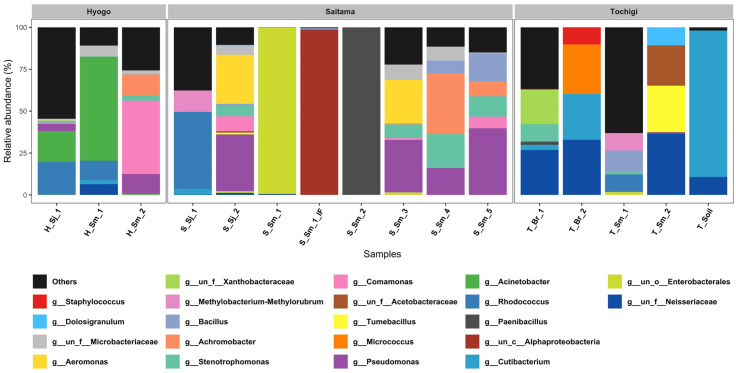 Figure 1
 Figure 2
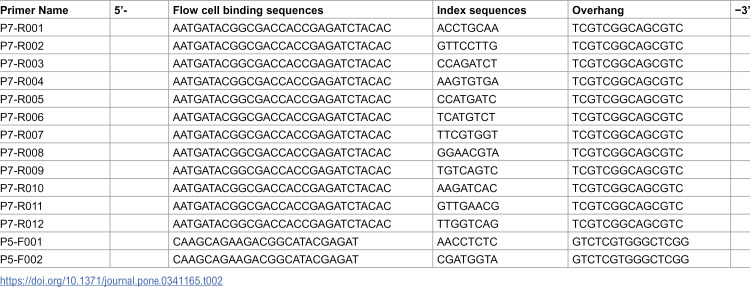 Figure 3
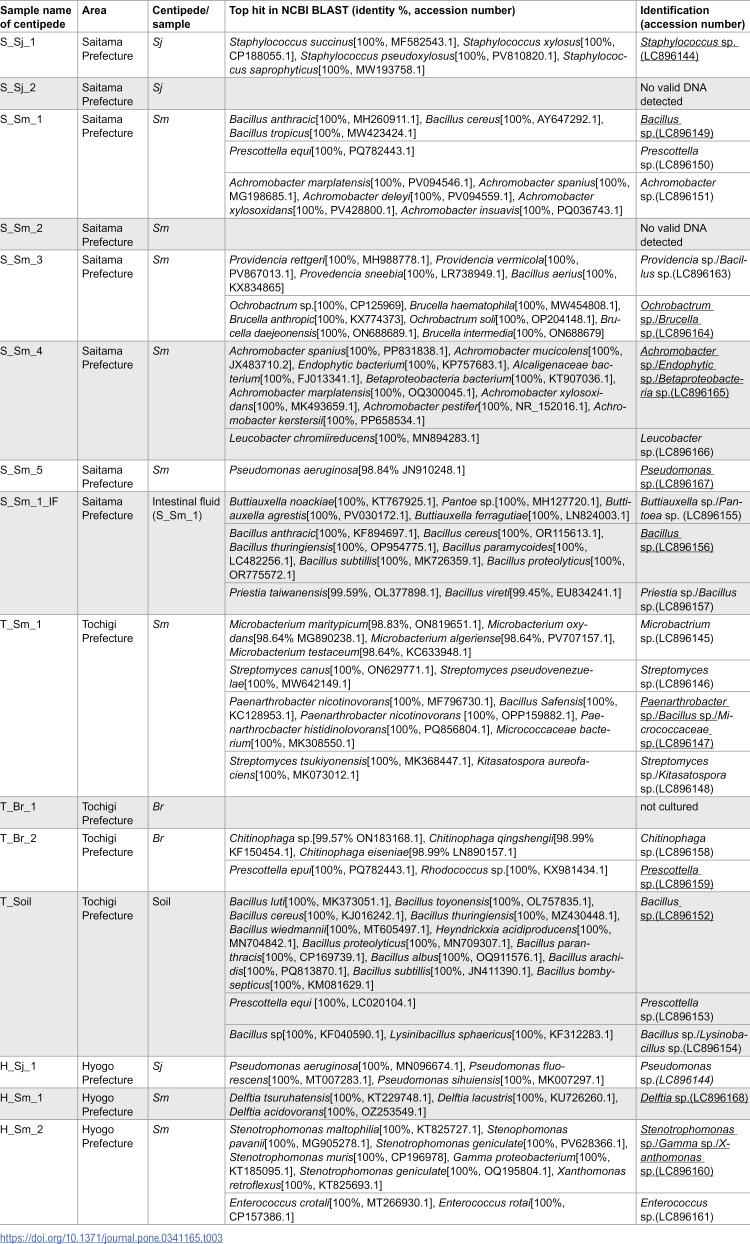 Figure 4
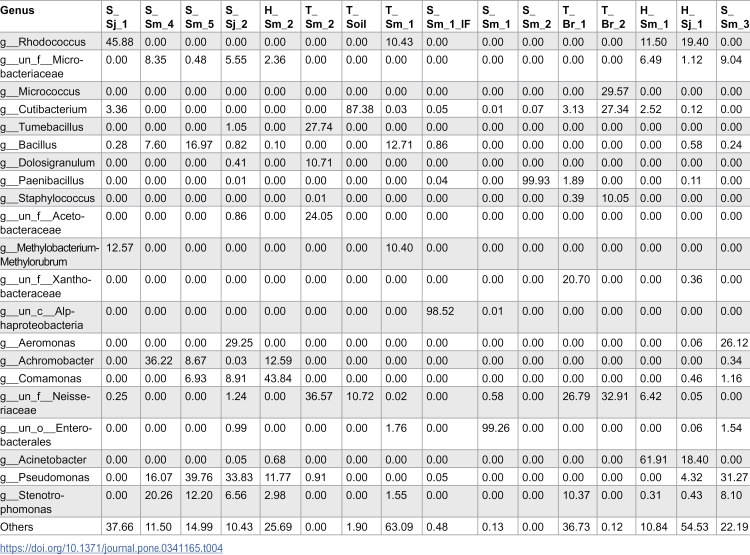 Figure 5
Peer Reviews
No public reviews on file for this paper yet. If you reviewed it on a platform where reviews are public (OpenReview, ICLR, NeurIPS, ICML), you can paste yours below so the community can read it here.
Videos
No videos yet. Explain this paper in a talk, walkthrough, or lecture? Add one.
Taxonomy
TopicsVenomous Animal Envenomation and Studies · Marine Invertebrate Physiology and Ecology · Rabies epidemiology and control