Prevalence and predictors of preconception medical and behavioral risks among soon-to-be married couples: A quantitative cross-sectional survey in Rwanda
Richard Nsengiyumva, Thiery Claudien Uhawenimana, Olive Bazirete, Darius Gishoma, Carlsson Ing-Marie, Lee HaEun, Jody Rae Lori

TL;DR
This study found that nearly half of soon-to-be married couples in Rwanda face significant preconception health risks, highlighting the need for early interventions.
Contribution
The study is among the first to assess preconception risks in premarital couples in Rwanda using a cross-sectional survey.
Findings
Nearly half of the couples were classified as high-risk for preconception health.
Common risks included mental stress, underweight, and lack of screening for conditions like syphilis and anemia.
Awareness of preconception care and higher income were linked to lower risk levels.
Abstract
Maternal and neonatal morbidities and mortality remain a global public health concern. Although preconception risk assessment has been found to enhance maternal, fetal, neonatal, and child health outcomes, few studies have explored preconception risks among premarital couples. The purpose of this study was to investigate the prevalence and predictors of preconception medical and behavioral risks among soon-to-be-married couples. A quantitative cross-sectional survey of 623 couples attending prenuptial meetings in rural and urban settings (churches and sector offices) was conducted from May to June 2024 using multistage cluster and purposive sampling. Data in the form of self-reported information were collected via structured interviewer-administered questionnaires. The Statistical Package for the Social Sciences (SPSS), version 29, was used to analyze the data. Most participants (64%)…
Genes, proteins, chemicals, diseases, species, mutations and cell lines named across the full text — each resolved to its canonical identifier and authoritative record.
Click any figure to enlarge with its caption.
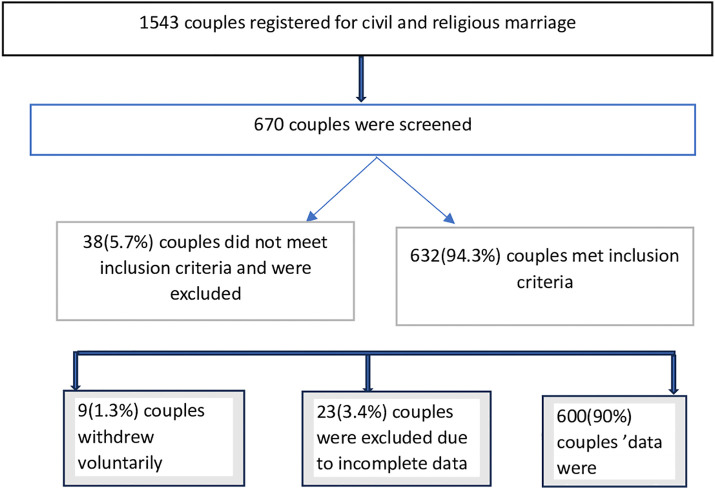 Figure 1
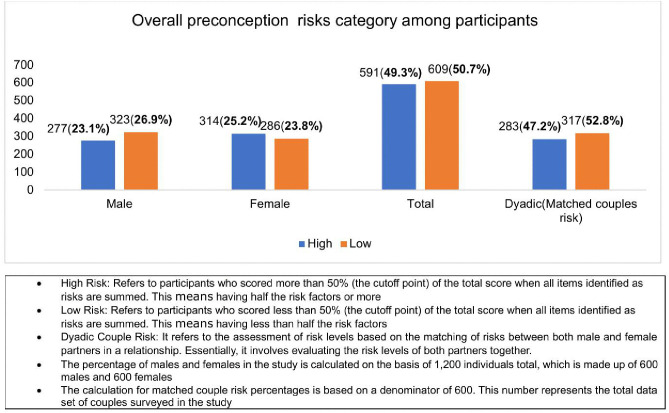 Figure 2
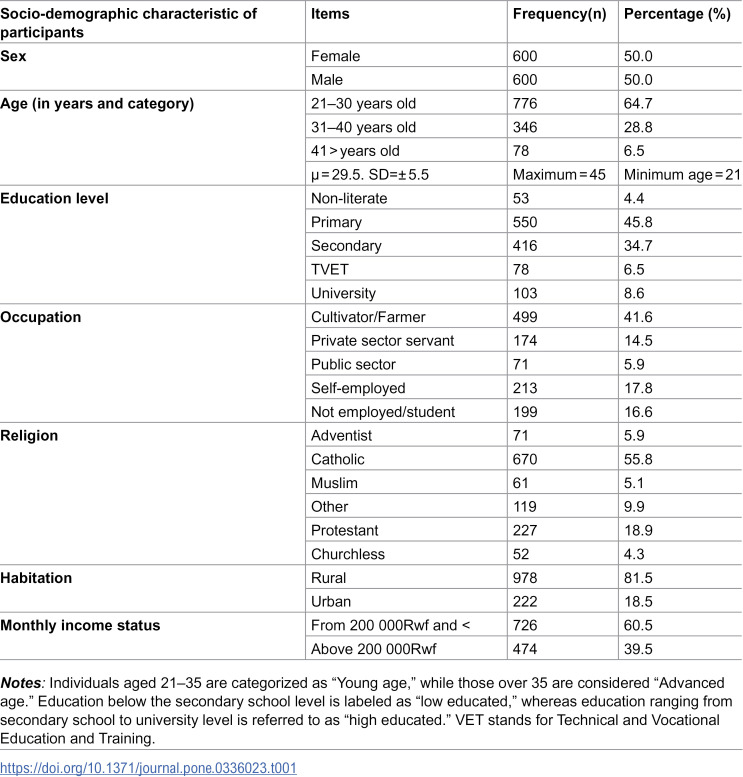 Figure 3
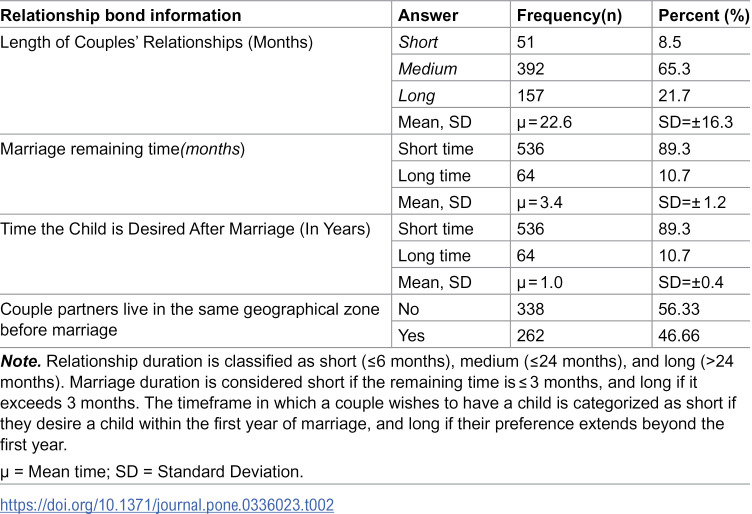 Figure 4
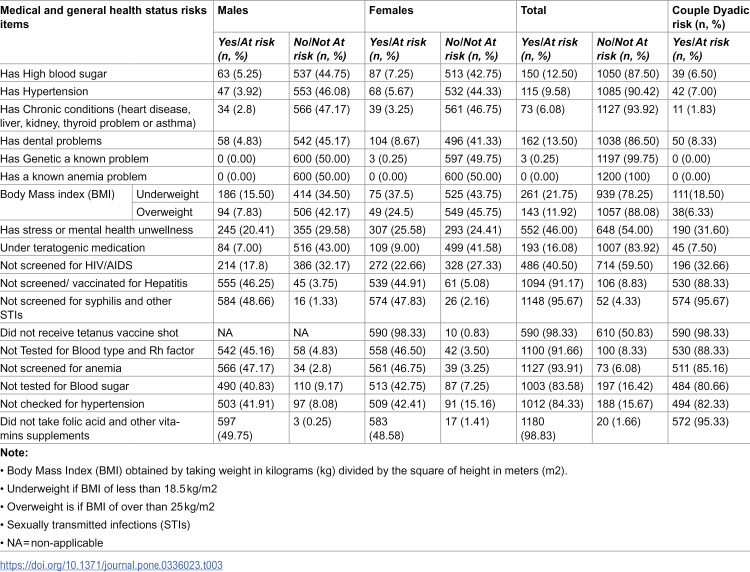 Figure 5
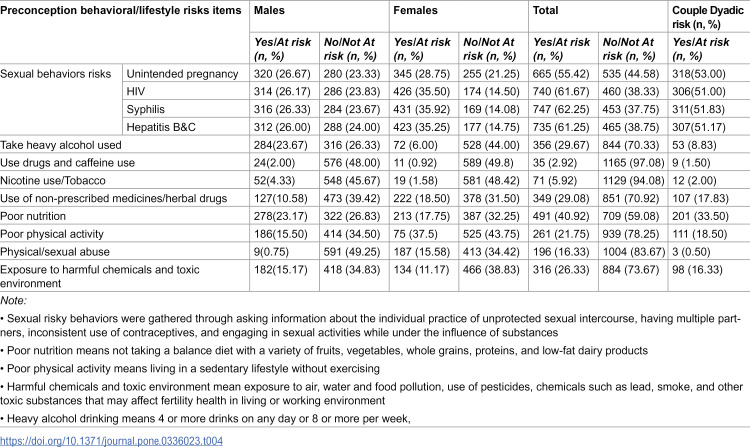 Figure 6
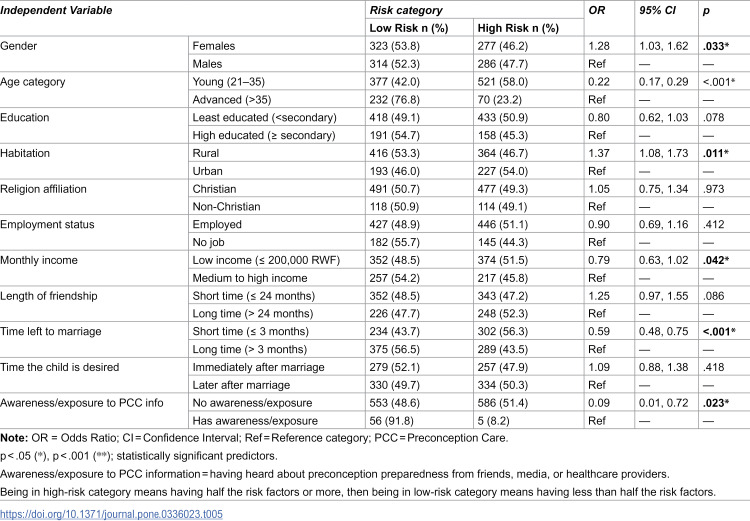 Figure 7
Peer Reviews
No public reviews on file for this paper yet. If you reviewed it on a platform where reviews are public (OpenReview, ICLR, NeurIPS, ICML), you can paste yours below so the community can read it here.
Videos
No videos yet. Explain this paper in a talk, walkthrough, or lecture? Add one.
Taxonomy
TopicsGlobal Maternal and Child Health · Reproductive Health and Contraception · Child Nutrition and Water Access