Temperature and genetic background drive mobilization of diverse transposable elements in a global human fungal pathogen
Anna I. Mackey, Vesper Fraunfelter, Samantha Shaltz, John McCormick, Callan Schroeder, John R. Perfect, Cedric Feschotte, Paul M. Magwene, Asiya Gusa

TL;DR
The study shows that temperature and genetic background influence transposable element (TE) activity in the fungal pathogen Cryptococcus neoformans, which can lead to antifungal resistance and adaptation.
Contribution
The discovery of a novel transposable element, CNEST, and its mobilization under heat stress in Cryptococcus neoformans.
Findings
Heat stress at 37°C increases the mobilization of certain transposable elements, leading to antifungal resistance.
DNA transposons are hypomethylated and uniformly distributed in the genome, possibly contributing to their frequent mobilization.
TE mobility is isolate- and strain-dependent, with significant variation even among clonally related strains from the same patient.
Abstract
Transposable elements (TEs) are key agents of genome evolution across all domains of life. These mobile genetic elements can cause mutations through transposition or by promoting structural rearrangements. Stress conditions can amplify TE mobility, either by impairing TE suppression mechanisms or through stress-induced interactions between transcription factors and TE sequences, offering a route for rapid genetic change. As such, TEs represent an important source of adaptability within populations. To investigate the interplay between environmental stress and eukaryotic TE dynamics relevant to infectious disease, we examined how heat stress and host-mimicking medium (RPMI) affect TE mobility in the global human fungal pathogen Cryptococcus neoformans, using a collection of clinical and environmental isolates. Using a selection-based screen, we captured the mobilization of seven distinct…
Genes, proteins, chemicals, diseases, species, mutations and cell lines named across the full text — each resolved to its canonical identifier and authoritative record.
Click any figure to enlarge with its caption.
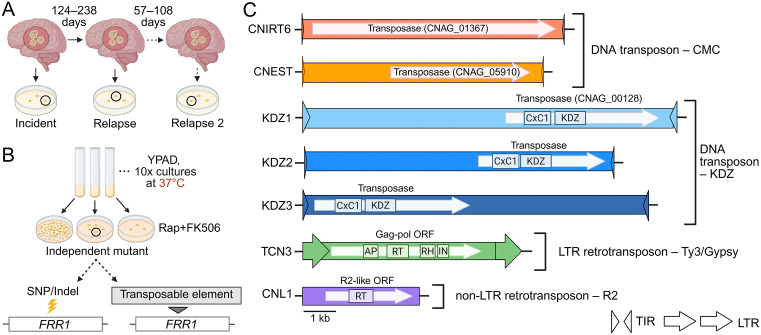 Figure 1
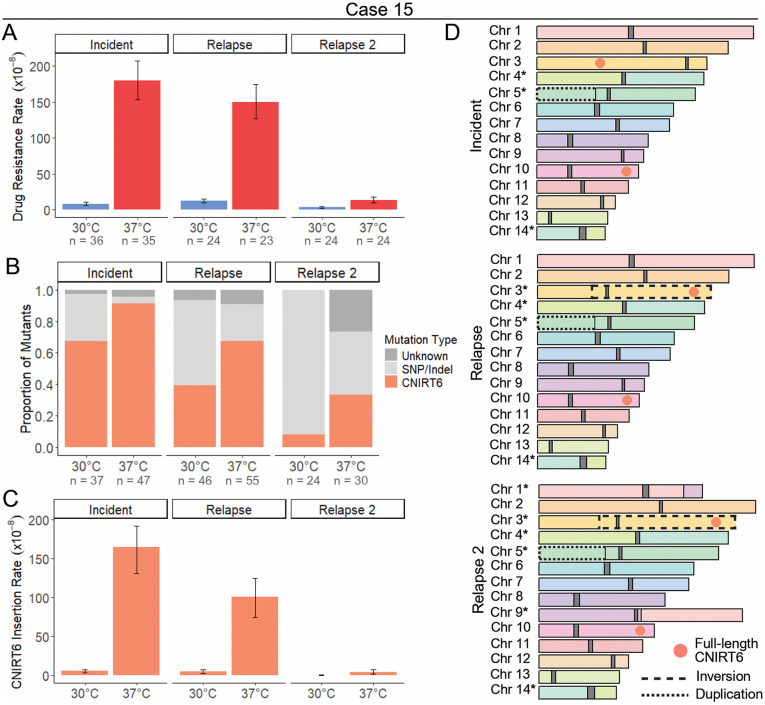 Figure 2
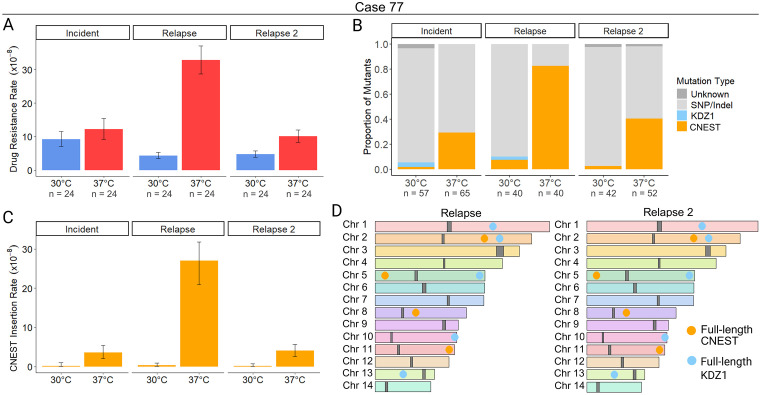 Figure 3
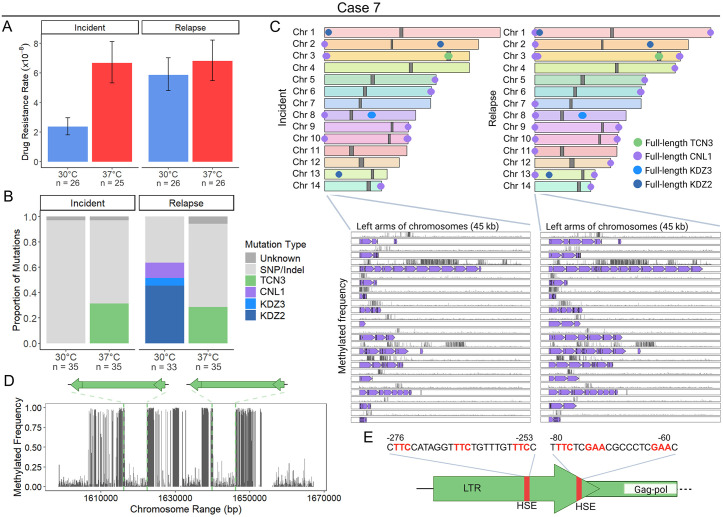 Figure 4
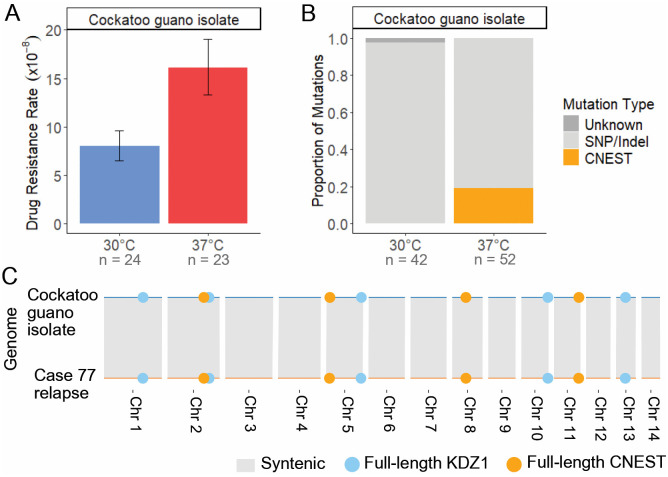 Figure 5
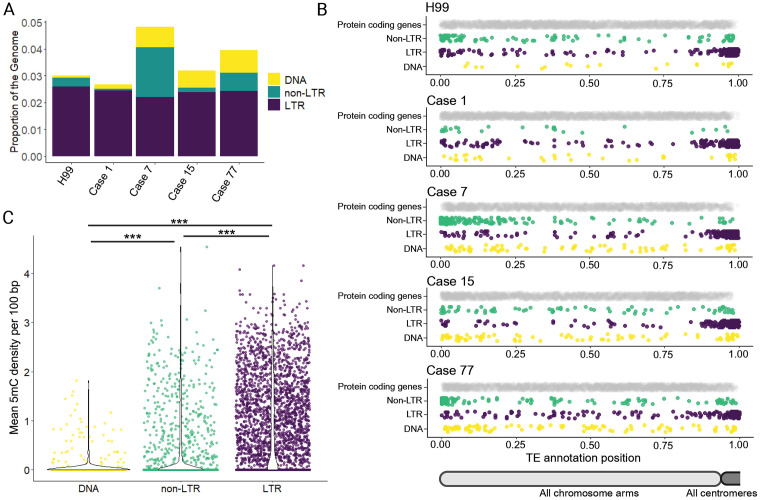 Figure 6
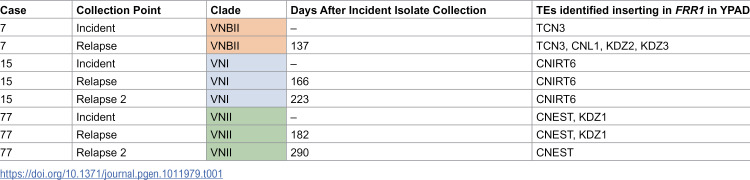 Figure 7
Peer Reviews
No public reviews on file for this paper yet. If you reviewed it on a platform where reviews are public (OpenReview, ICLR, NeurIPS, ICML), you can paste yours below so the community can read it here.
Videos
No videos yet. Explain this paper in a talk, walkthrough, or lecture? Add one.
Taxonomy
TopicsFungal Infections and Studies · Chromosomal and Genetic Variations · Nail Diseases and Treatments