Impact of storage conditions on the stability and biological efficacy of trans-arachidin-1 and trans-arachidin-3
Ploy Khongrungjarat, Chonnikan Tothong, Chanyanut Pankaew, Suchada Phimsen, Nopawit Khamto, Nutthamon Kijchalao, Warissara Wongkham, Piyathida Wongkham, Wipaporn Chuaymaung, Adsadayu Thonnondang, Apinun Limmongkon, Shengqian Sun, Shengqian Sun, Shengqian Sun, Shengqian Sun

TL;DR
This study shows that storing trans-arachidin-1 and trans-arachidin-3 at low temperatures preserves their bioactivity and stability over time.
Contribution
The first comprehensive investigation into the stability and biological efficacy of Ara-1 and Ara-3 under different storage conditions.
Findings
PCE stored at –20 °C and 4 °C retained higher antioxidant capacity and phenolic content compared to room temperature storage.
Ara-3 maintained strong cytotoxicity over six months, while Ara-1 showed significant loss in activity.
Low-temperature storage is crucial for preserving the bioactivity of stilbenoid-rich extracts.
Abstract
Prenylated stilbenoids, particularly trans-arachidin-1 (Ara-1) and trans-arachidin-3 (Ara-3), have gained attention for their notable bioactivities and potential health-promoting properties. This study presents the first comprehensive investigation into the stability and biological efficacy of these compounds in both peanut hairy root culture crude extracts (PCE) and partially purified fractions derived from elicited peanut hairy root cultures. PCE stored at –20 °C and 4 °C maintained higher antioxidant capacity, total phenolic content compared to samples stored at room temperature. In cytotoxicity assays using SW480 colon cancer cells, the extract stored at –20 °C retained bioactivity with only minor changes in IC₅₀ values over three months, demonstrating superior stability under frozen conditions. Over a six-month period, partially purified fractions of Ara-1 and Ara-3 showed a…
Genes, proteins, chemicals, diseases, species, mutations and cell lines named across the full text — each resolved to its canonical identifier and authoritative record.
Click any figure to enlarge with its caption.
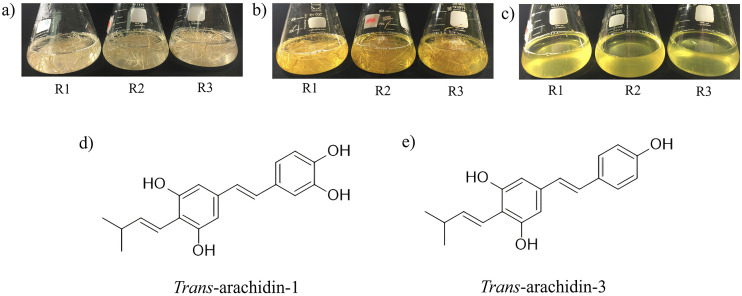 Figure 1
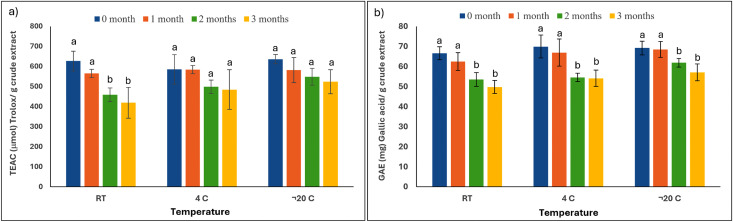 Figure 2
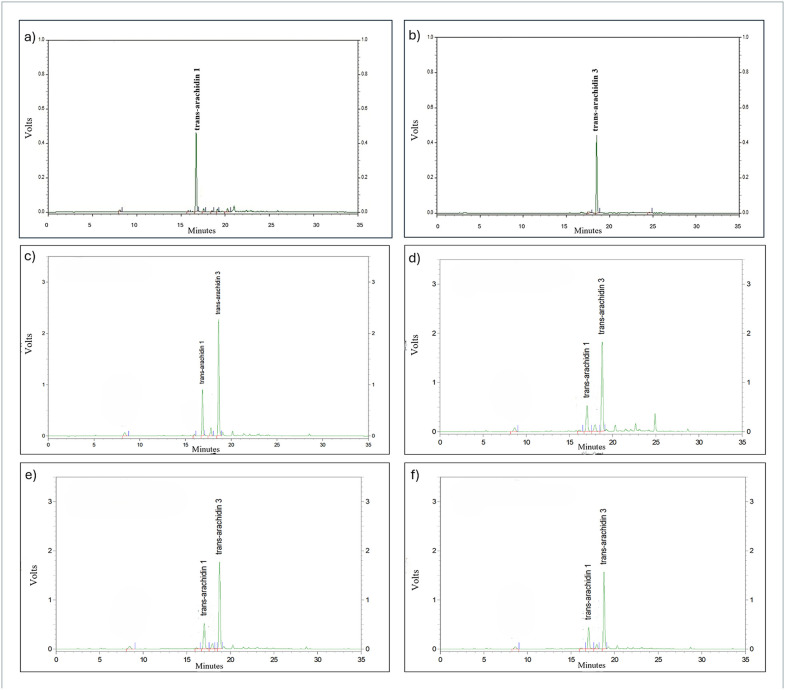 Figure 3
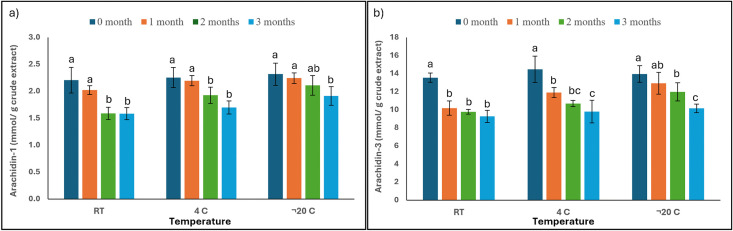 Figure 4
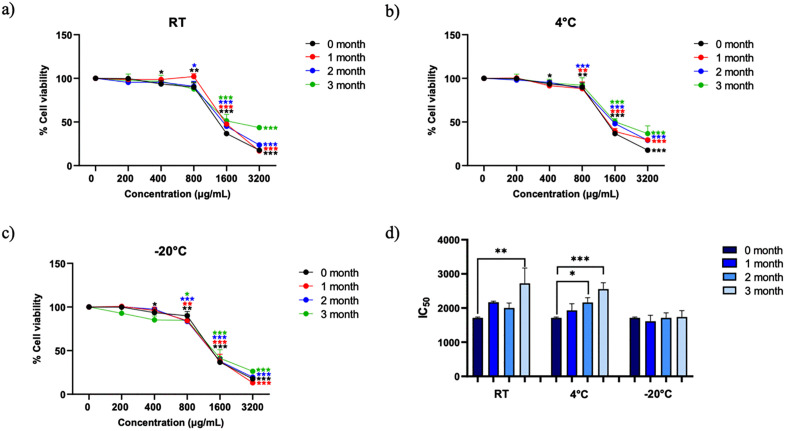 Figure 5
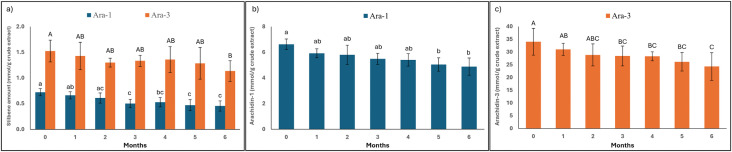 Figure 6
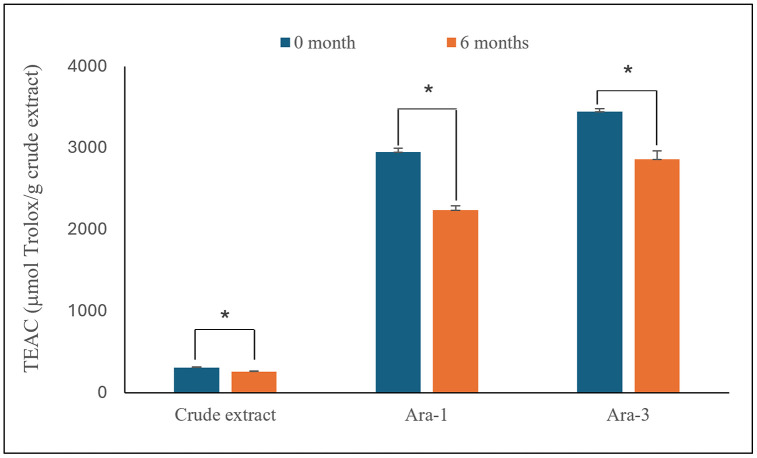 Figure 7
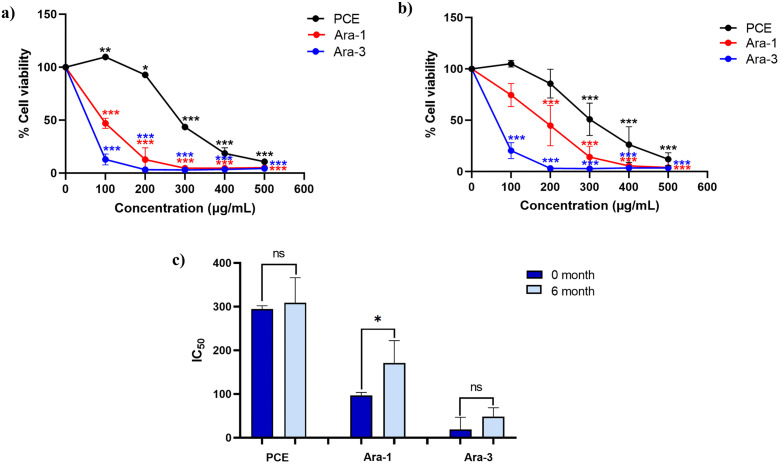 Figure 8
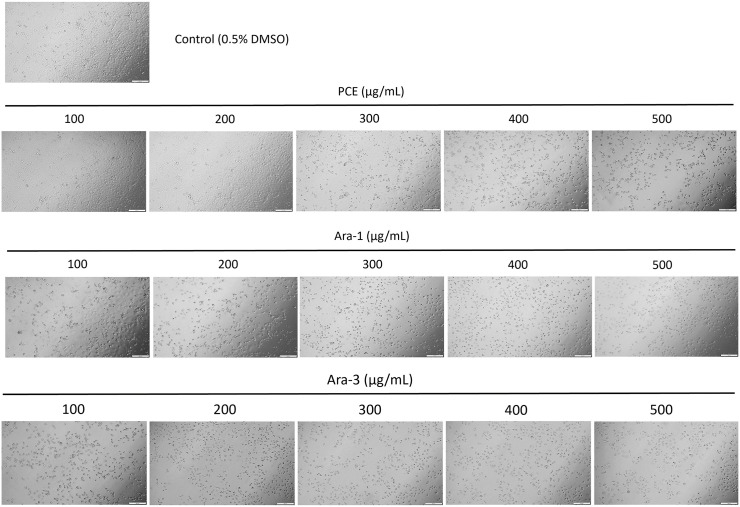 Figure 9
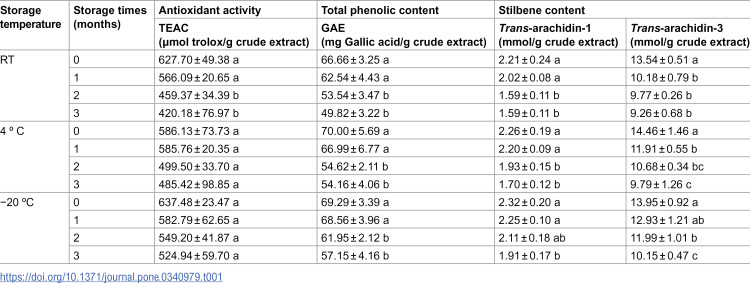 Figure 10
Peer Reviews
No public reviews on file for this paper yet. If you reviewed it on a platform where reviews are public (OpenReview, ICLR, NeurIPS, ICML), you can paste yours below so the community can read it here.
Videos
No videos yet. Explain this paper in a talk, walkthrough, or lecture? Add one.
Taxonomy
TopicsSirtuins and Resveratrol in Medicine · Peanut Plant Research Studies · Antioxidant Activity and Oxidative Stress