Data Science Education for Residents, Researchers, and Students in Psychiatry and Psychology: Program Development and Evaluation Study
Hayoung K Donnelly, David Mandell, Sy Hwang, Emily Schriver, Ugurcan Vurgun, Graydon Neill, Esha Patel, Megan E Reilly, Michael Steinberg, Amber Calloway, Robert Gallop, Maria A Oquendo, Gregory K Brown, Danielle L Mowery

TL;DR
A workshop was created to teach psychiatry and psychology trainees how to use AI and data science for suicide prevention research, and it successfully boosted their confidence in these skills.
Contribution
A novel virtual workshop was developed and evaluated to train mental health professionals in data science and AI techniques for suicide prevention.
Findings
Participants' confidence in NLP knowledge increased significantly after the workshop.
Participants also showed significant improvement in their coding confidence.
Open-ended feedback suggested future enhancements like thematic analysis and diverse datasets.
Abstract
The use of artificial intelligence (AI) to analyze health care data has become common in behavioral health sciences. However, the lack of training opportunities for mental health professionals limits clinicians’ ability to adopt AI in clinical settings. AI education is essential for trainees, equipping them with the literacy needed to implement AI tools in practice, collaborate effectively with data scientists, and develop skills as interdisciplinary researchers with computing skills. As part of the Penn Innovation in Suicide Prevention Implementation Research Center, we developed, implemented, and evaluated a virtual workshop to educate psychiatry and psychology trainees on using AI for suicide prevention research. The workshop introduced trainees to natural language processing (NLP) concepts and Python coding skills using Jupyter notebooks within a secure Microsoft Azure Databricks…
Genes, proteins, chemicals, diseases, species, mutations and cell lines named across the full text — each resolved to its canonical identifier and authoritative record.
Click any figure to enlarge with its caption.
 Figure 1
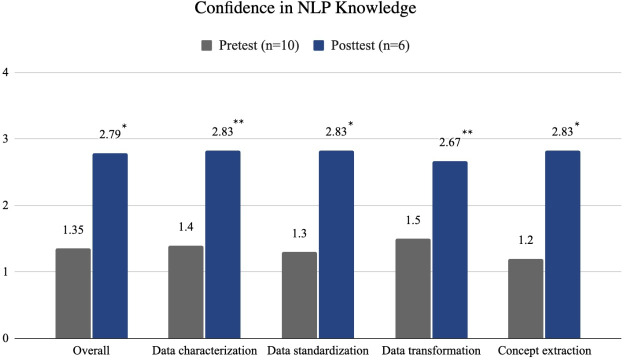 Figure 2
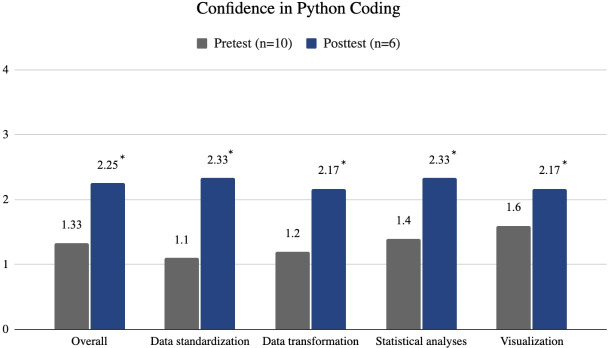 Figure 3
Peer Reviews
No public reviews on file for this paper yet. If you reviewed it on a platform where reviews are public (OpenReview, ICLR, NeurIPS, ICML), you can paste yours below so the community can read it here.
Videos
No videos yet. Explain this paper in a talk, walkthrough, or lecture? Add one.
Taxonomy
TopicsMental Health via Writing · Digital Mental Health Interventions · Suicide and Self-Harm Studies